Good marketers apply creativity.
Great marketers apply creativity + science + AI.
Tap a slide to expand
Great marketers apply creativity + science + AI.
Here’s how to combine AI with 8 neuromarketing principles to improve your marketing.
—
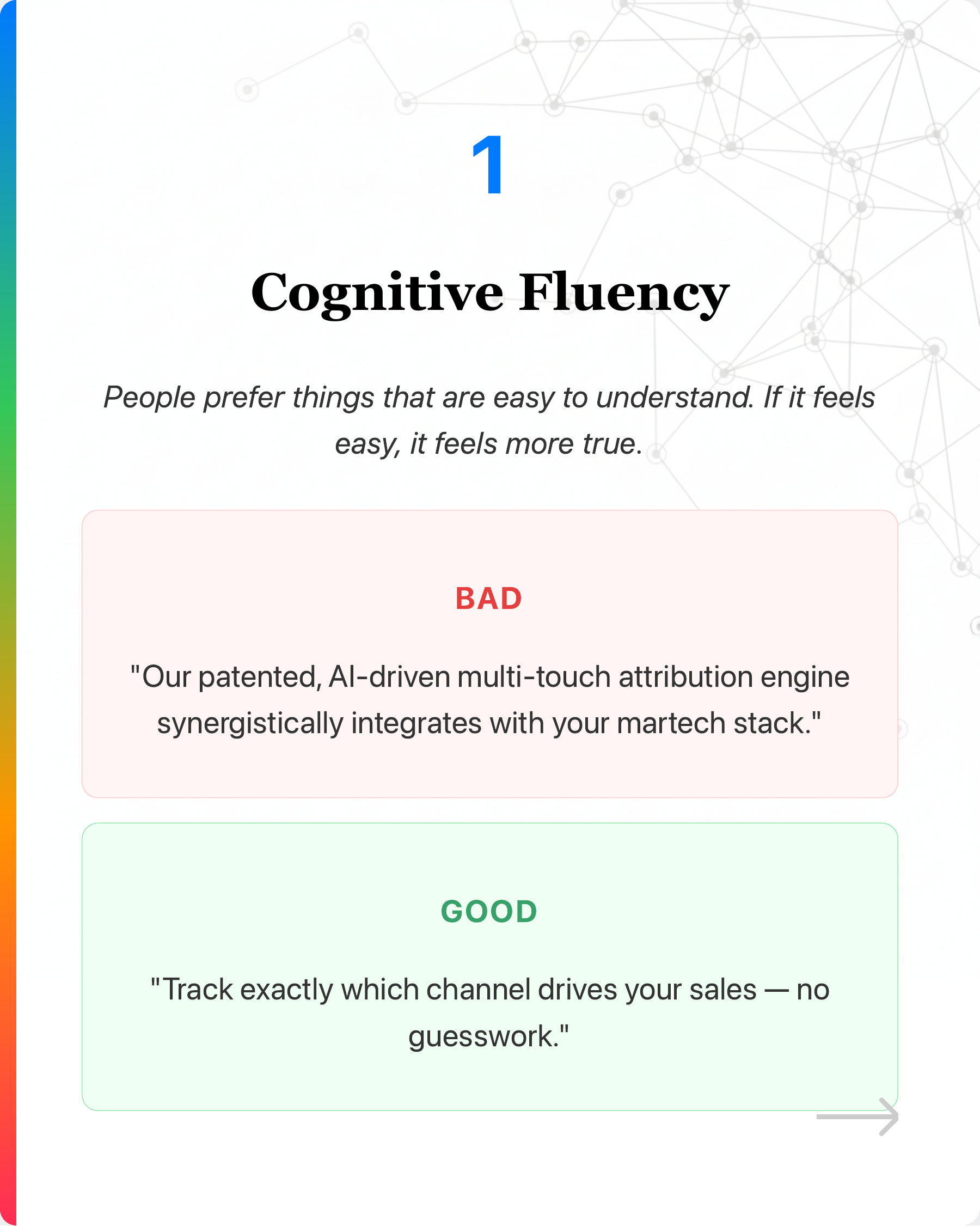
- Cognitive Fluency (Processing Ease)
People prefer things that are easy to understand. If it feels easy, it feels more true.
Bad: “Our patented, AI-driven multi-touch attribution engine synergistically integrates with your martech stack.”
Good: “Track exactly which channel drives your sales — no guesswork.”
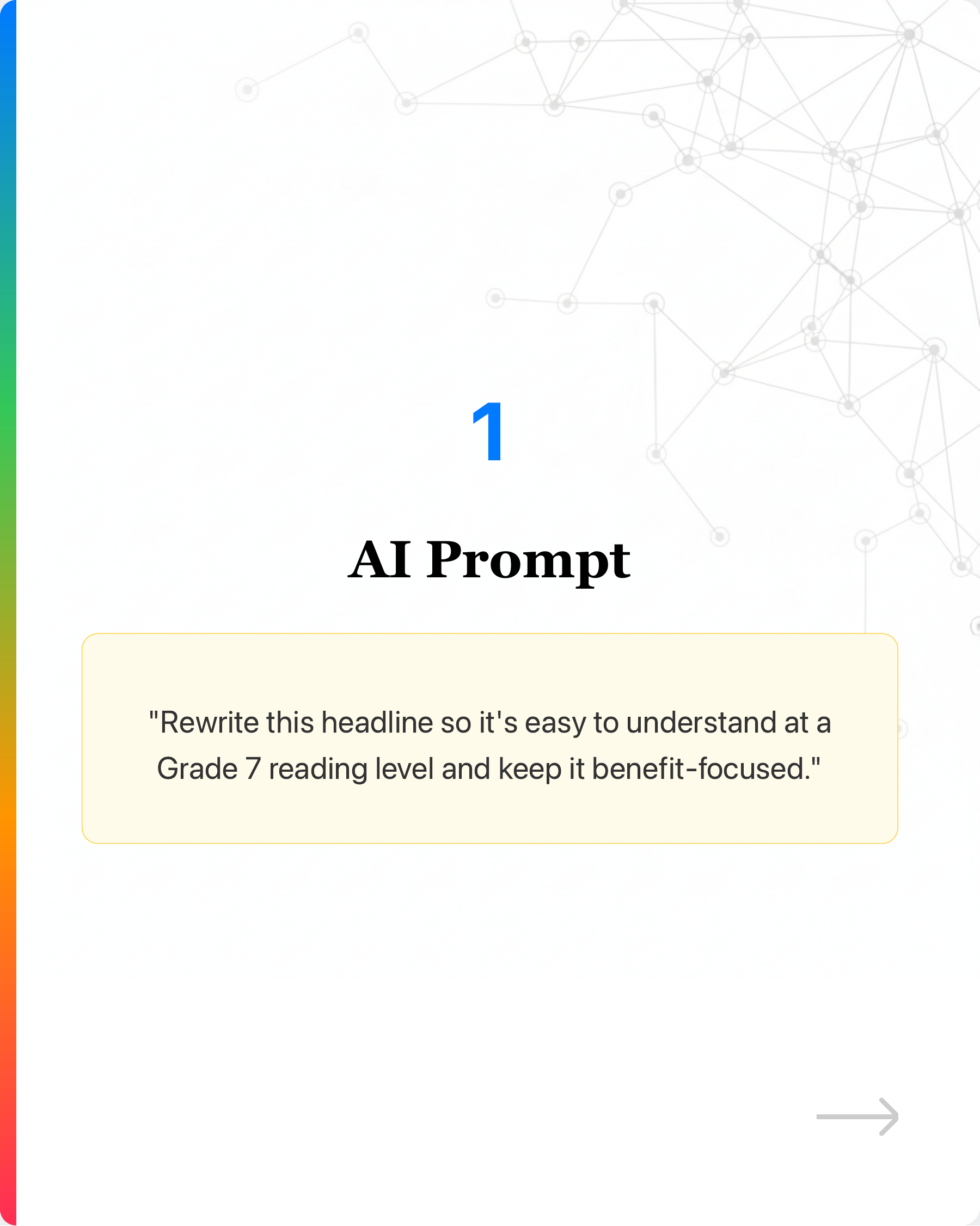
AI Prompt: “Rewrite this headline so it’s easy to understand at a Grade 7 reading level and keep it benefit-focused.”
—
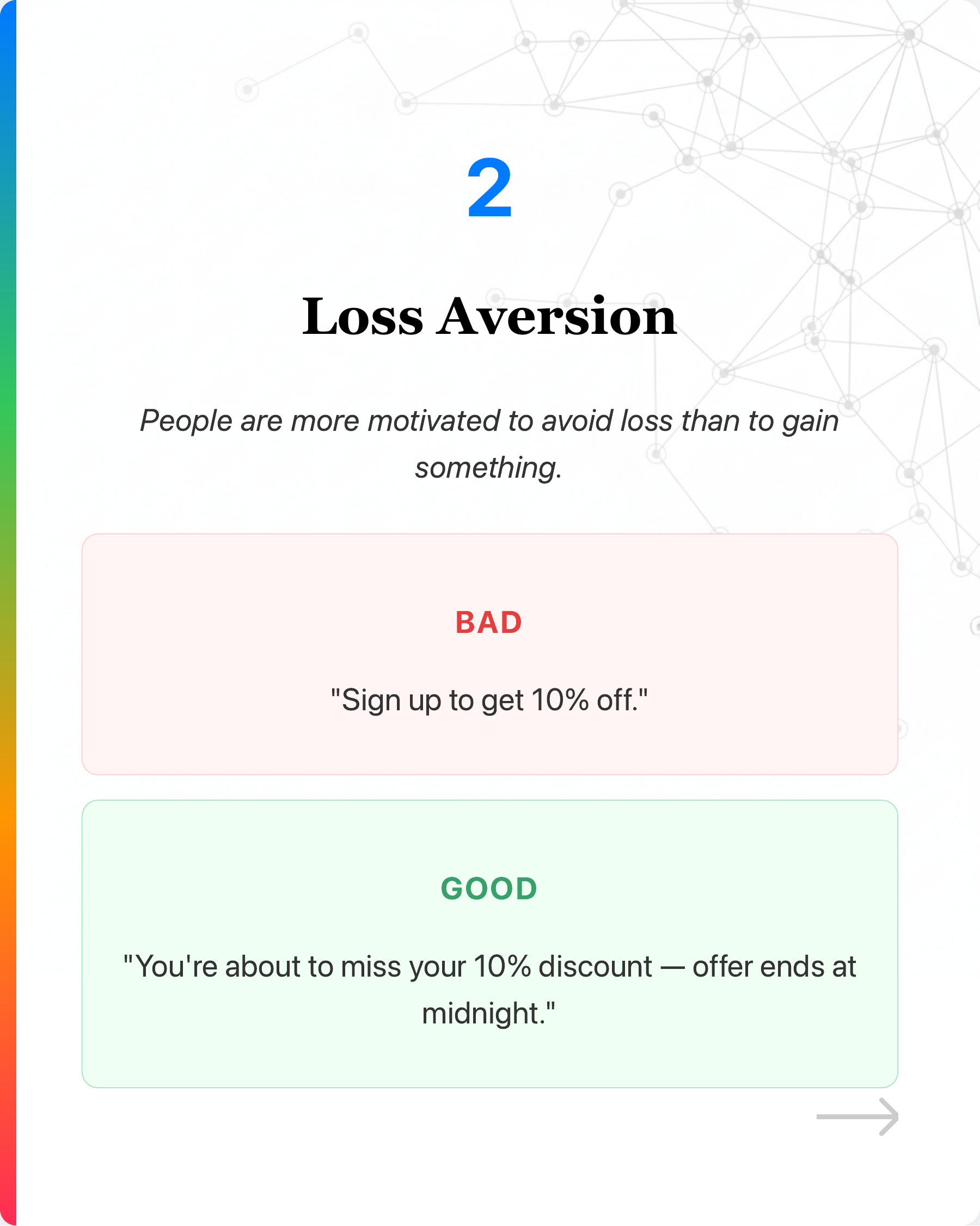
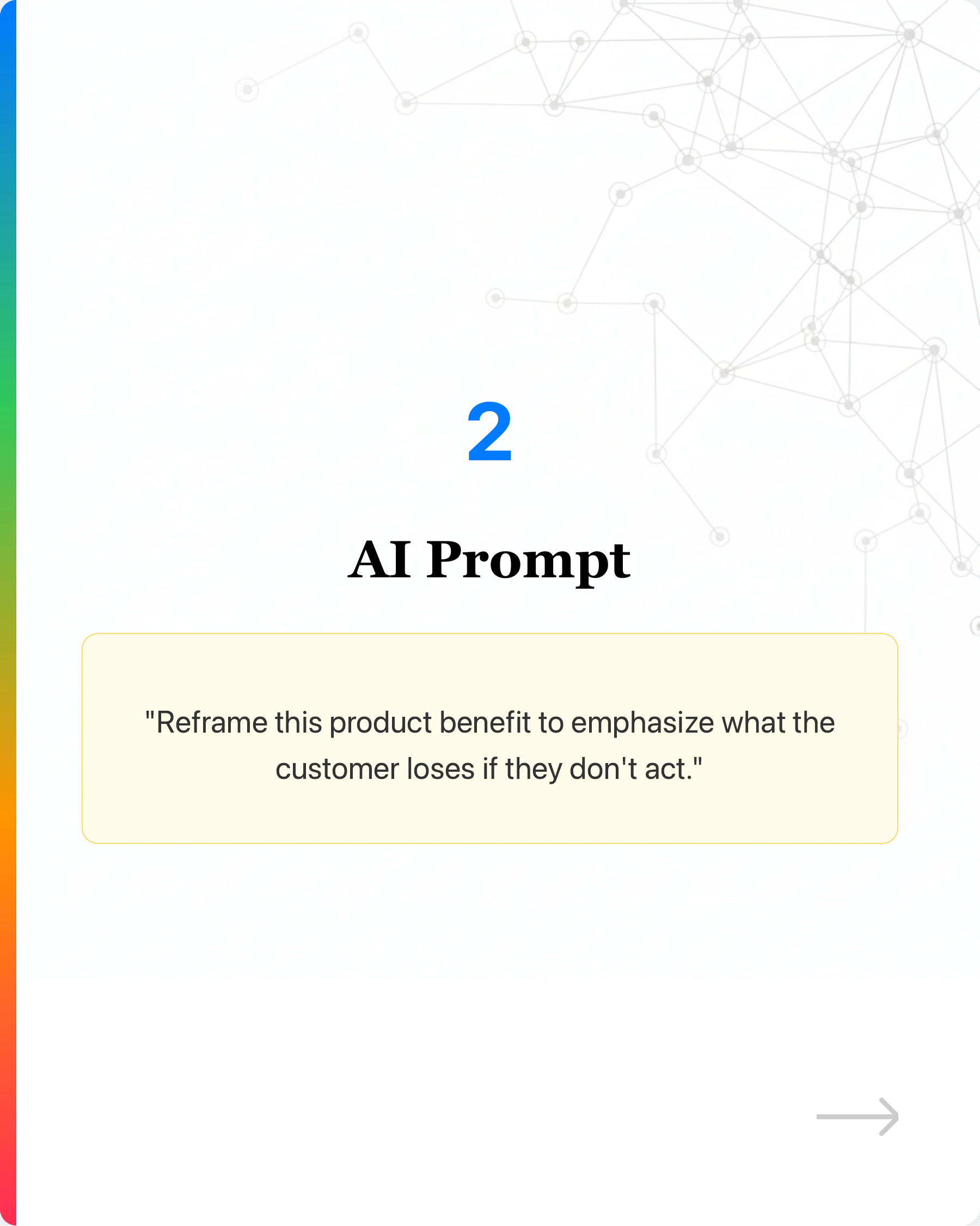
- Loss Aversion
People are more motivated to avoid loss than to gain something.
Bad: “Sign up to get 10% off.”
Good: “You’re about to miss your 10% discount — offer ends at midnight.”
AI Prompt: “Reframe this product benefit to emphasize what the customer loses if they don’t act.”
—
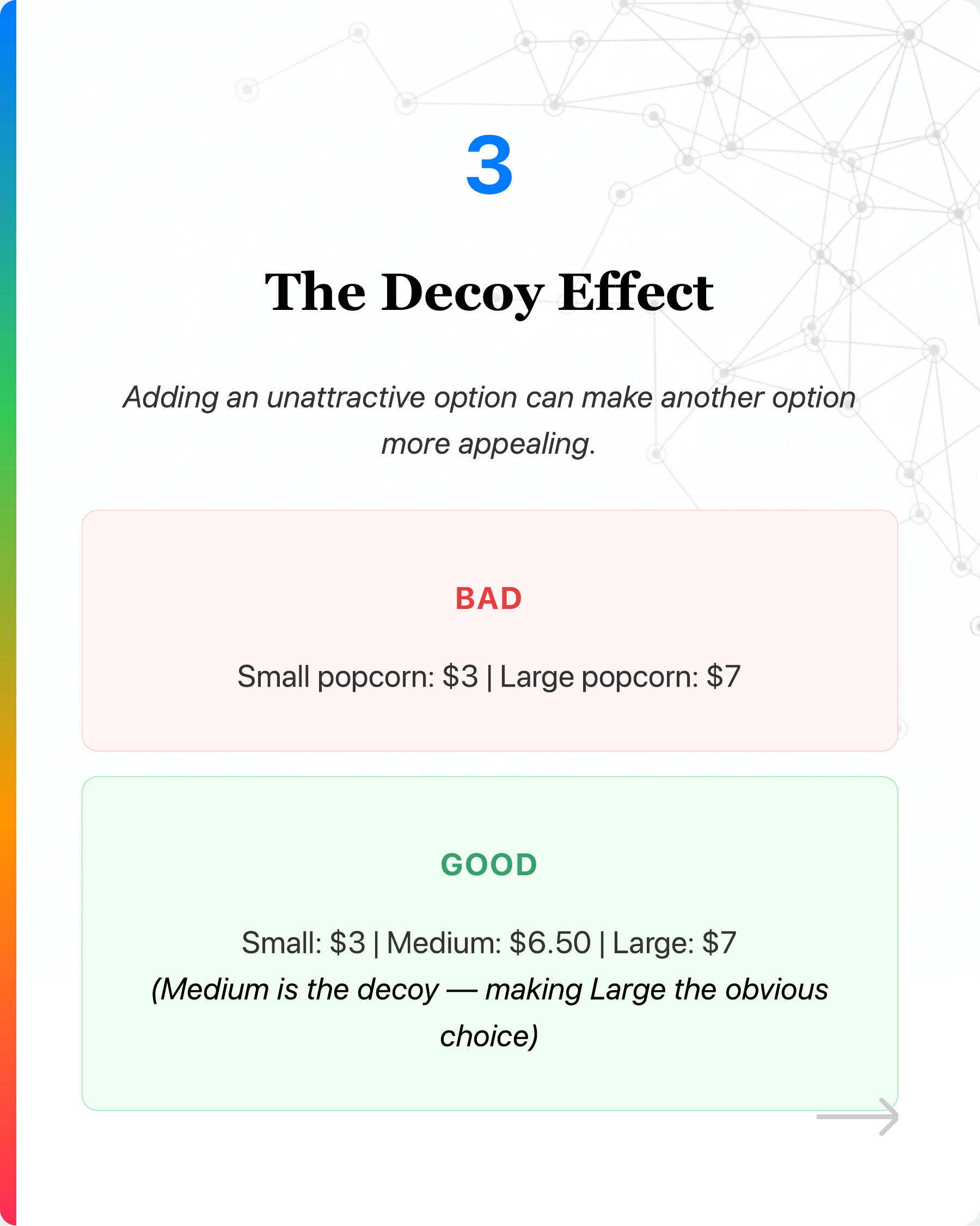
- The Decoy Effect
Adding an unattractive option can make another option more appealing.
Bad: Small popcorn: $3 | Large popcorn: $7
Good: Small: $3 | Medium: $6.50 | Large: $7 (Medium is the decoy — only $0.50 less than Large but much smaller, making Large the obvious choice)
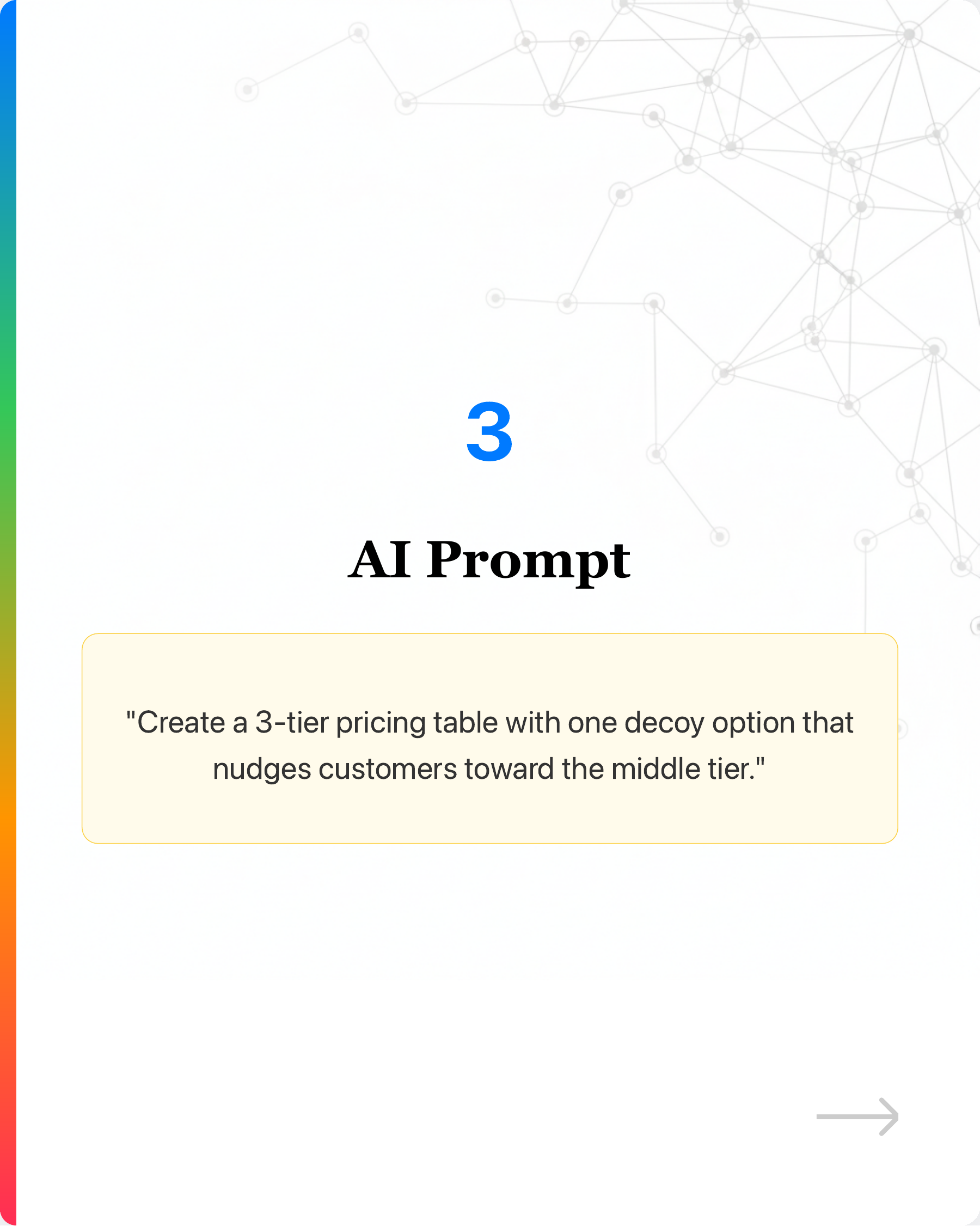
AI Prompt: “Create a 3-tier pricing table with one decoy option that nudges customers toward the middle tier.”
—
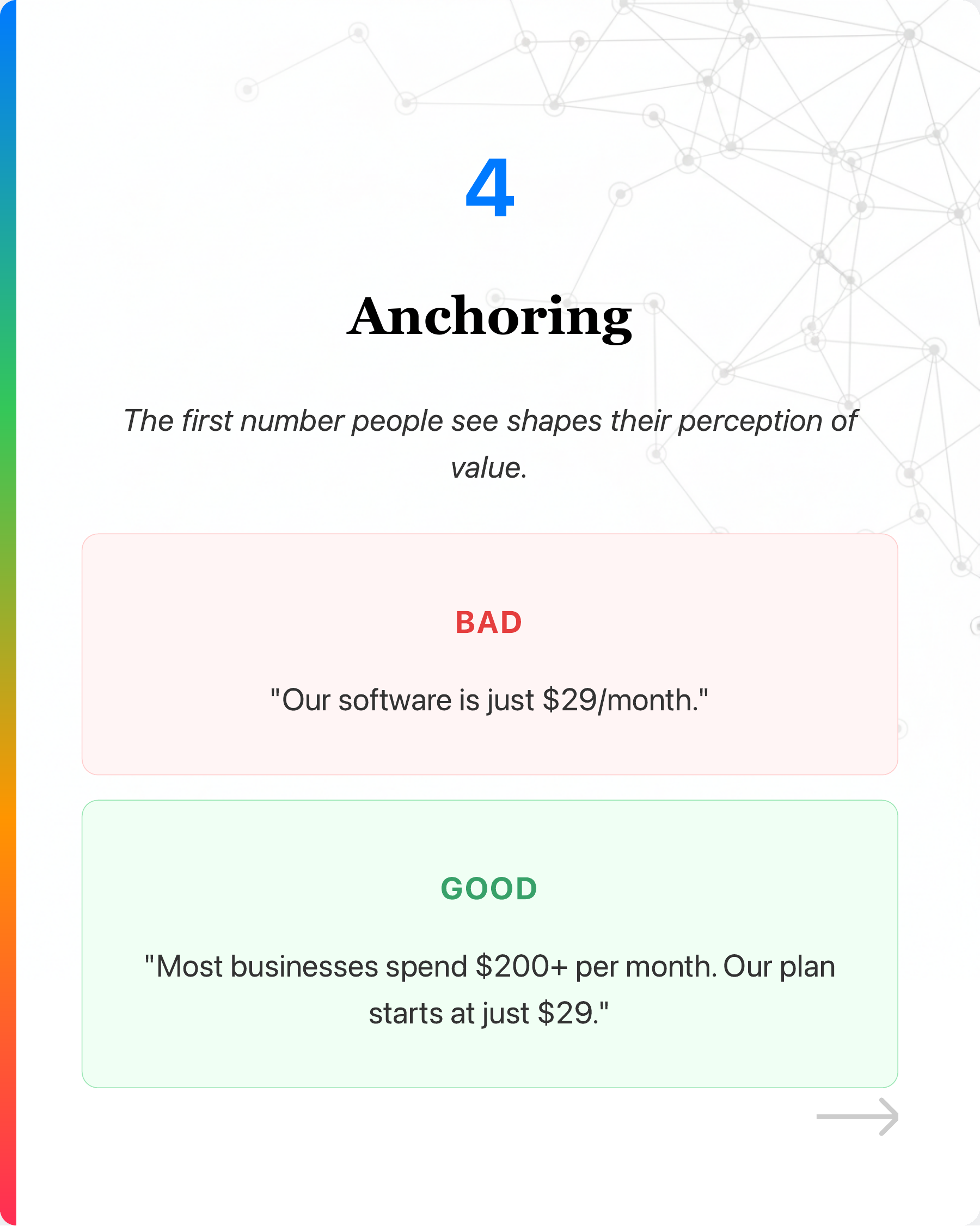
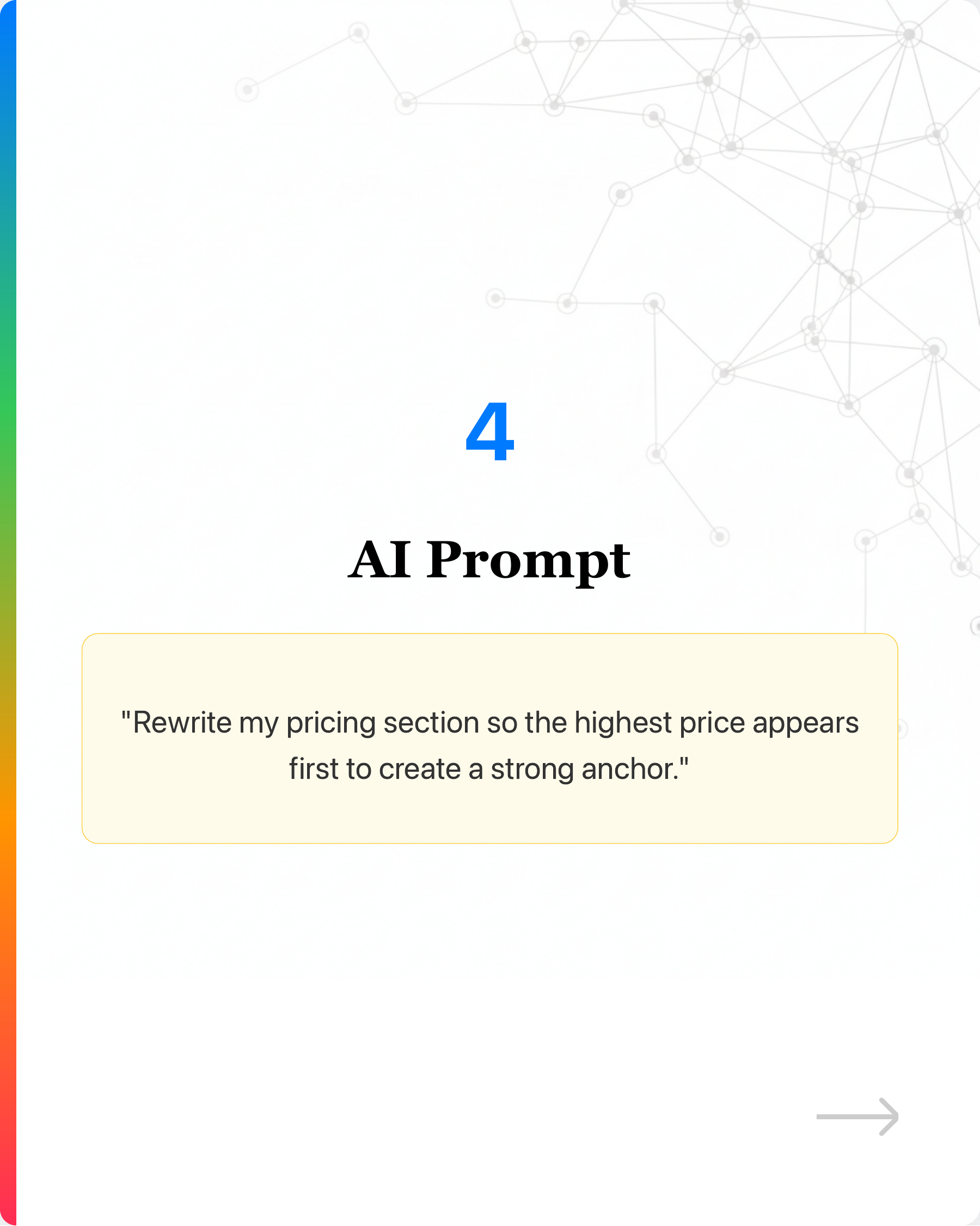
- Anchoring
The first number people see shapes their perception of value.
Bad: “Our software is just $29/month.”
Good: “Most businesses spend $200+ per month. Our plan starts at just $29.”
AI Prompt: “Rewrite my pricing section so the highest price appears first to create a strong anchor.”
—
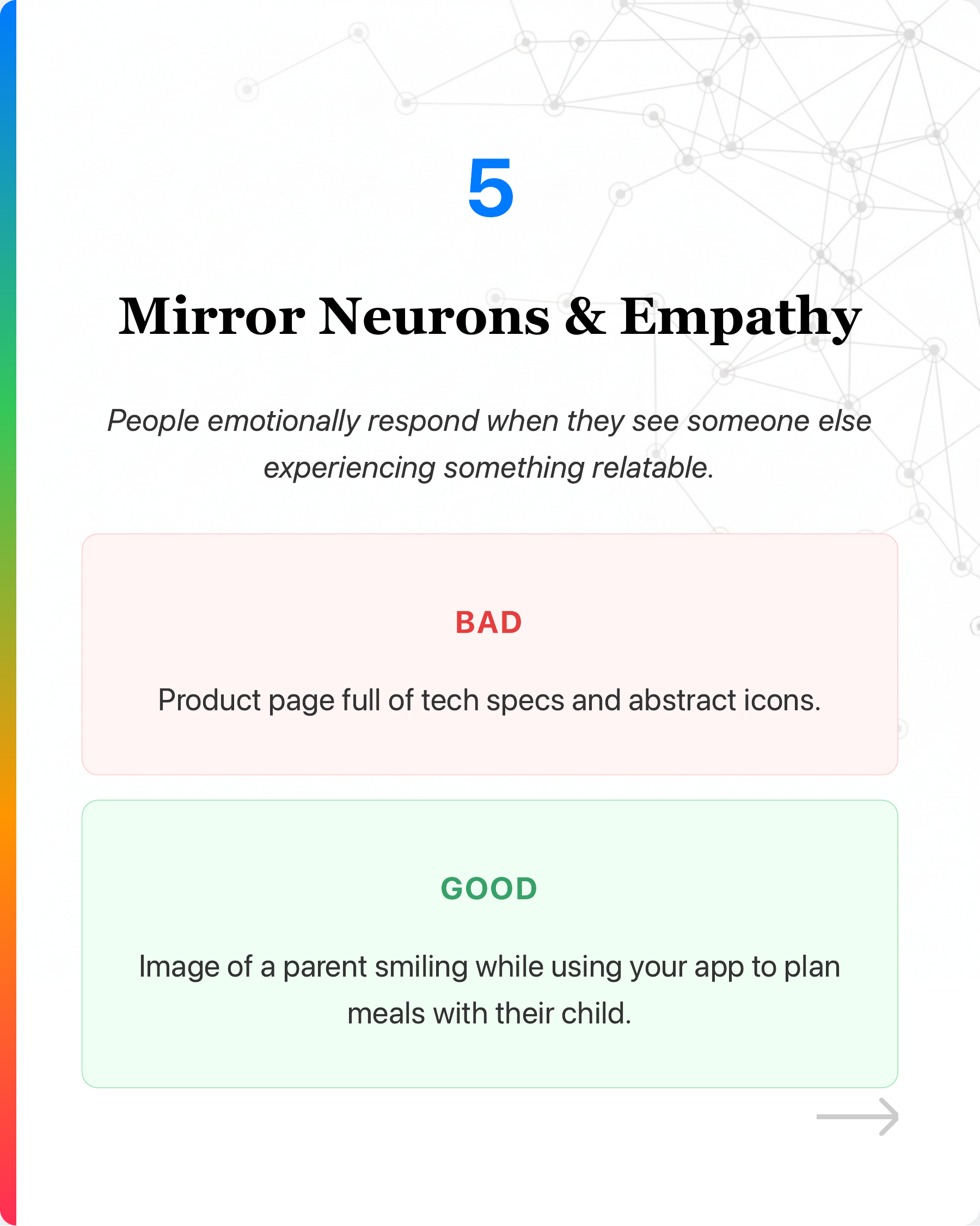
- Mirror Neurons & Empathy
People emotionally respond when they see someone else experiencing something relatable.
Bad: Product page full of tech specs and abstract icons.
Good: Image of a parent smiling while using your app to plan meals with their child.
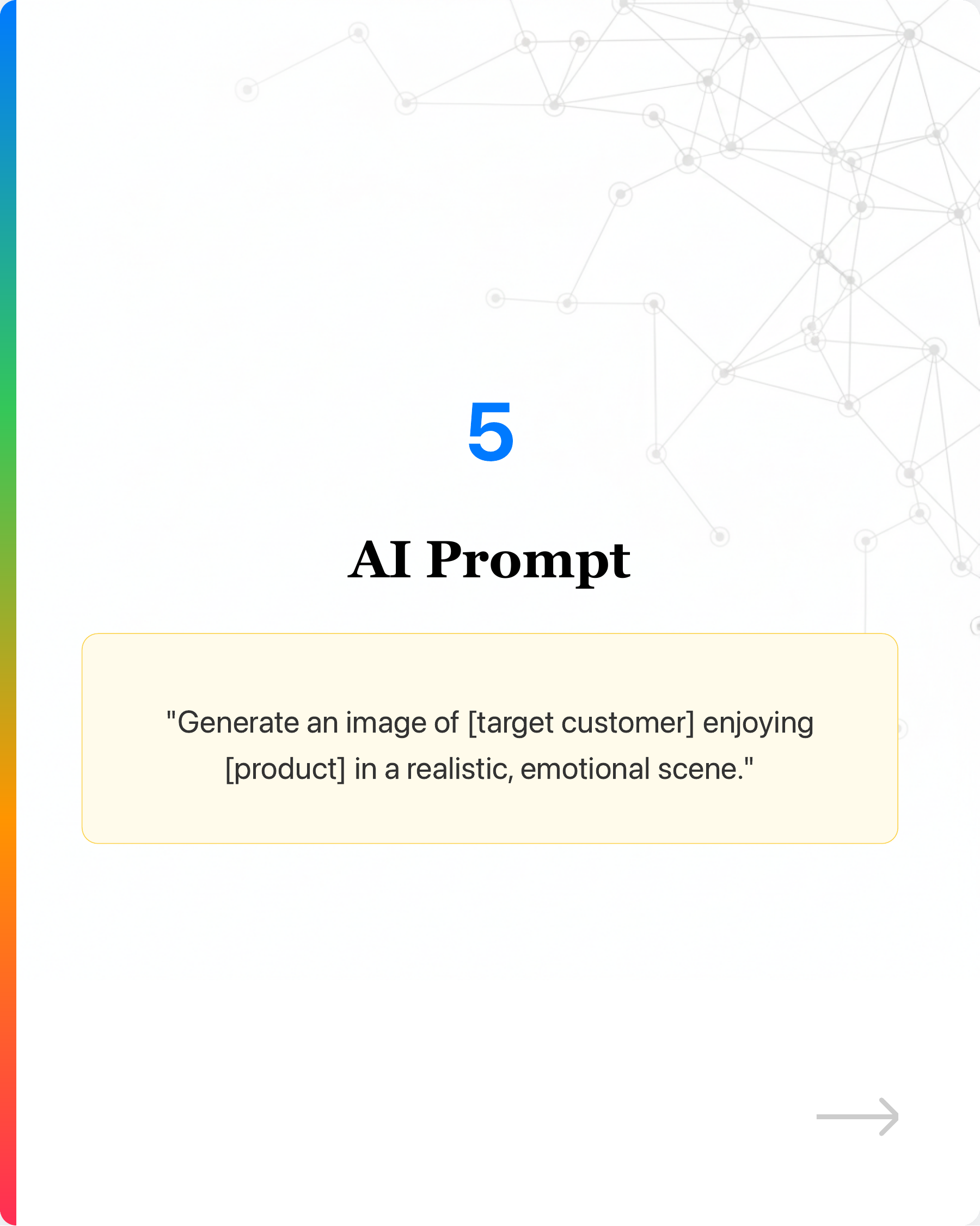
AI Prompt: “Generate an image of [target customer] enjoying [product] in a realistic, emotional scene.”
—
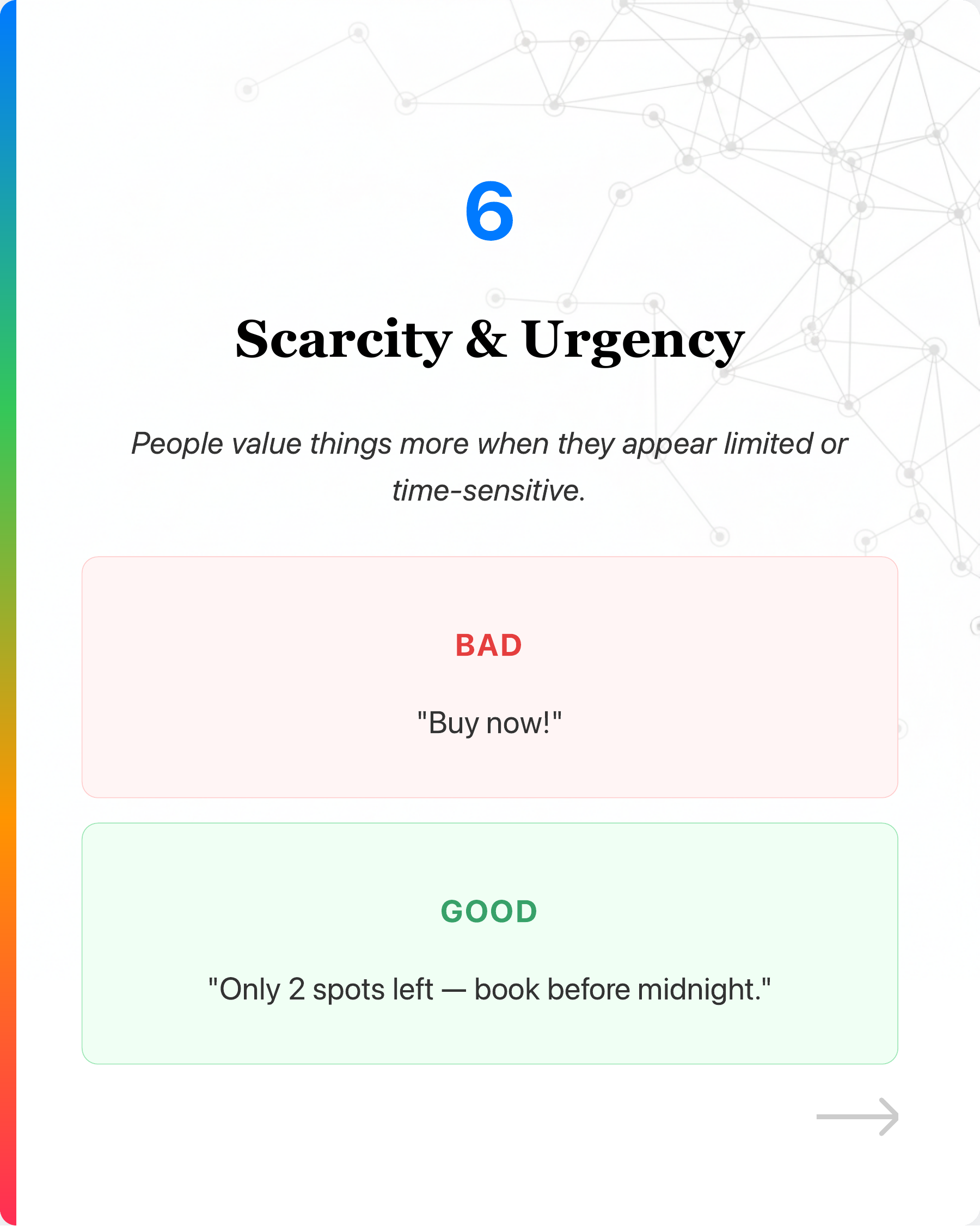
- Scarcity & Urgency
People value things more when they appear limited or time-sensitive.
Bad: “Buy now!”
Good: “Only 2 spots left — book before midnight.”
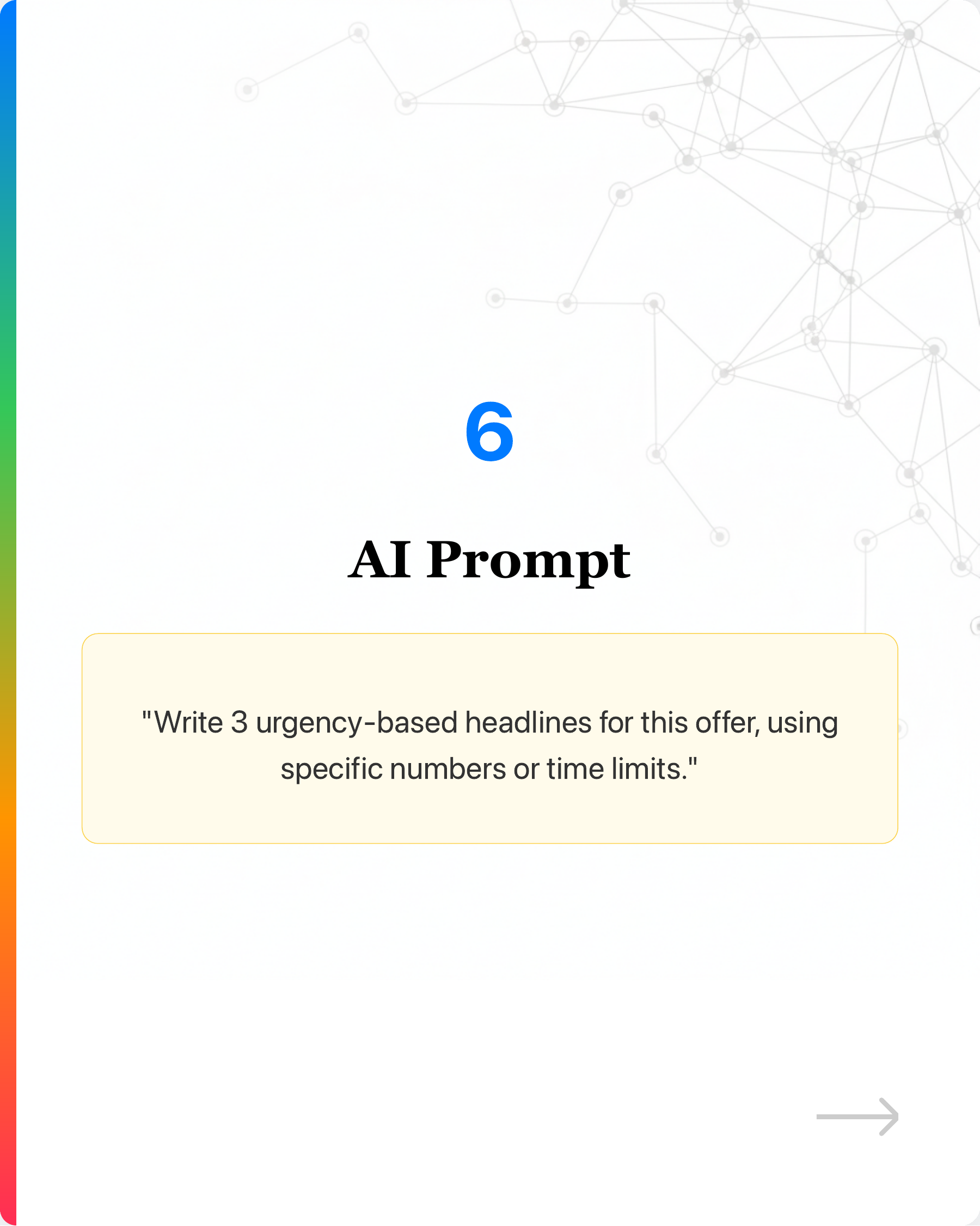
AI Prompt: “Write 3 urgency-based headlines for this offer, using specific numbers or time limits.”
—
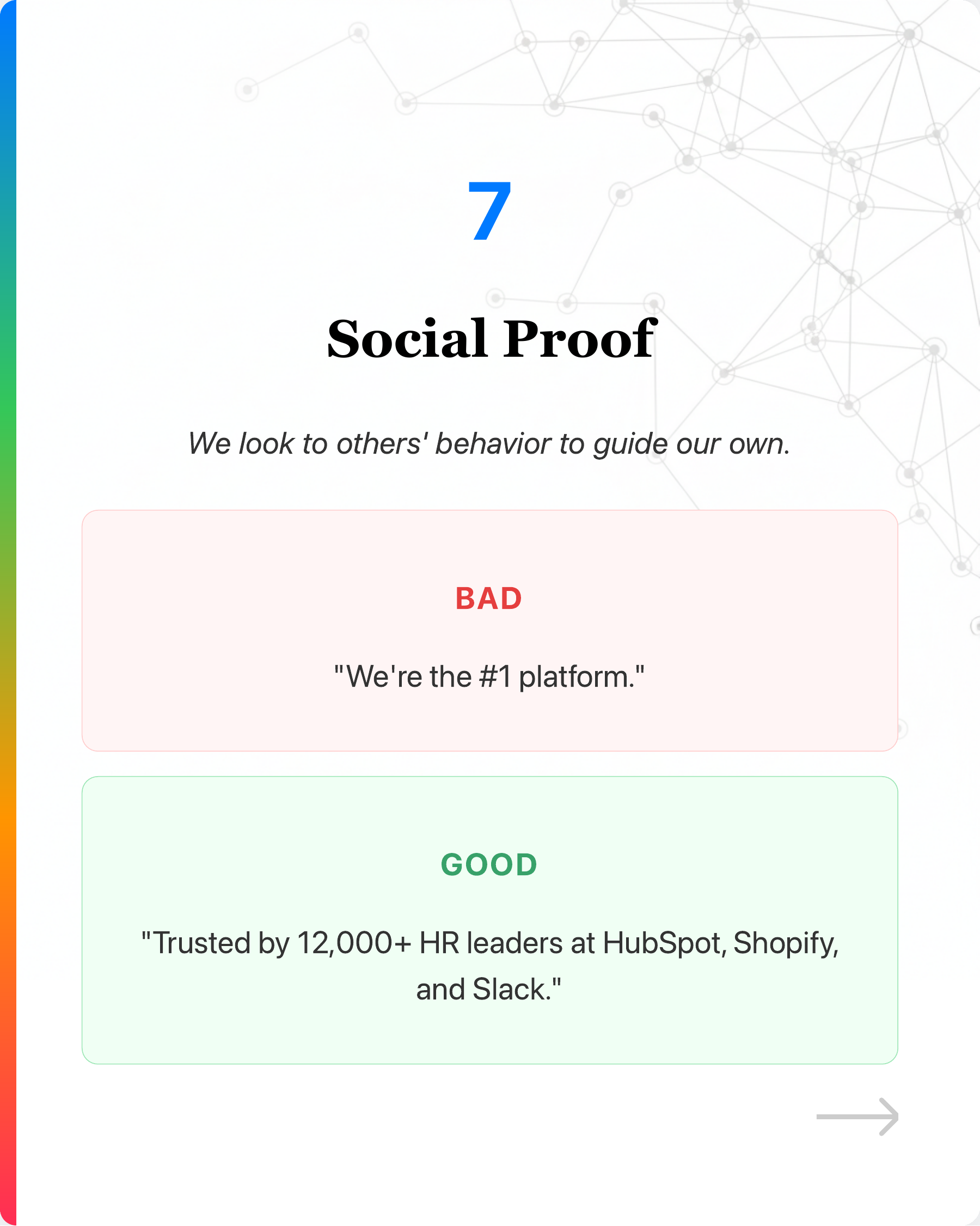
- Social Proof
We look to others’ behavior to guide our own.
Bad: “We’re the #1 platform.”
Good: “Trusted by 12,000+ HR leaders at HubSpot, Shopify, and Slack.”
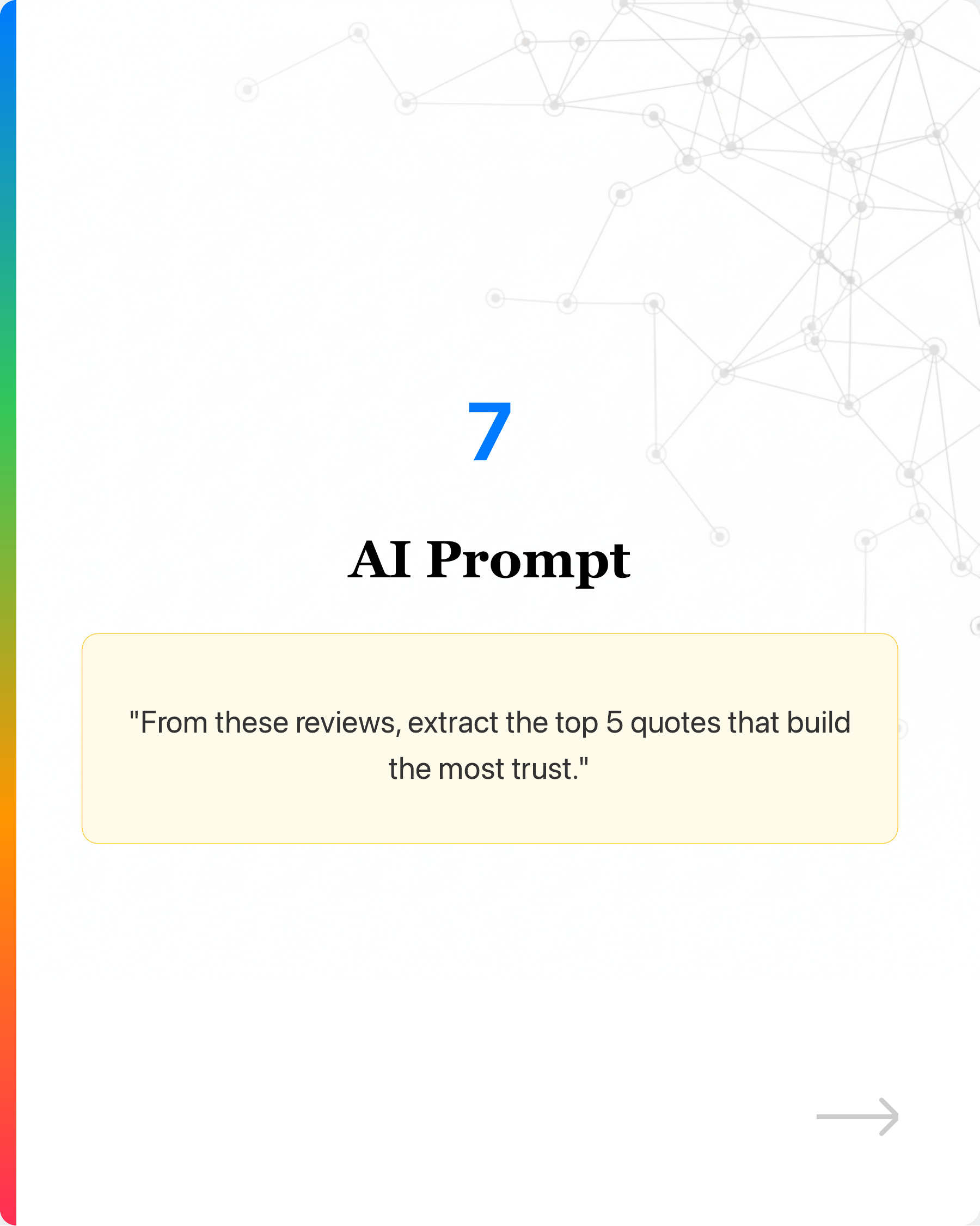
AI Prompt: “From these reviews, extract the top 5 quotes that build the most trust.”
—
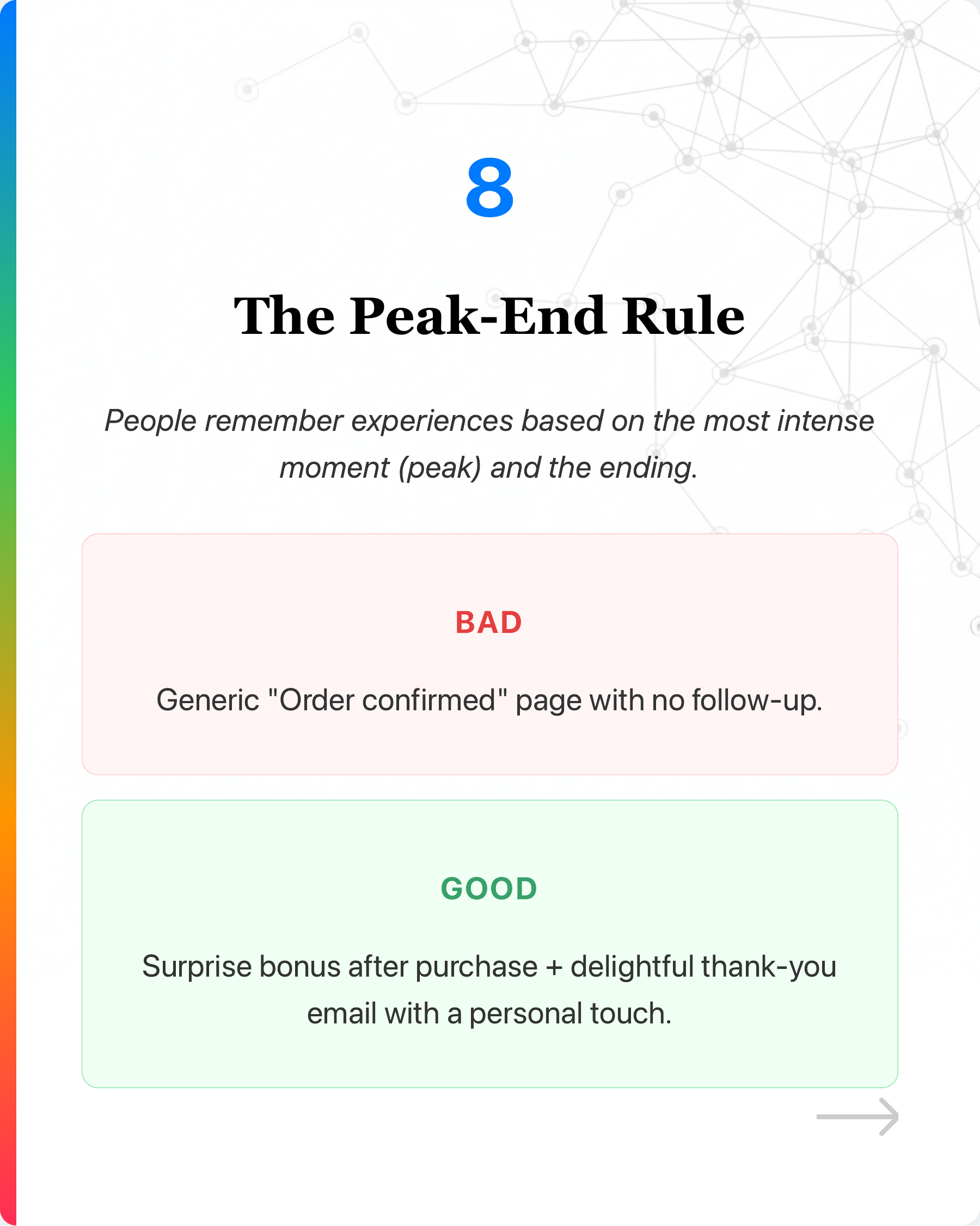
- The Peak-End Rule
People remember experiences based on the most intense moment (peak) and the ending.
Bad: Generic “Order confirmed” page with no follow-up.
Good: Surprise bonus after purchase + delightful thank-you email with a personal touch.
AI Prompt: “Suggest 5 creative ‘wow moments’ we can add at purchase completion to leave a strong lasting impression.”
—
Takeaway: Great marketing isn’t just creativity — it’s creativity backed by how the brain works. AI helps you apply both at scale
Enjoyed this? Subscribe for more.
Practical insights on AI, growth, and independent learning. No spam.
More in AI Marketing
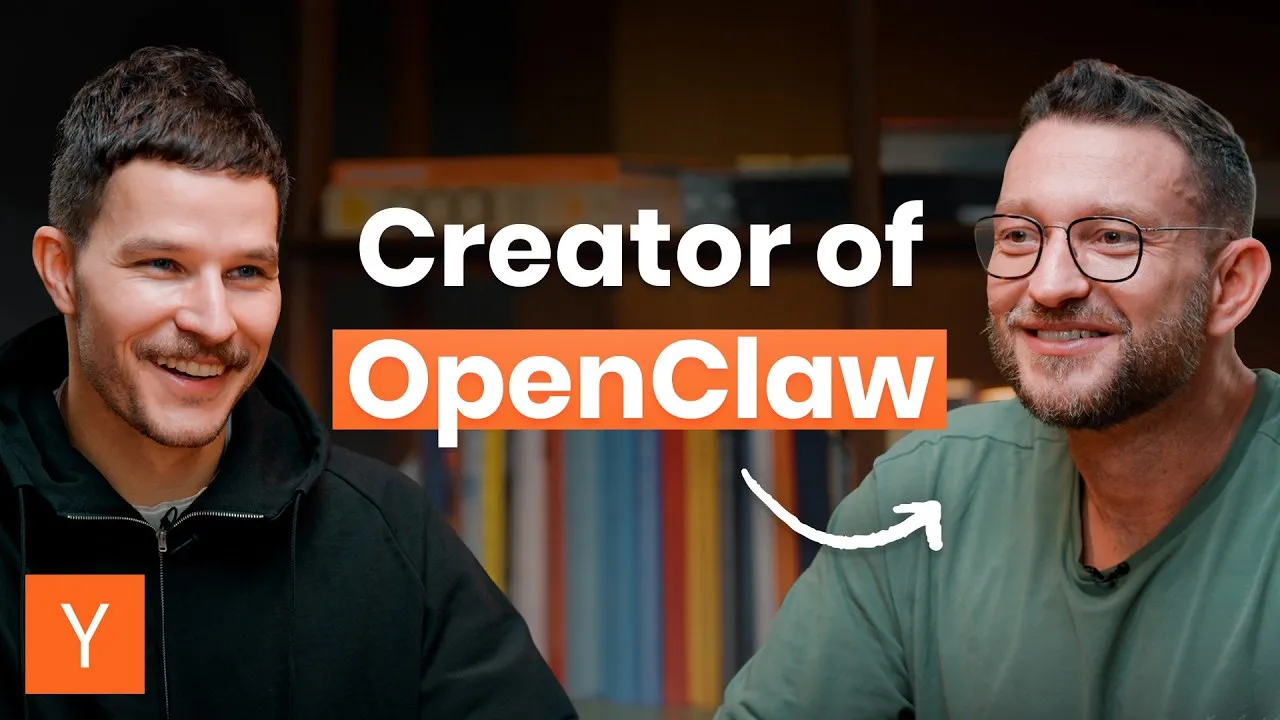
OpenClaw Creator: Why 80% Of Apps Will Disappear
If you are still thinking OpenClaw is just hype, you should watch this interview with Peter Steinberger.
How to Use The Theory of Constraints to Find High-ROI AI Opportunities
In this article, I share how we use the Theory of Constraints to find high-ROI AI opportunities.
Has Cursor Gotten Worse Over the Last 4 Months?
When I first started using Cursor, I was blown away. With a single prompt, it generated clean, multi-file codes that mirrored exactly how I would have writte...

“Amara’s Law and the Long Game of AI”
There’s so much inflated expectation of AI that our enthusiasm will wane after hitting reality in short-term. A bubble will burst. And it will continue to gr...
Could we have been wrong about zero click impressions?
For a while now, we’ve been blaming AI Overviews for the rise in zero click searches. But maybe that’s only half the story.
Vibe coding has been around longer than we think...
I once asked a developer to explain his code when it broke due to edge cases. He told me he didn't know because he copied it from Google. At least he was hon...
OpenClaw Creator: Why 80% Of Apps Will Disappear
If you are still thinking OpenClaw is just hype, you should watch this interview with Peter Steinberger.
“Amara’s Law and the Long Game of AI”
There’s so much inflated expectation of AI that our enthusiasm will wane after hitting reality in short-term. A bubble will burst. And it will continue to gr...
Vibe coding has been around longer than we think...
I once asked a developer to explain his code when it broke due to edge cases. He told me he didn't know because he copied it from Google. At least he was hon...
How to Use The Theory of Constraints to Find High-ROI AI Opportunities
In this article, I share how we use the Theory of Constraints to find high-ROI AI opportunities.
Has Cursor Gotten Worse Over the Last 4 Months?
When I first started using Cursor, I was blown away. With a single prompt, it generated clean, multi-file codes that mirrored exactly how I would have writte...
Could we have been wrong about zero click impressions?
For a while now, we’ve been blaming AI Overviews for the rise in zero click searches. But maybe that’s only half the story.