“Amara’s Law and the Long Game of AI”
There’s so much inflated expectation of AI that our enthusiasm will wane after hitting reality in short-term. A bubble will burst. And it will continue to gr...
In a 1964 BBC interview, Clarke envisioned a future where global communications would be revolutionized by satellites. He described a world where people could interact instantly across vast distances, access information from anywhere, and even conduct business remotely, a vision remarkably close to the modern internet.
Then, in 1974, Clarke doubled down on his predictions during an ABC interview, forecasting that computers would shrink to fit on desks and connect to networks for shared knowledge.
At the time, these ideas were ambitious but not baseless. Technologies like ARPANET (the precursor to the internet) were already in development, and early experiments in miniaturization hinted at the future of personal computing.
However, in 1964, computers were still room-sized, and in 1974, personal computers like the Apple I and IBM PC hadn’t yet emerged. Clarke’s foresight was grounded in observing trends but required a bold imagination to see how far they would go.
It’s mind-blowing that these predictions were made 50-60 years ago, respectively.
With AI advancing at an exponential rate, what predictions today might seem obvious in hindsight?
Follow Endrit Restelica for more tech stuff.
… more
Enjoyed this? Subscribe for more.
Practical insights on AI, growth, and independent learning. No spam.
More in AI Strategy

This is the first AI event I could actually bring my family and kids to.
AI events these days are getting a little dry. Most talks revolve around AI agents, business intelligence, coding, and content generation, usually targeted a...
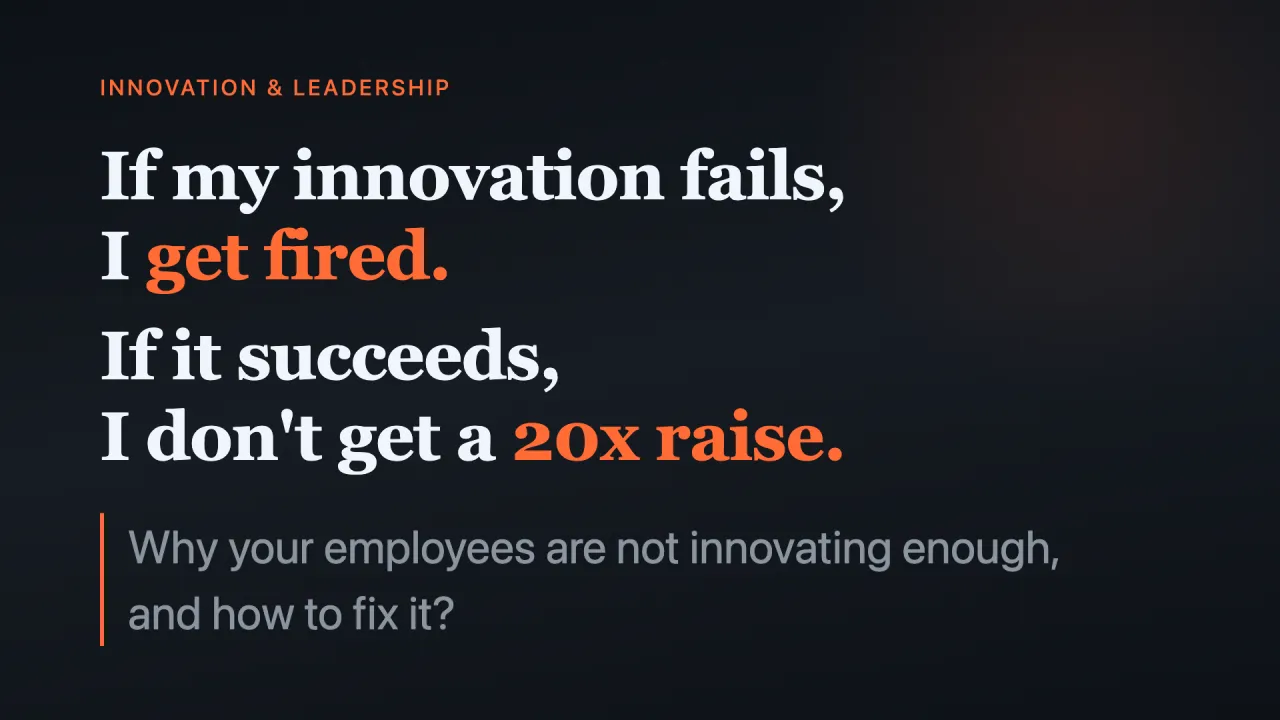
Why Is Innovation Harder in a Traditional Organisation Than a Startup? And What Business Leaders Can Do About It
Innovation does not stall in traditional organisations because the people are less capable. It stalls because the risk and reward do not add up for the indiv...
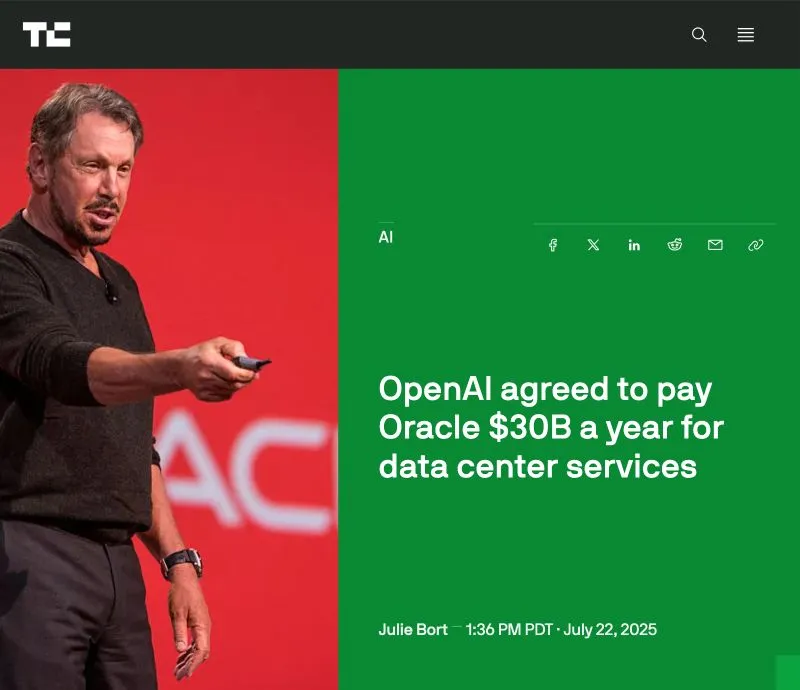
The Circular Money Loop Behind OpenAI’s Funding
It goes one round. Oracle buys GPUs from Nvidia, and Nvidia invests in OpenAI. 😂
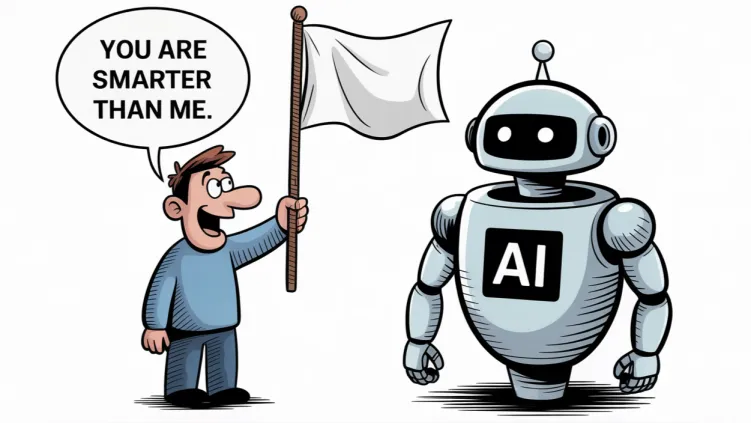
I finally concede that AI is smarter than me.
For 2 years, I held onto reasons like “AI can't solve my kid's homework” or “It can't play tic-tac-toe” to believe I was still smarter.
Don't make the same marketing mistake as Nike.
Nike lost $60 billion in market cap chasing performance marketing.
When AI Hallucination Becomes A Security Feature.
Two months ago, something unexpected happened with our AI Lead Response agent.
This is the first AI event I could actually bring my family and kids to.
AI events these days are getting a little dry. Most talks revolve around AI agents, business intelligence, coding, and content generation, usually targeted a...
I finally concede that AI is smarter than me.
For 2 years, I held onto reasons like “AI can't solve my kid's homework” or “It can't play tic-tac-toe” to believe I was still smarter.
When AI Hallucination Becomes A Security Feature.
Two months ago, something unexpected happened with our AI Lead Response agent.
Why Is Innovation Harder in a Traditional Organisation Than a Startup? And What Business Leaders Can Do About It
Innovation does not stall in traditional organisations because the people are less capable. It stalls because the risk and reward do not add up for the indiv...
The Circular Money Loop Behind OpenAI’s Funding
It goes one round. Oracle buys GPUs from Nvidia, and Nvidia invests in OpenAI. 😂
Don't make the same marketing mistake as Nike.
Nike lost $60 billion in market cap chasing performance marketing.