"Don't fix what's not broken. We have other priorities."
This is the most common reason to push back on transformation.
This is the most common reason to push back on transformation.
And I think it’s actually a fair argument - when the environment stays constant. If nothing is changing around you, keeping what works is the rational choice.
But we are not in a constant environment right now.
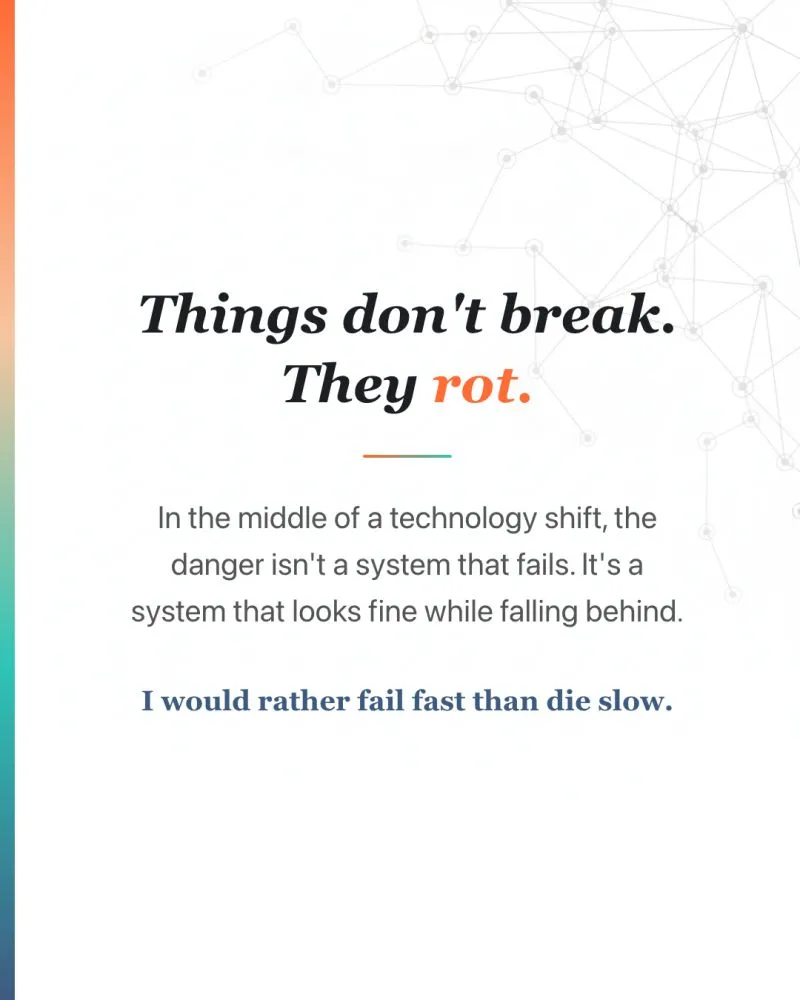
The problem is people wait for things to break before they act. But in the middle of a technology shift, things don’t break. They rot.
A broken system is obvious. Everyone sees it, you fix it, you move on.
A rotting system looks fine. Revenue is okay. Operations run. Nobody is complaining.
But underneath, your competitor just automated what takes your team 3 days into 3 hours. Your best people are quietly updating their LinkedIn because they can see it even if leadership can’t. Your process went from “industry standard” to “industry lagging” while everyone was busy with “other priorities.”
Rot is invisible until it is almost too late.
I have seen this pattern across 19 years of building tech companies. The companies that die are almost never the ones that tried something new and failed. They are the ones that kept saying “we’ll get to it next quarter” until there were no more quarters left.
Next time someone in your team says “we have other priorities,” ask this: are we choosing not to do it, or are we choosing not to see it?
I would rather fail fast than die slow.
#DigitalTransformation #AI #Innovation
Enjoyed this? Subscribe for more.
Practical insights on AI, growth, and independent learning. No spam.
More in AI Strategy
How to Use The Theory of Constraints to Find High-ROI AI Opportunities
In this article, I share how we use the Theory of Constraints to find high-ROI AI opportunities.

OpenAI’s Windsurf deal is off — and Windsurf’s CEO is going to Google
Anyone feel like we should use AI to create a drama and publish it on Netflix?
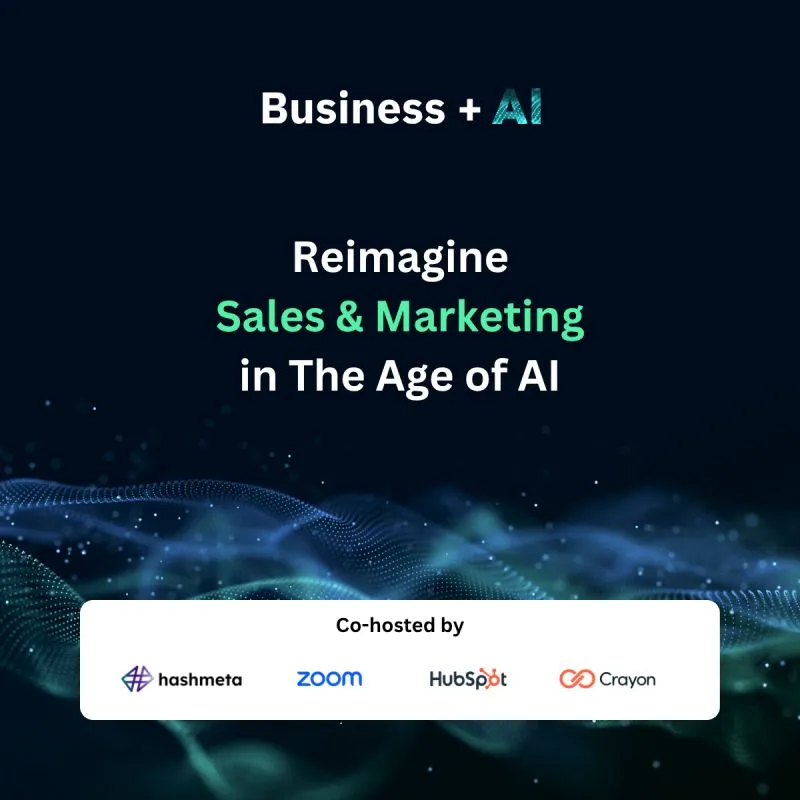
What Zoom and AI Note Taker Can Really Do
You're not alone — but you're missing out.
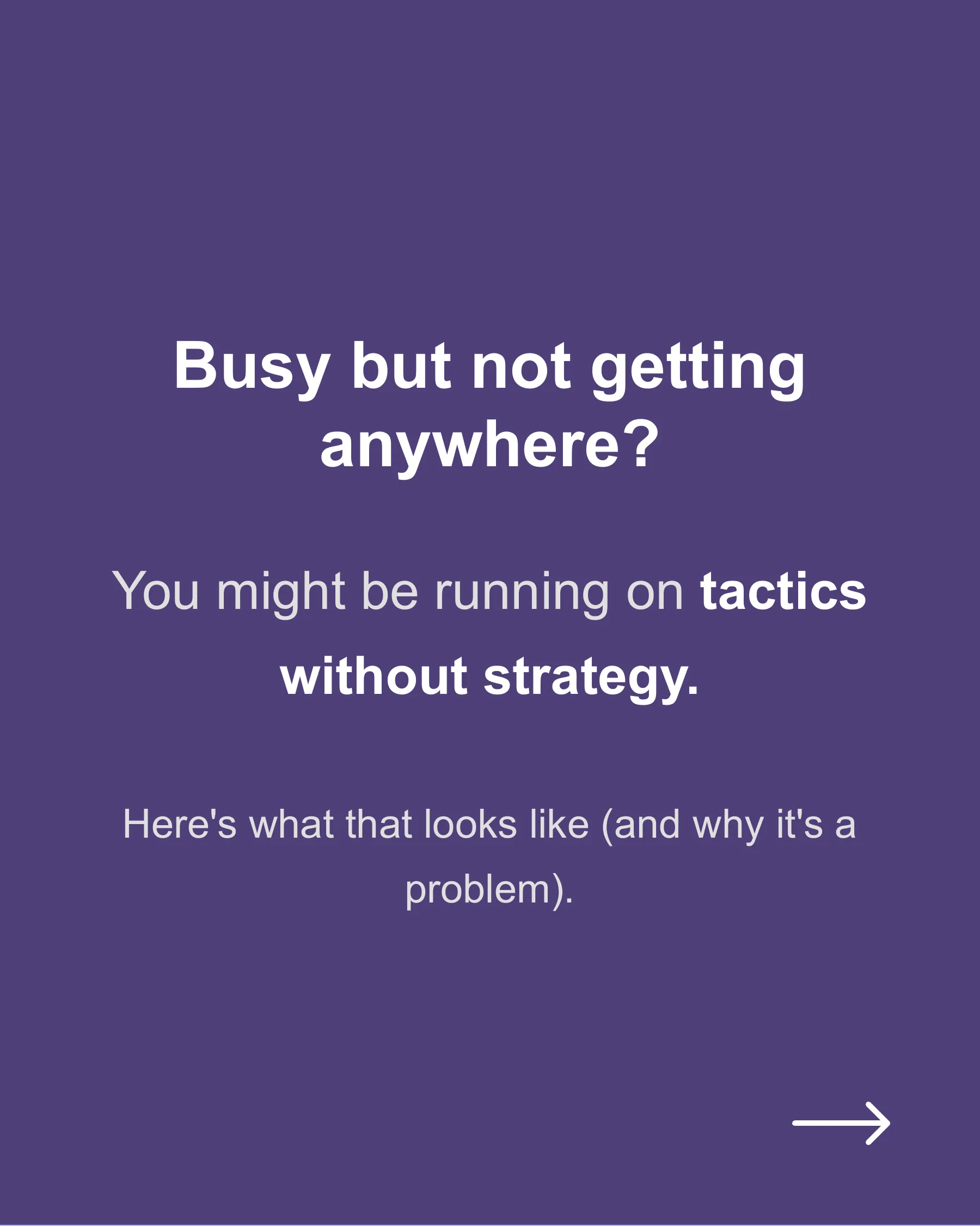
I've met many business owners and working professionals who are busy clearing tasks every day but...
It's a sign that they're running their business (or life) with tactics but no strategy.

This is the first AI event I could actually bring my family and kids to.
AI events these days are getting a little dry. Most talks revolve around AI agents, business intelligence, coding, and content generation, usually targeted a...

The Worst Job Displacement of Software Engineers Is Yet to Come.
This is not another fear mongering post.
How to Use The Theory of Constraints to Find High-ROI AI Opportunities
In this article, I share how we use the Theory of Constraints to find high-ROI AI opportunities.
What Zoom and AI Note Taker Can Really Do
You're not alone — but you're missing out.
This is the first AI event I could actually bring my family and kids to.
AI events these days are getting a little dry. Most talks revolve around AI agents, business intelligence, coding, and content generation, usually targeted a...
OpenAI’s Windsurf deal is off — and Windsurf’s CEO is going to Google
Anyone feel like we should use AI to create a drama and publish it on Netflix?
I've met many business owners and working professionals who are busy clearing tasks every day but...
It's a sign that they're running their business (or life) with tactics but no strategy.
The Worst Job Displacement of Software Engineers Is Yet to Come.
This is not another fear mongering post.