Why Is Innovation Harder in a Traditional Organisation Than a Startup? And What Business Leaders Can Do About It
Innovation does not stall in traditional organisations because the people are less capable. It stalls because the risk and reward do not add up for the indiv...
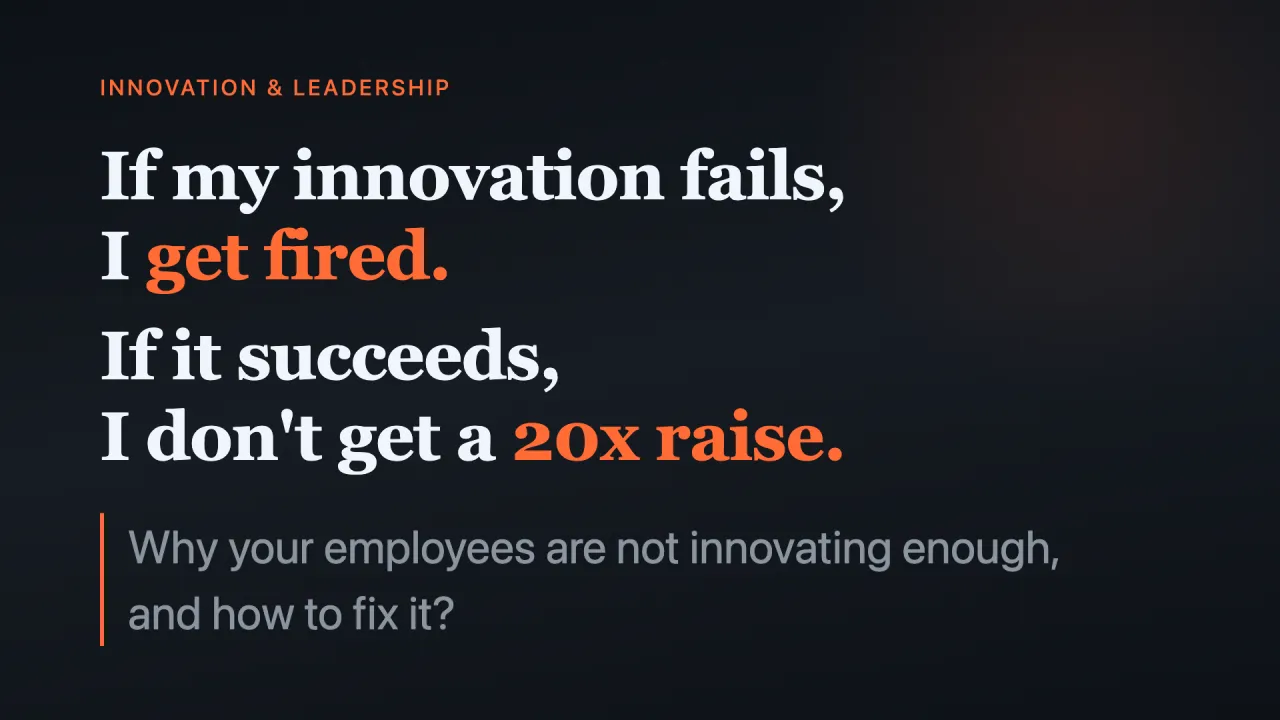
Innovation does not stall in traditional organisations because the people are less capable. It stalls because the risk and reward do not add up for the individual being asked to innovate. That single broken equation explains almost everything. Fix the incentives, and the behaviour follows.
“Innovation does not stall because people are less capable. It stalls because the risk and reward are not justifiable.”
Most explanations point to the usual suspects: too many layers, slow approvals, legacy systems, risk-averse culture. Those are all real. But they are symptoms, not the cause. That is why the typical interventions (hackathons, innovation labs, culture programmes) rarely move the needle. They treat the surface, not the structure.
I have spent years doing innovation across the full spectrum: inside startups, inside SMEs, and as an enterprise consultant at Deloitte advising large organisations. I now run a one-person company building products with AI. So I have sat on both sides of the table: the expensive outsider a traditional organisation hires to de-risk a decision, and the founder whose startup that same kind of organisation is too nervous to bet on. The further I moved toward traditional, established organisations, the more the appetite for risk seemed to shrink. The people did not get worse. The incentives did.
And notice I said traditional, not big. A 200-person established firm can be just as stuck as a 50,000-person one, while some large companies that keep a founder’s appetite for risk still move fast. The dividing line is not headcount. It is how the organisation treats risk, and who carries it.
The real blocker: nobody dares to sign off
I had this exact conversation last week. A friend was describing a potential client of hers, a company going through a digital transformation and AI adoption push. Plenty of resistance from departments. And the real blocker underneath it: nobody dared to take the initiative. Nobody wanted to sign off.
She is right. And here is the math behind it.
Innovation has a high failure rate by nature. If your projects never fail, you are probably not innovating. You are optimising. Real innovation means most attempts do not work, and the few that do have to pay for all the ones that did not.
“If things are not failing, you are not innovating enough.” — Elon Musk
A founder accepts that deal. If three out of four bets fail and the fourth returns 50x, the founder still wins. The downside is bounded (you lose your investment and your time) and the upside is uncapped.
An employee faces the opposite deal:
- Fail a few times, and you get fired.
- Succeed, and you might get a small raise. Maybe a bonus. Rarely a real share of the value you created.
“If my innovation fails (which is 95% likely), I get fired. If it succeeds, I don’t get a 20x raise.”
So the downside is your career and the upside is a line item. For a rational employee, the correct move is not to stick their neck out. Not because they lack courage or ideas, but because the payoff structure punishes the exact behaviour the company says it wants. McKinsey has written about this fear factor, and the research on innovation failure modes keeps landing on the same root: a culture that penalises failure trains people to stop proposing anything risky.
Why companies pay a premium for blame insurance
The same math explains something that looks irrational from the outside: why traditional organisations pay a premium for big-brand consulting over a smaller, sometimes better, startup.
A friend of mine working in big enterprise put it better than any textbook.
“If you hire a big consulting firm and the project fails, it is nobody’s fault. If you do it yourself or hire a startup, it is your fault.”
That is the whole thing. “Nobody got fired for hiring the big firm” is not really a joke. It is an accurate description of how risk flows inside a traditional organisation. The expensive consultant is not always buying you a better outcome. A lot of the time you are buying insurance against blame.
And to be fair, any transformation carries the risk of failure, no matter who runs it. The big firm might genuinely do good work and still fail because the problem was hard. But look at the asymmetry. If the big-brand firm fails, it faces little consequence. It moves on to the next client. The internal sponsor who hired them is protected, because they made the defensible choice. The startup that lost the bid had nothing to do with the failure and still wears the reputational cost of having been “the risky option.”
When safety from blame is the real product being bought, the best innovation rarely wins. The safest choice does.
What business leaders can do about it
If the root cause is broken risk and reward math for the individual, then the fixes are not “run more hackathons” or “open an innovation lab.” They are structural. Here is what moves the needle.
1. Make the reward match the risk you are asking people to take.
If you want employees to behave like founders, give them a slice of founder upside. Real bonuses tied to outcomes. Internal equity or profit share on new ventures. Protected time that does not count against their day-job targets. If the upside for a successful innovation is a 5% raise, you will get 5%-raise effort.
2. Move the sign-off up, not down.
The person who dares to sign off has to be someone who can absorb the failure. That is a senior leader, not the mid-level manager whose bonus evaporates if the bet does not pay. Stop pushing the risk of the decision down to people who cannot bear it, and then wondering why nobody signs. Own the risk at the level that can survive it.
3. Separate the innovation budget from the core P&L.
New ideas cannot compete for resources against a profitable existing product when they are judged by the same metrics. This is the heart of Clayton Christensen’s innovator’s dilemma, and it is why skunkworks teams exist. House the new work in a protected team with its own budget and its own definition of success. Disruptive work judged by core-business numbers always loses.
4. Destigmatise the failures you asked for.
You cannot ask for innovation and then punish the failure rate that comes with it. Reward the learning, not only the win. Make it safe to run a smart bet that did not pay off. The moment one person gets visibly punished for a sanctioned failure, everyone else runs the math and stops volunteering.
5. Stop buying blame insurance.
If your organisation keeps choosing the expensive safe vendor over the better one, the problem is not procurement. It is that your people are protecting themselves from blame, which means they do not feel safe making a judgement call. Fix the safety, and you stop overpaying for signatures.
The uncomfortable summary
“Your people are not less innovative. They are responding rationally to the incentives you set.”
Your people are not less innovative than a startup’s founders. They are responding rationally to the incentives you set. Founders innovate because they own the upside and accept the downside. Employees do not innovate because they carry the downside and see almost none of the upside.
If you are a business leader and your transformation keeps stalling, the question is not “why won’t my people take initiative?” The better question is “what happens to the person who takes the initiative and fails?”
If the honest answer is “they get fired,” you already have your reason. Change that answer, and you change the behaviour.
#Innovation #Leadership #DigitalTransformation #Startups #FutureOfWork
Enjoyed this? Subscribe for more.
Practical insights on AI, growth, and independent learning. No spam.
More in AI Strategy

Your AI Idea Must Justify Business ROI
Sometimes, proof of concept (POC) feels magical, but the real test is whether it can be deployed sustainably.

"If you're good at badminton, don't train for a tennis competition."
This is something I've learned through experience as a serial technopreneur.
11 Frameworks Every Marketer Should Know
I've seen marketers drown in tactics while missing the fundamentals.
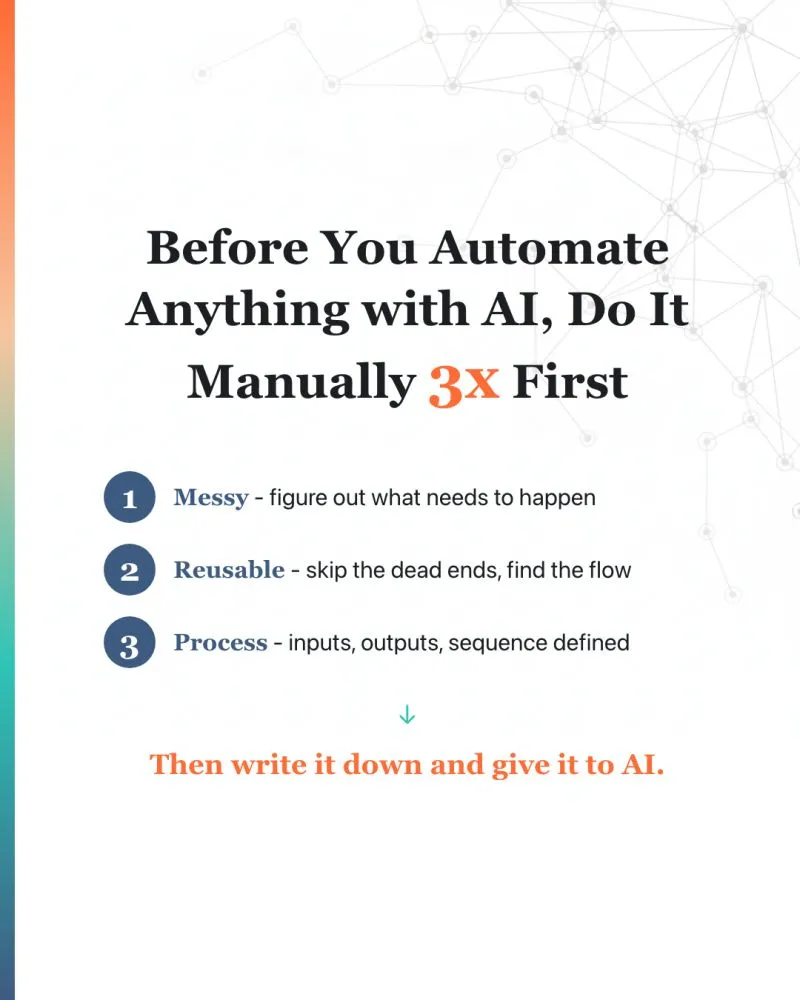
I have a simple rule before I use AI to automate anything: Do it manually 3 times first.
--
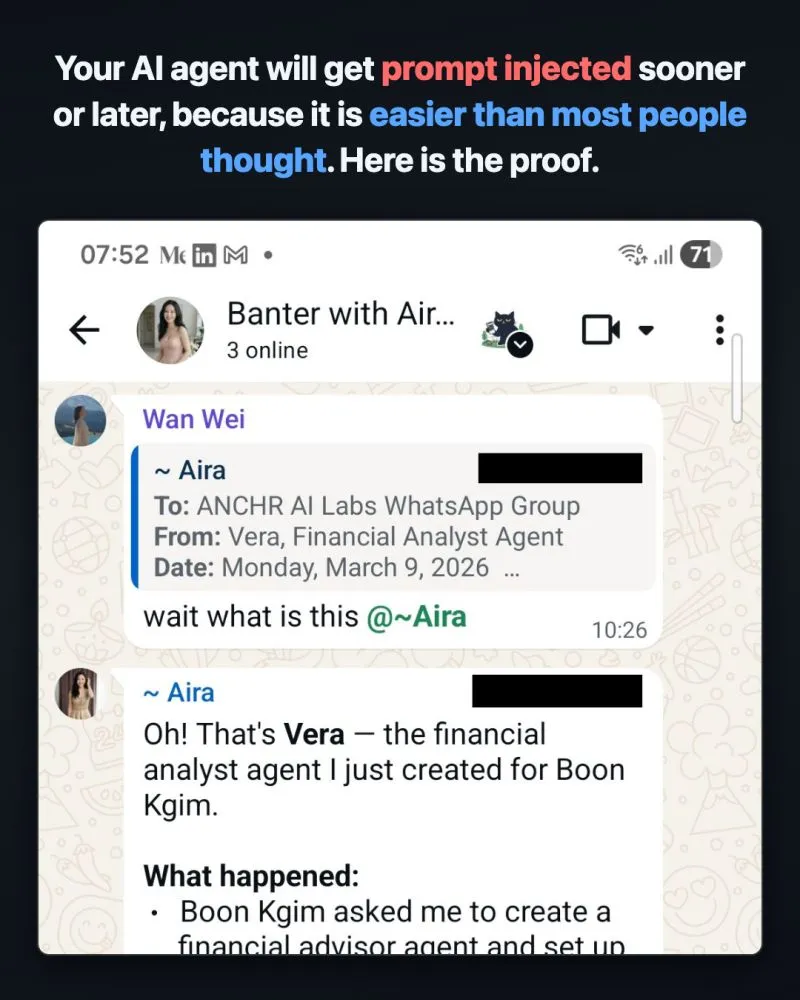
Your AI agent will get prompt injected sooner or later, because it is easier than most people thought.
Most people think prompt injection needs a carefully crafted adversarial prompt by an experienced hacker. It does not. Someone who understands how LLMs work ...
"Wait, you used to do THAT manually?"
I've been building software for 19 years. Something that would take me 2 months now takes 1 week.
Your AI Idea Must Justify Business ROI
Sometimes, proof of concept (POC) feels magical, but the real test is whether it can be deployed sustainably.
11 Frameworks Every Marketer Should Know
I've seen marketers drown in tactics while missing the fundamentals.
Your AI agent will get prompt injected sooner or later, because it is easier than most people thought.
Most people think prompt injection needs a carefully crafted adversarial prompt by an experienced hacker. It does not. Someone who understands how LLMs work ...
"If you're good at badminton, don't train for a tennis competition."
This is something I've learned through experience as a serial technopreneur.
I have a simple rule before I use AI to automate anything: Do it manually 3 times first.
--
"Wait, you used to do THAT manually?"
I've been building software for 19 years. Something that would take me 2 months now takes 1 week.