Should You Listen to Customer Feedback?
This is one of the most debated topics in product development.
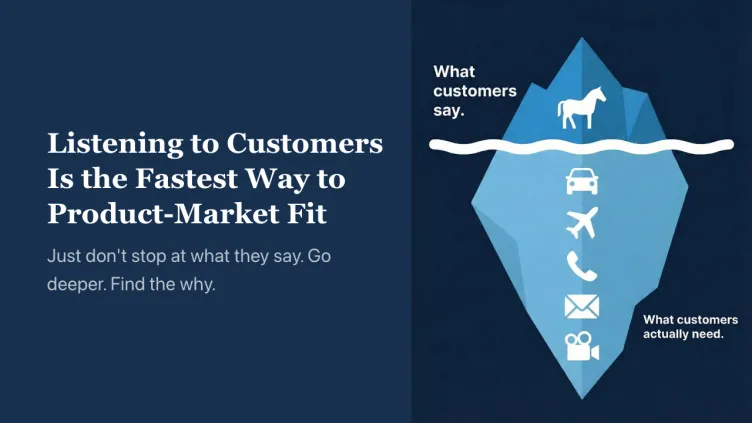
Should You Listen to Customer Feedback? Steve Jobs said no, but is that what he really meant? And how many of us have the same level of product sense as Jobs?
This is one of the most debated topics in product development.
“If Henry Ford had asked his customers what they wanted, they would have said a faster horse.”
Steve Jobs famously said, “People don’t know what they want until you show it to them.”
Jeff Bezos once noted, “If you only listen to customers, you’ll never invent something they can’t imagine.”
These quotes get thrown around a lot, usually to justify the lack of effort to gather customer feedback.
But based on my experience, listening to customers is the fastest way to find product market fit. You just need to ask the right questions and analyze beyond what they say.
Here are 4 things I’ve learned about customer feedback from building products for 19 years.
1. Ask the Right Questions
When our fashion discovery app was struggling, we spent months rolling out feature after feature. None of them moved the needle.
Desperate, we invited our 10 most active users and asked two open-ended questions:
- “What is the one thing you love about our app?”
- “What is the one thing you would like us to fix?”
8 out of 10 said they loved our new arrivals alert, but it was too slow. Items were sold out by the time they clicked.
We fixed it. Monthly active users jumped from 5,000 to 100,000.
We spent months guessing. Two open-ended questions gave us the answer.
2. Not All Feedback Is Equal
In the same startup, a lot of guys kept suggesting we add price tracking. But for our real customers, women, a price drop on a clothing item signals something very different. It means the item is out of season, out of sizes, or no longer popular.
For women, that’s a turn-off, not a feature.
Know who your real customer is before you act on feedback.
3. Ask “Why” to Find the Real Intent
When someone says “I want a faster horse,” don’t stop there.
- Why do you want a faster horse? I need to get to the next town faster.
- Why? I need to meet this person face-to-face as soon as possible.
- Why? I need to deliver this message to the person as soon as possible.
Now you’re solving for speed and communication, not a better horse.
That’s how you get to the car, plane, phone, email, or Zoom.
4. Record User Stories, Not Suggested Solutions
Don’t record “I want a faster horse.”
Record “I need to deliver a message to someone in the next town.”
The solution might be a faster horse, a car, a phone call, an email, or Zoom. When you record the story, you leave room for a better solution.
The Real Lesson from Ford and Jobs
The people who quote Ford and Jobs to skip customer research miss the point.
Ford didn’t ignore his customers. He listened beyond the surface and discovered the real intention — and built something better.
Jobs didn’t dismiss his customers. He observed their frustrations — and reimagined the solution entirely.
Listening to customers is the fastest way to find product market fit. Just don’t stop at what they say. Go deeper. Find the why. Then build the car.
P.S. There’s no evidence Henry Ford actually said the “faster horse” quote. But the lesson still holds.
Enjoyed this? Subscribe for more.
Practical insights on AI, growth, and independent learning. No spam.
More in Tech & Startup
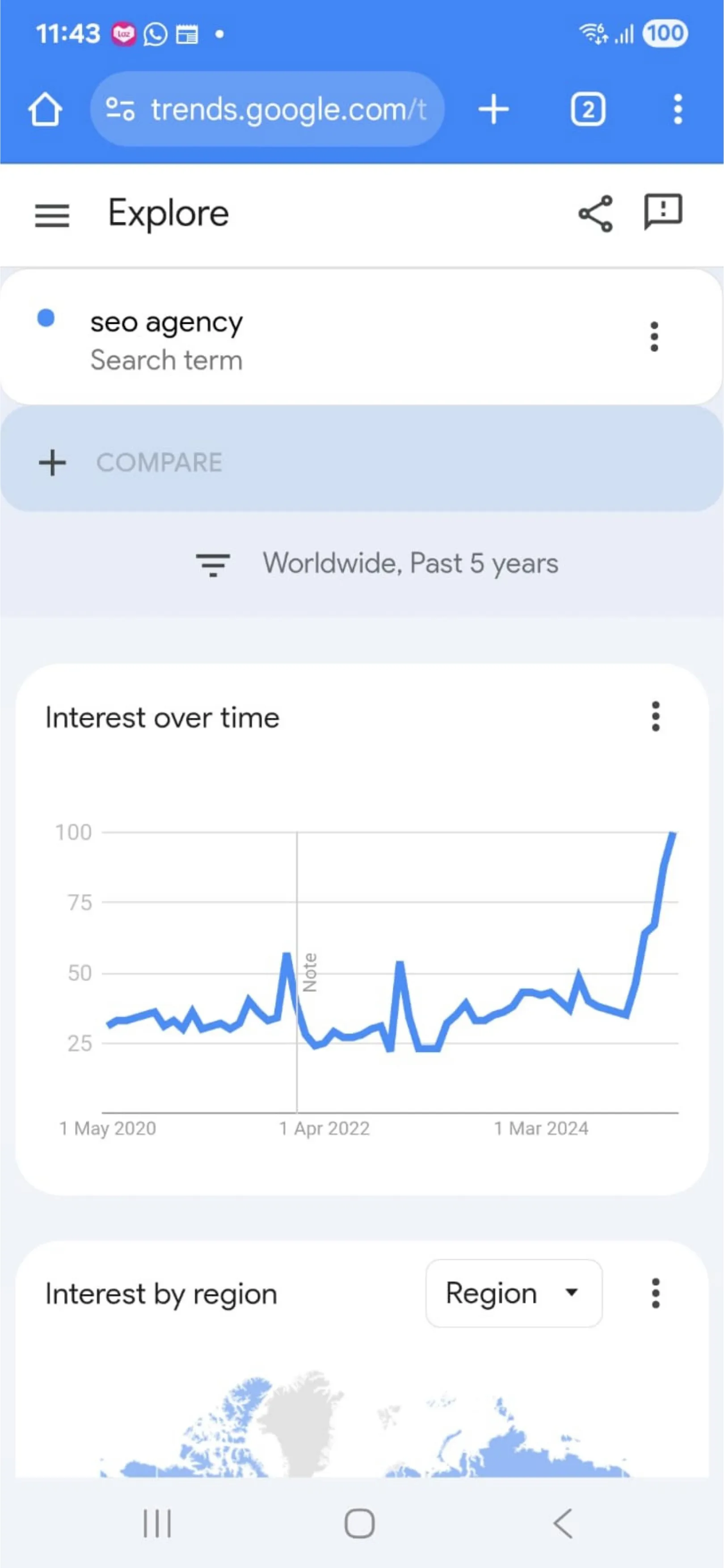
Many think SEO is dying. It's actually flying.
Just look at the trend 📈. Global searches for "SEO agency" are at a 5-year high (see graph).

Every parent with primary kids will experience this stress every week.
It is an evening ritual like this:

Forget Pain Points: Think Convenience
This advice from Ev Williams, co-founder of Blogger, Twitter and Medium should serve as a signpost.

Why Some Startups and SMEs Fail to Scale
That's the question I wanted to find out after selling my startup to Hashmeta Group.
Sharing one of my favorite prompting techniques that I don't see many talk about.
Ever spent more time crafting a perfect prompt than doing the actual task?
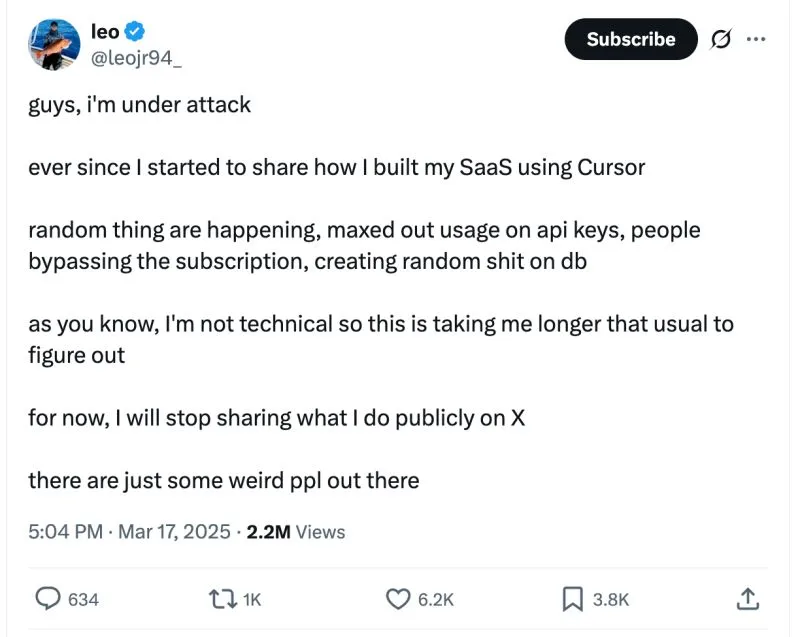
"Guys, I’m under attack"
I came across this post where a founder shared how his SaaS got exploited right after he started sharing how he built his SaaS using Cursor.
Many think SEO is dying. It's actually flying.
Just look at the trend 📈. Global searches for "SEO agency" are at a 5-year high (see graph).
Why Some Startups and SMEs Fail to Scale
That's the question I wanted to find out after selling my startup to Hashmeta Group.
"Guys, I’m under attack"
I came across this post where a founder shared how his SaaS got exploited right after he started sharing how he built his SaaS using Cursor.
Every parent with primary kids will experience this stress every week.
It is an evening ritual like this:
Forget Pain Points: Think Convenience
This advice from Ev Williams, co-founder of Blogger, Twitter and Medium should serve as a signpost.
Sharing one of my favorite prompting techniques that I don't see many talk about.
Ever spent more time crafting a perfect prompt than doing the actual task?