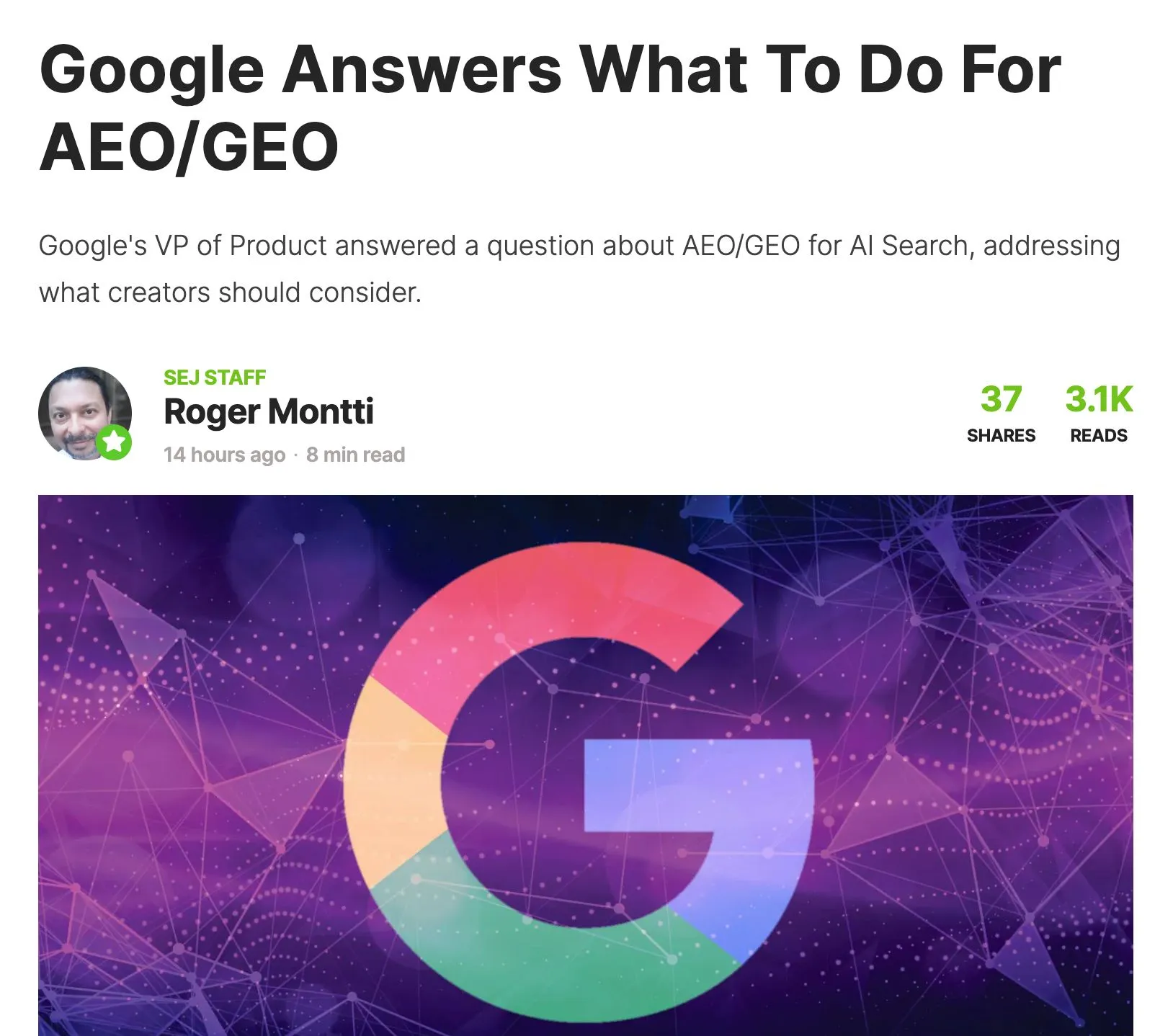
Google's VP of Product recently answered a question about AEO/GEO for AI Search.
Here are some key takeaways:
Here are some key takeaways:
1️⃣ Traditional SEO principles still apply.
Google’s AI Search is fundamentally built on the same signals as its traditional search engine. Factors like satisfying user intent, content originality, and citing credible sources remain crucial for ranking.
2️⃣ AI Search uses “query fan-out”.
For a single user query, the AI conducts dozens of automated background searches to gather a wide range of information before constructing a response.
3️⃣ Integration of Parametric Memory and Search Signals.
The AI model blends its stored knowledge from training (parametric memory) with live, real-time data from Google Search. This unique combination allows it to use its reasoning abilities while grounding its answers in factually accurate information evaluated by traditional search ranking signals.
4️⃣ It’s an extension of Google Search, not a separate chatbot.
Google’s AI Search is a search-based reasoning system. It integrates established signals for spam, authoritativeness, and helpfulness to ensure the information it provides is trustworthy, reinforcing Google’s core mission.
5️⃣ Focus on answering complex, conversational questions.
Creators should adapt their content to address the longer, more detailed “how-to” and advice-based queries that users are now posing to AI. The goal is to be the best and most thorough answer to these complex informational needs.
Source: https://lnkd.in/ga5zPkF2
Enjoyed this? Subscribe for more.
Practical insights on AI, growth, and independent learning. No spam.
More in Tech & Startup

When we tell people we use AI to do SEO, no one pays attention.
The truth is, GEO is fundamentally 80% SEO.
Hot Take: Vibe Coding Won't Replace Software Engineers
Here, I share my journey from a strong believer to a skeptic.

Joining an AI Strategy Panel at NTU EEE Alumni Event
Whether you’re deep in engineering, building your start-up, crafting user experiences, or leading teams – AI is reshaping all our paths right now.
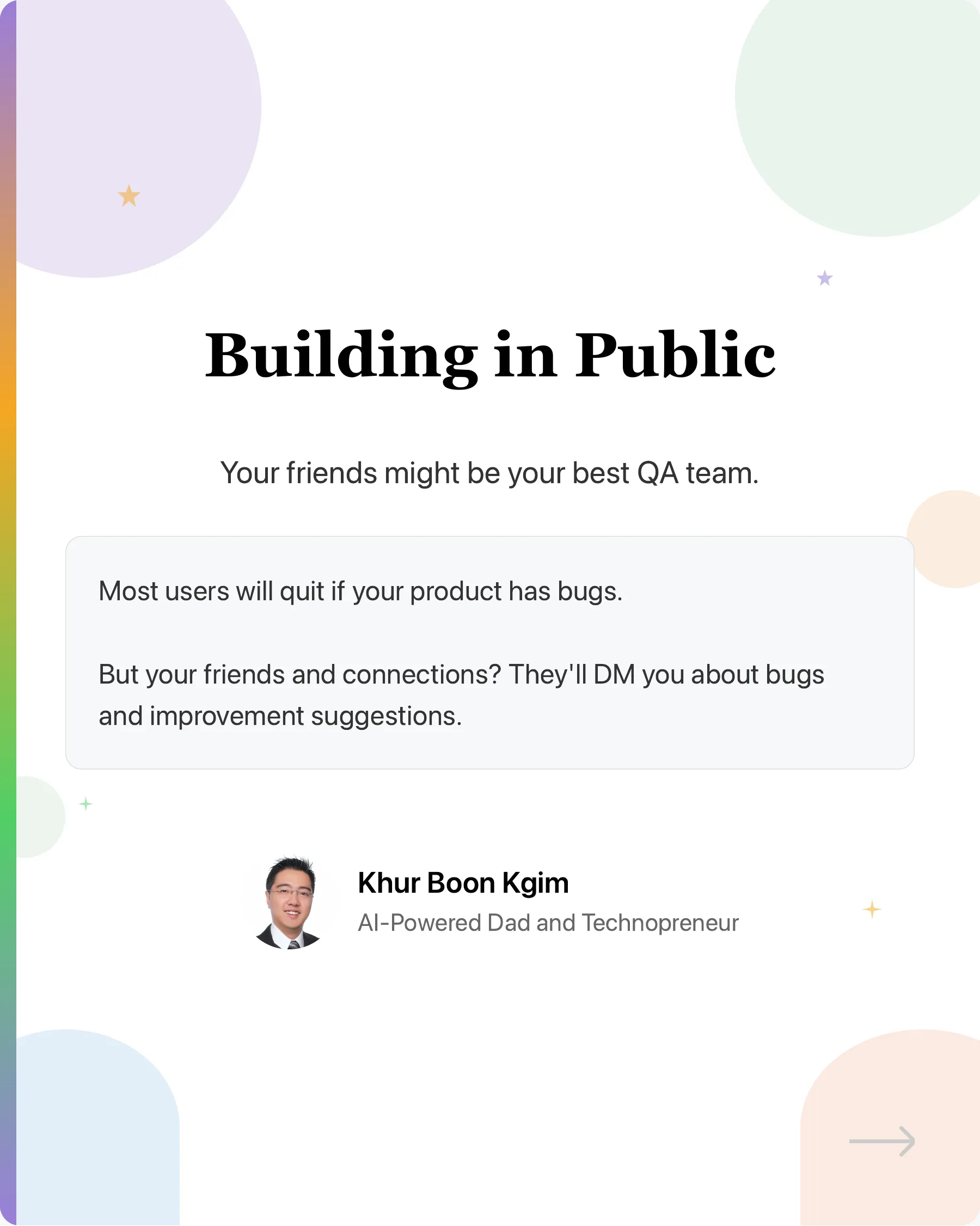
One of the benefits of building in public:
You get instant feedback from your circle of influence.

"Don't fix what's not broken. We have other priorities."
This is the most common reason to push back on transformation.

Forget Pain Points: Think Convenience
This advice from Ev Williams, co-founder of Blogger, Twitter and Medium should serve as a signpost.
When we tell people we use AI to do SEO, no one pays attention.
The truth is, GEO is fundamentally 80% SEO.
Joining an AI Strategy Panel at NTU EEE Alumni Event
Whether you’re deep in engineering, building your start-up, crafting user experiences, or leading teams – AI is reshaping all our paths right now.
Forget Pain Points: Think Convenience
This advice from Ev Williams, co-founder of Blogger, Twitter and Medium should serve as a signpost.
Hot Take: Vibe Coding Won't Replace Software Engineers
Here, I share my journey from a strong believer to a skeptic.
One of the benefits of building in public:
You get instant feedback from your circle of influence.
"Don't fix what's not broken. We have other priorities."
This is the most common reason to push back on transformation.