We are entering The Age of Creation
Recently, I spent some time consolidating my thoughts as an entrepreneur while preparing for an AI panel discussion. What became clear to me is that this is ...
Recently, I spent some time consolidating my thoughts while preparing for an AI panel discussion to share my views as an entrepreneur.
I’d like to start by saying this is the most exciting time to be an entrepreneur. Even Google’s co-founder, Sergey Brin, is back in the driver’s seat because he doesn’t want to miss this moment.
One of the most famous questions that Sequoia Capital often asks founders is, “Why now?” That question highlights the importance of timing in startups.
If you have a great idea, one of these three scenarios is likely the reality:
- Many have already done it, and a few have cornered the market. You think it’s new because you’re not in the market.
- Many have tried but failed, meaning it’s actually a bad idea.
- Not many have tried it because the right conditions weren’t there.
Scenario three is where the opportunity lies, and the right conditions often arise with a new enabling technology. Take EVs, for example. The idea has been around for a long time, but early EVs were underpowered, slow, and had a short range. Breakthroughs in motor and battery technologies are what make today’s EVs possible.
Most enabling technologies have niche applications. Every once in a while, we witness foundational technologies becoming generally available. Foundational technologies are those with applications that cut across industries, functions, and our daily lives. Think about the steam engine, electricity, personal computers, the internet, smartphones, and mobile internet. And now, generative AI.
These technologies don’t appear overnight. They often exist for decades in labs or industries, but the tipping point comes when someone makes them accessible to the rest of the world. That accessibility is what sparks transformation. A good example is how Apple and Steve Jobs made personal computers accessible to the world.
AI is a strong example. It has been around for a long time, but it wasn’t very accessible. To train an AI model, you need two things: first, a lot of data—and ideally, well-labeled data. I remember back in 2007, when I was doing computer vision research on human activity recognition, I had to take photos of myself acting and then manually segment the images in Photoshop. Just preparing the data was a lot of work.
Second, you need a lot of compute power, and at that time, computers and GPUs were slow. Training even a small model could take forever.
Fast forward to November 2022, when generative AI took off with the launch of ChatGPT 3.5. Interestingly, OpenAI didn’t invent anything completely new in AI. Their real innovation was the user experience, the scale, and the fact that they made it almost free.
Earlier large language models were trained to complete paragraphs. OpenAI tuned them to complete instructions and conversations, which suddenly made them sound human. They did it at a much larger scale than before and then made it available to the public at almost no cost. This made it viral.
That is what I mean by accessible. The rest of the world no longer needs massive amounts of data to train their own LLM. Someone did it and made it available to us for almost free, with a user experience that feels familiar.
These transformative technologies are engines of convenience. They grant everyone a “magic wand” to do things in new, previously unimaginable ways. This enables us to cut unnecessary steps, automate repetitive ones, and unlock massive value.
This creates a window of opportunity for agile entrepreneurs to challenge slow incumbents. Many new companies will emerge from this wave, and many existing companies that fail to adapt will be replaced.
And to me, this time is even more profound because GenAI is a technology of creation. It can create things as a human would. For the first time, we are seeing software that can create other software. We are just at the starting point, where GenAI can create text, code, images, and videos. Researchers are already training GenAI models on other things like hardware design, 3D models, and more.
We are entering what I would like to call the “Age of Creation”. The accessibility of creation is what makes this moment one of the most exciting times for entrepreneurship.
So, what does this mean for entrepreneurs?
It means the barrier to entry from idea to market has been drastically lowered. An individual or a small, dedicated team can now build what used to require a large, well-funded company. The ability to generate code, design marketing materials, and draft legal documents on the fly means that the core of a new venture can be built faster and cheaper than ever before.
This isn’t just about doing old things faster; it’s about creating entirely new categories of businesses. We already see a rise in “AI-native” companies that can generate millions in economic value with a lean team.
If you’ve ever had an idea sitting on the back burner, waiting for the right time, the right team, or the right funding—this is your signal. The tools are here, and they are more accessible than ever. The question is no longer just “Why now?”
The answer is now. Go build.
So, what are you building?
#AI #Entrepreneurship #Tech #GenAI #Startups
Enjoyed this? Subscribe for more.
Practical insights on AI, growth, and independent learning. No spam.
More in Tech & Startup
Three Stories of a Technopreneur
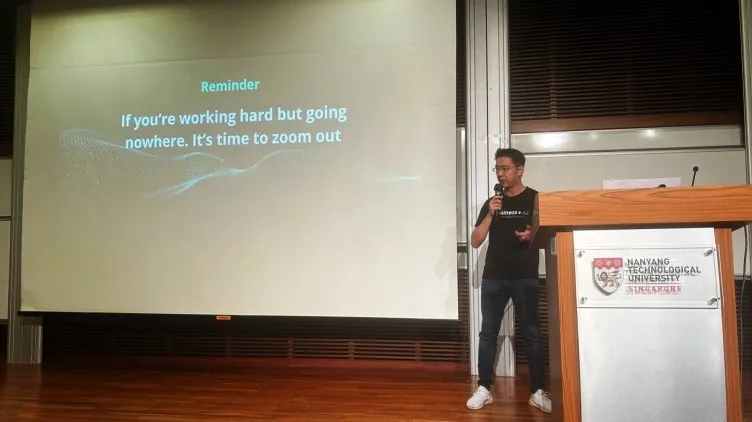
I have done many workshops and professional sharing sessions. This was the first time I shared personal stories.
The Circular Money Loop Behind OpenAI’s Funding
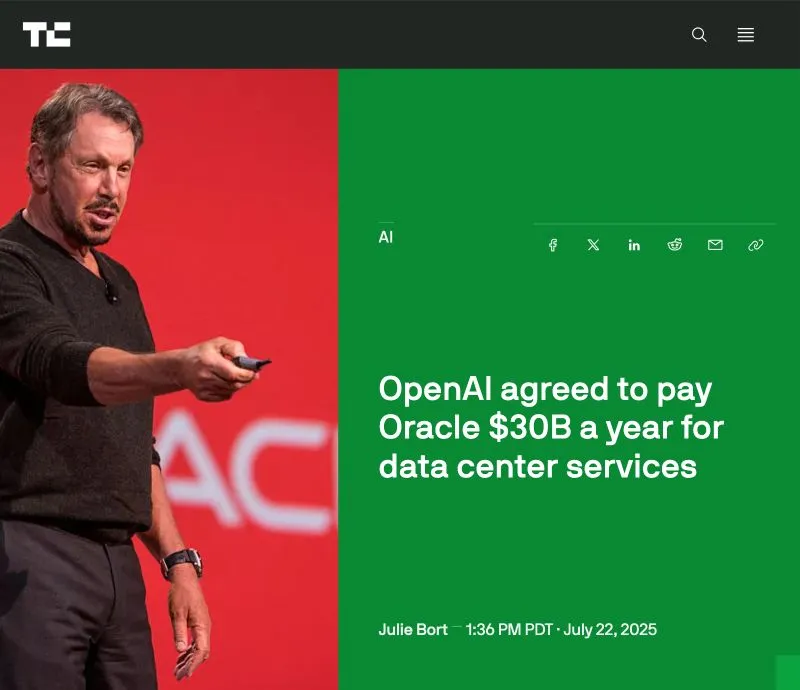
It goes one round. Oracle buys GPUs from Nvidia, and Nvidia invests in OpenAI. 😂

Cursor's Pricing Changes Caused an Uproar
They have to do it because subsidizing the market with cheap tokens is not sustainable in the long run.
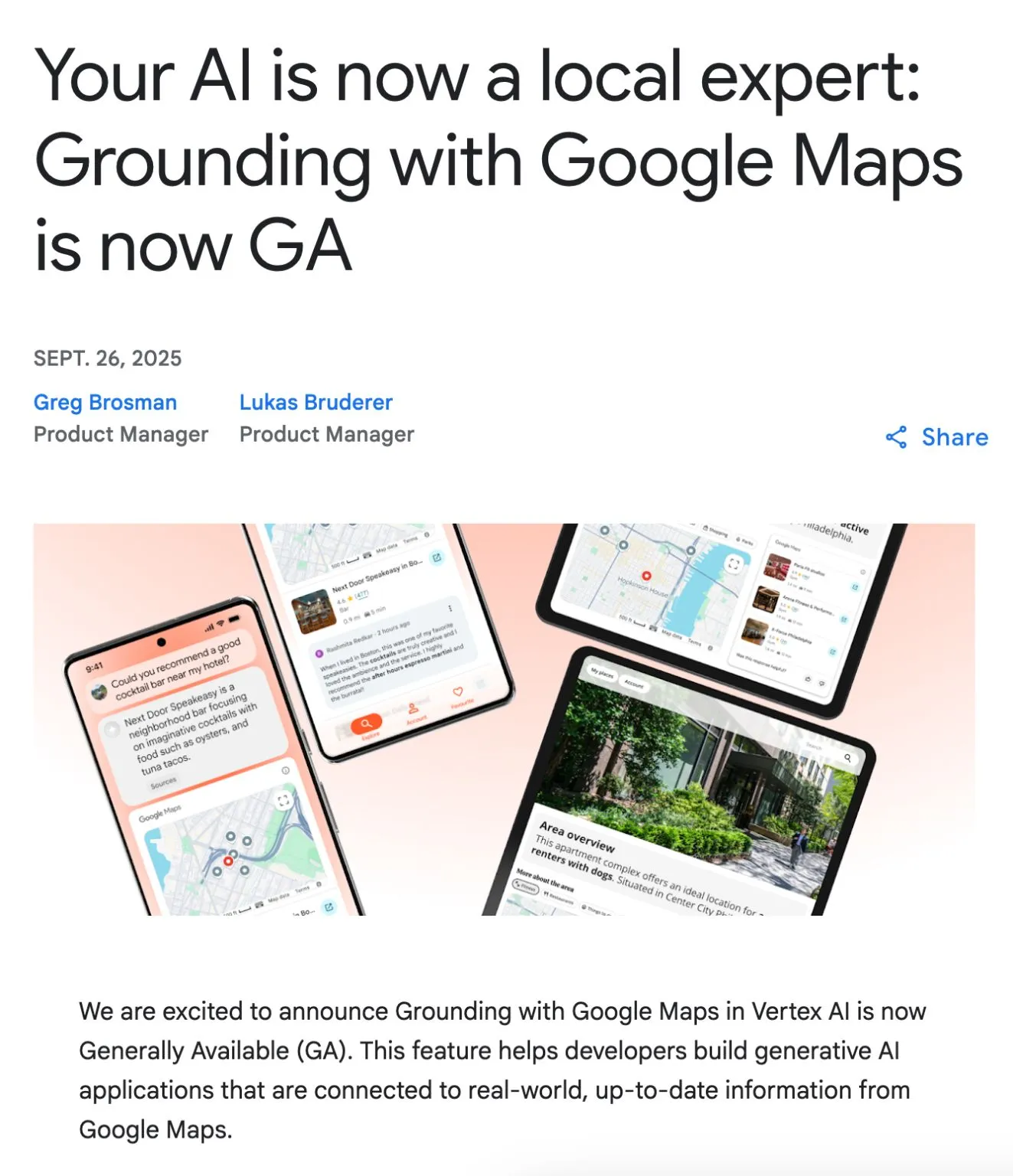
Google is steadily expanding its moats for GenAI again.
Google started as a laughing stock in the GenAI arms race with the failed Bard demo.
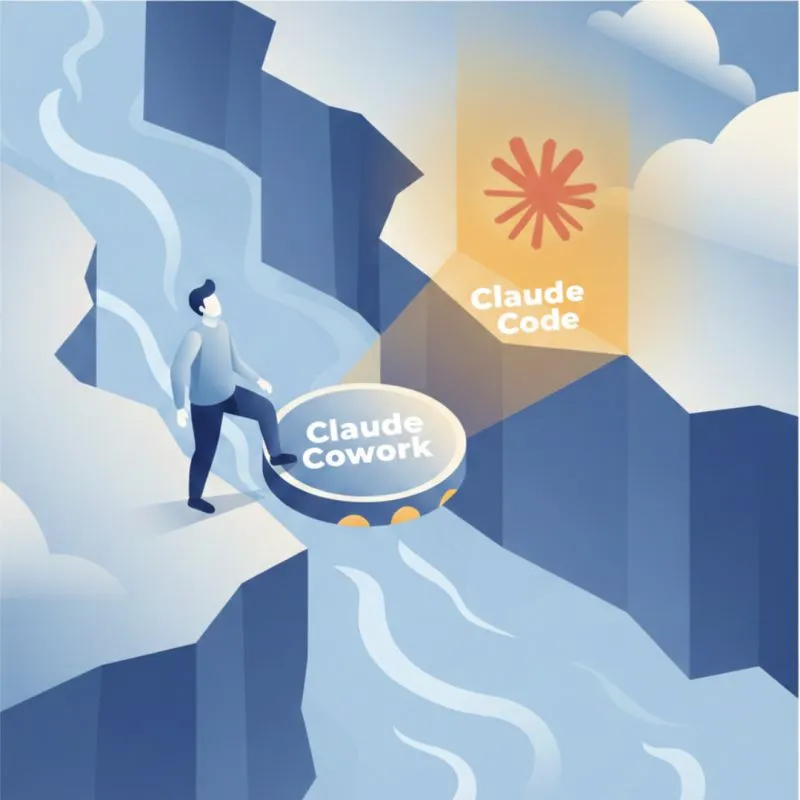
UX/UI and naming matter more than capability for adoption.
Recently, everyone on LinkedIn is talking about learning Claude after the demo of Claude Cowork.
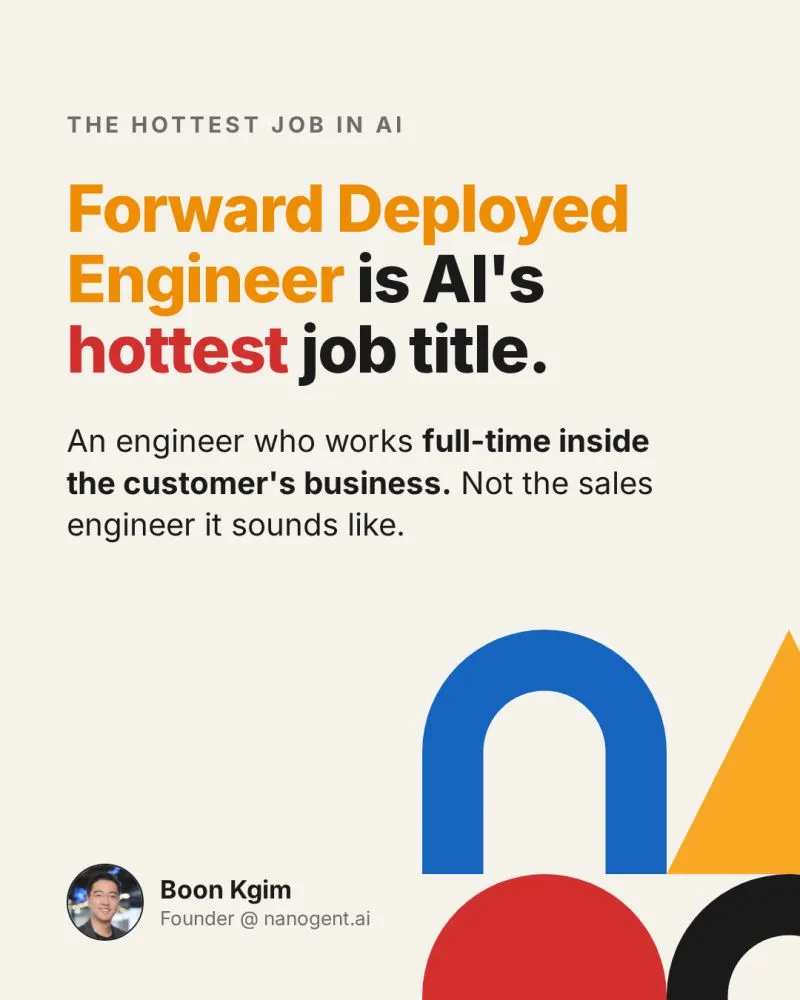
What exactly is "Forward Deployed Engineer," AI's hottest job title?
The short version: a normal engineer builds from their own company's office. A Forward Deployed Engineer works full-time on the client's side, embedded in th...
Three Stories of a Technopreneur
I have done many workshops and professional sharing sessions. This was the first time I shared personal stories.
Cursor's Pricing Changes Caused an Uproar
They have to do it because subsidizing the market with cheap tokens is not sustainable in the long run.
UX/UI and naming matter more than capability for adoption.
Recently, everyone on LinkedIn is talking about learning Claude after the demo of Claude Cowork.
The Circular Money Loop Behind OpenAI’s Funding
It goes one round. Oracle buys GPUs from Nvidia, and Nvidia invests in OpenAI. 😂
Google is steadily expanding its moats for GenAI again.
Google started as a laughing stock in the GenAI arms race with the failed Bard demo.
What exactly is "Forward Deployed Engineer," AI's hottest job title?
The short version: a normal engineer builds from their own company's office. A Forward Deployed Engineer works full-time on the client's side, embedded in th...