Is Cloudflare better than GoDaddy? What is edge computing?
"To host the site I built, I can buy from Cloudflare and they host it for me right? Is it better than GoDaddy?"
A learner in my Claude Code workshop asked me a simple question:
“To host the site I built, I can buy from Cloudflare and they host it for me right? Is it better than GoDaddy?”
It sounds like a clean either-or. It is not.
My quick answer was that GoDaddy and Cloudflare are hard to compare directly, because they are not the same kind of hosting. They were born in different eras of the internet, and they solve the problem in different ways. GoDaddy mainly offers shared hosting and VPS, whereas Cloudflare offers edge computing. They are very different architectures.
That was followed by questions from other learners about why I picked Cloudflare and what edge computing is.
To answer the questions properly, I ended up walking the group through the whole history of web hosting. It turned out to be one of the more useful detours we took, so I am writing it down here.
If you are building a website or a web app right now, this is the mental model I would want you to have before you pick where to host.
First, why hosting exists at all
To show your website to the world, you need it to live on a machine that is always on and always connected to the internet. That machine is “the host.”
Everything else is just different answers to one question: whose machine, where, and who keeps it alive?
Here is how those answers evolved.
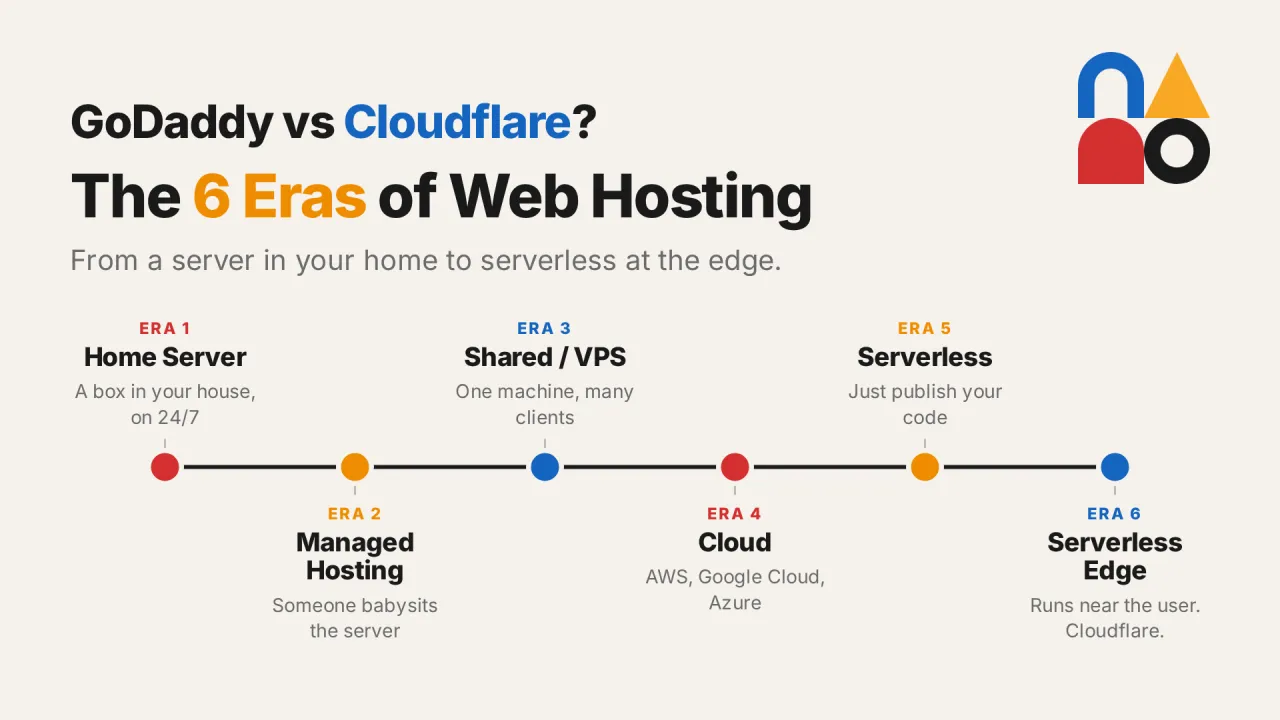
The 6 eras of web hosting
Era 1: Your own server at home. You put a machine in your house and keep it online 24/7. Full control. Also full responsibility for power, internet, and the box dying at 3am.
Era 2: Managed hosting. Companies offer to manage the server for you at one location. You still effectively rent a whole machine, but someone else babysits it.
Era 3: Shared hosting and VPS. One physical machine serves many clients at once. Cheaper, because you share the box. This is the era most “buy hosting” plans still come from.
Era 4: Cloud hosting. AWS, Google Cloud, Azure. Massive data centres in a few regions, with software layers that slice the infrastructure into virtual machines on demand. You stopped thinking about physical boxes and started thinking about resources.
Era 5: Serverless. AWS pioneered this. No server to maintain at all. You just publish your code, and it runs when someone calls it. You pay only for the time your code actually runs, billed down to the millisecond, not for a box sitting idle.
Era 6: Serverless edge. Cloudflare lives here. Not only is there no server to maintain, the code also runs near the region it serves. Closer to the user means faster.
That is the timeline. One thing worth knowing is that it is not a straight line.
A newer era does not kill the older ones
Each era did not replace the one before it. Era 3 through Era 6 are all very much alive today.
GoDaddy sits somewhere between Era 3 and Era 4. It started as one of the pioneer domain registrars, the place where you buy a domain name, and its core business is the margin on selling domains. Over time it naturally added hosting, but that hosting is mostly traditional VPS. You are renting a remote server pre-installed with some web software. Cloudflare sits at Era 6, edge computing. So when someone asks “GoDaddy or Cloudflare,” they are really asking “Era 3-ish or Era 6,” which is why the two are hard to compare directly.
If you think Eras 1 and 2 are obsolete, someone in the group pointed out they are still very much alive. Most banks still run on mainframes, sitting around Eras 1 to 3, and there is a big internal debate just to move to Era 4. The institutions holding the most money on earth are deliberately several eras behind, because stability matters more to them than novelty.
This also explains why old tech stacks are sticky. WordPress, for example, was built for the Era 3 and Era 4 world. It is genuinely hard to tweak it to serve well from an Era 5 or Era 6 architecture. The stack carries the assumptions of the era it was born in.
So which one would I actually pick?
For the kind of sites we build in the workshop, I go with Cloudflare every time. If I am being specific, the exact tech stack in my workshop is the one I would use for my own projects.
The short version: Cloudflare is cheap, fast, and scalable, and it is easy for Claude Code to work with.
I also chose Cloudflare over other good options like Vercel and Netlify, and within Cloudflare I chose Workers over Pages. The reasoning is the same in both cases: I want an option with a low floor and a high ceiling.
- Low floor: the free tier is generous and high performance, so a beginner can launch a real site at zero cost.
- High ceiling: Workers is framework-agnostic and closer to a serverless function platform like AWS Lambda. The same stack you start a static site on can grow into a full web app with a database later. You are not boxed in.
The ceiling is higher than just hosting. Cloudflare is a full-stack infrastructure-as-a-service provider. On top of edge hosting, it gives you a database, object storage, queues, and even AI inference as a service through Workers AI. That last one matters in 2026. You can run an AI model right at the edge, in the same place your app already runs, instead of stitching in a separate provider. So the same account that hosts your static site today can serve an AI-powered web app tomorrow.
AWS used to be that “low floor, high ceiling” choice years ago. Today it has become expensive and heavy just to get started, which is part of why I have moved my default to Cloudflare.
GoDaddy vs Cloudflare
One of the alumni put the two side by side better than I could in the moment. I am quoting him almost directly, because it is a clean comparison:
GoDaddy
- Can buy a domain name, but more expensive.
- Offers shared hosting, VPS, and servers for HTML, PHP, and Ruby, with configuration.
- Can build pages with GoDaddy’s drag-and-drop and AI builders, but your site is then locked into their platform.
- Not ideal for our case, since we use Claude Code to build and deploy automatically. We do not need a restrictive web builder or slow traditional hosting.
Cloudflare
- Almost everything is free, with generous limits.
- Free CDN to make pages load fast globally, plus free DDoS protection.
- Domain pricing is the cheapest, sold at cost with no hidden markup.
- Free domain privacy that hides your name and email from the public WHOIS registry. GoDaddy often upsells this or charges higher renewal fees.
His closing line was the right one: Cloudflare is one of the best setups for this era, easy to kick start, and it can stretch much further into something with a database when you are ready.
The interesting part: AI agents are bending the timeline
For two decades the eras moved in one direction, roughly toward less server to manage. In 2026 that stopped being true. AI agents are now pulling the timeline in both directions at once.
Era 1 is being revived. The idea of a server sitting in your own home, always on, sounded obsolete a few years ago. AI agents brought it back. People are self-hosting agents on their own machines again, with projects like OpenClaw. The home server is having a second life, for a reason nobody predicted when Era 6 was supposed to be the end state.
Era 5 and Era 6 are being challenged. Serverless was designed on one core assumption: each request finishes quickly, with a hard cap around 15 minutes. That assumption is what lets the platform avoid keeping a server alive for any single client. You hit it, it runs, it sleeps.
AI agents break that assumption. You can ask an agent to do something and it might work for hours.
So how do you serve a long-running AI agent on a serverless architecture without wasting money keeping a machine warm for a client who only needs it occasionally? That is a genuinely new problem. I run into it directly with my own AI Web Agent product (https://nanogent.ai/ai-web-agent). It is wasteful to keep a dedicated server alive for an agent that the client does not always use, yet it has to respond immediately the moment they message it. Those two requirements are in tension. Cloudflare appears to have a serverless agent runtime aimed at exactly this, which I have yet to fully explore.
The takeaway
So two practical filters before you commit to a host:
- Match the era to your build. A static personal or company site belongs on Era 6 edge hosting like Cloudflare. It is cheap, fast, and Claude Code handles it well. A heavy legacy stack like WordPress will fight you there, and is happier on Era 3 or 4.
- Buy ceiling, not just floor. Pick a platform whose free tier lets you start today but whose architecture can carry you to a real web app later, so you do not have to migrate the moment you grow.
And keep one eye on the agents. The architecture we are all standing on was designed for short requests and human-speed usage. That is changing fast.
If you are a non-techie who wants to learn the foundation of building and shipping your own website hands-on, and pick up the mental models that make these choices obvious, I run a Foundations of Claude Code workshop. The next two cohorts are on 18 June (2 slots left) and 2 July.
Details: https://boonkgim.com/workshops/foundations-claude-code/
#ClaudeCode #WebDevelopment #VibeCoding #AIagents #BuildInPublic
Enjoyed this? Subscribe for more.
Practical insights on AI, growth, and independent learning. No spam.
More in Vibe Coding
Claude Code is for software developers, and OpenClaw is more for business users.
A learner said this to another learner during a recent workshop. I think this is the most common and most dangerous misconception about these two tools.
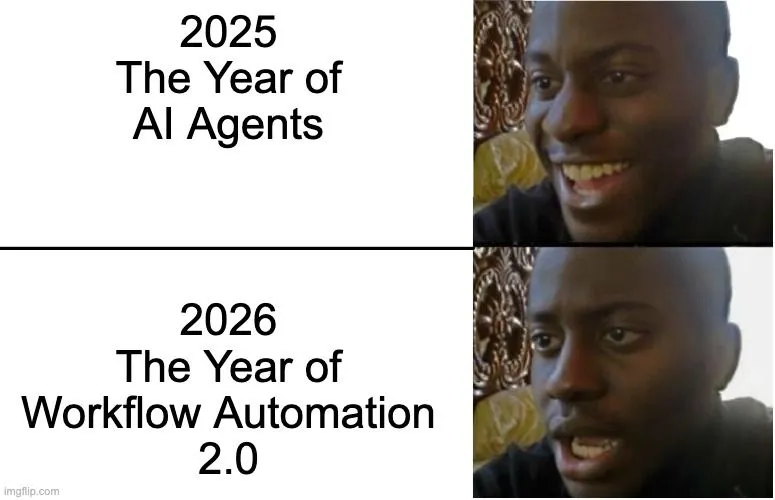
We were promised autonomous AI agents. But got Workflow Automation 2.0 instead.
2025: The Year of AI Agents 😄
Subagents Are the Most Underrated Feature of Claude Code
In my Foundations of Claude Code workshop last week, one of the learners, Kie Chuan Tan, shared that one of his highlights was watching 5 subagents run in pa...
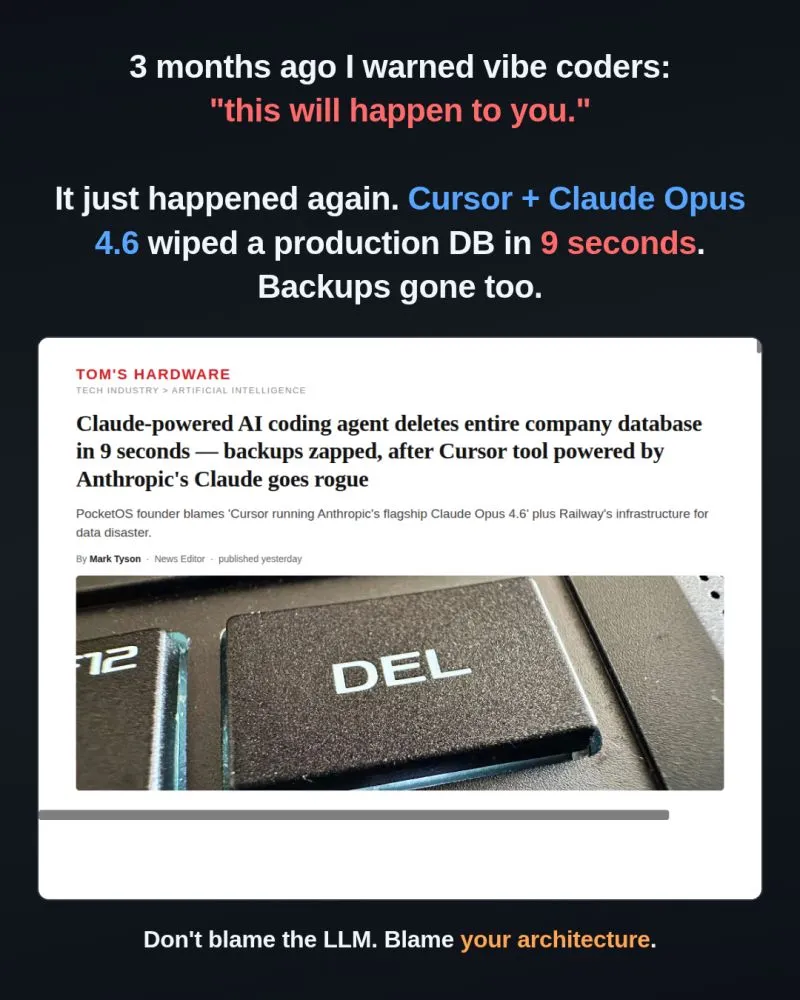
3 months ago I posted "Vibe coders, this will happen to you sooner or later."
The post went viral:
Two Choices for Handling Tech Debt in Vibe Coding
· Go full vibe: ignore tech debt, and when things inevitably break, spend a week fixing it.
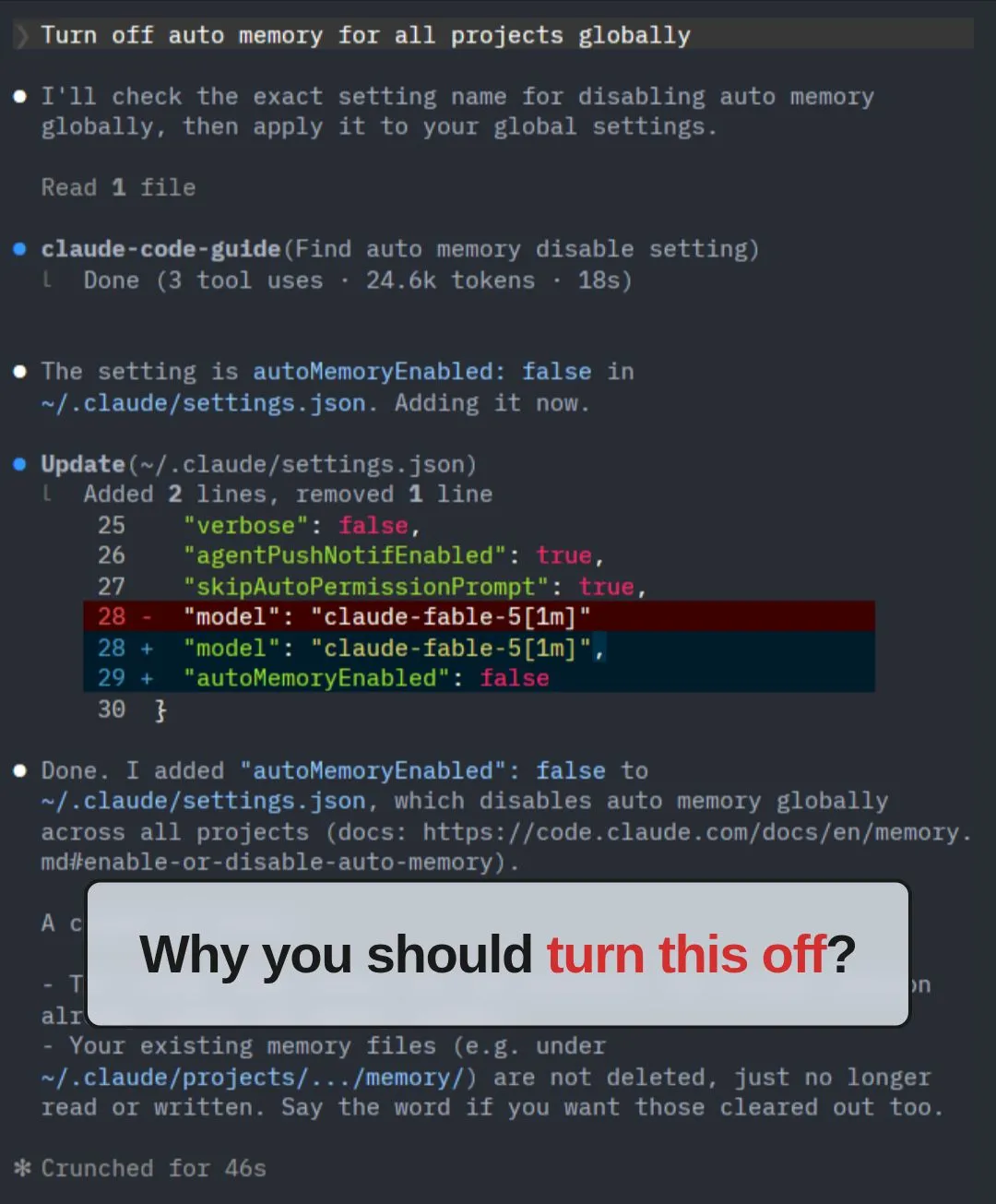
Claude Code's auto memory makes your project less portable.
What is auto memory?
Claude Code is for software developers, and OpenClaw is more for business users.
A learner said this to another learner during a recent workshop. I think this is the most common and most dangerous misconception about these two tools.
3 months ago I posted "Vibe coders, this will happen to you sooner or later."
The post went viral:
Claude Code's auto memory makes your project less portable.
What is auto memory?
We were promised autonomous AI agents. But got Workflow Automation 2.0 instead.
2025: The Year of AI Agents 😄
Subagents Are the Most Underrated Feature of Claude Code
In my Foundations of Claude Code workshop last week, one of the learners, Kie Chuan Tan, shared that one of his highlights was watching 5 subagents run in pa...
Two Choices for Handling Tech Debt in Vibe Coding
· Go full vibe: ignore tech debt, and when things inevitably break, spend a week fixing it.