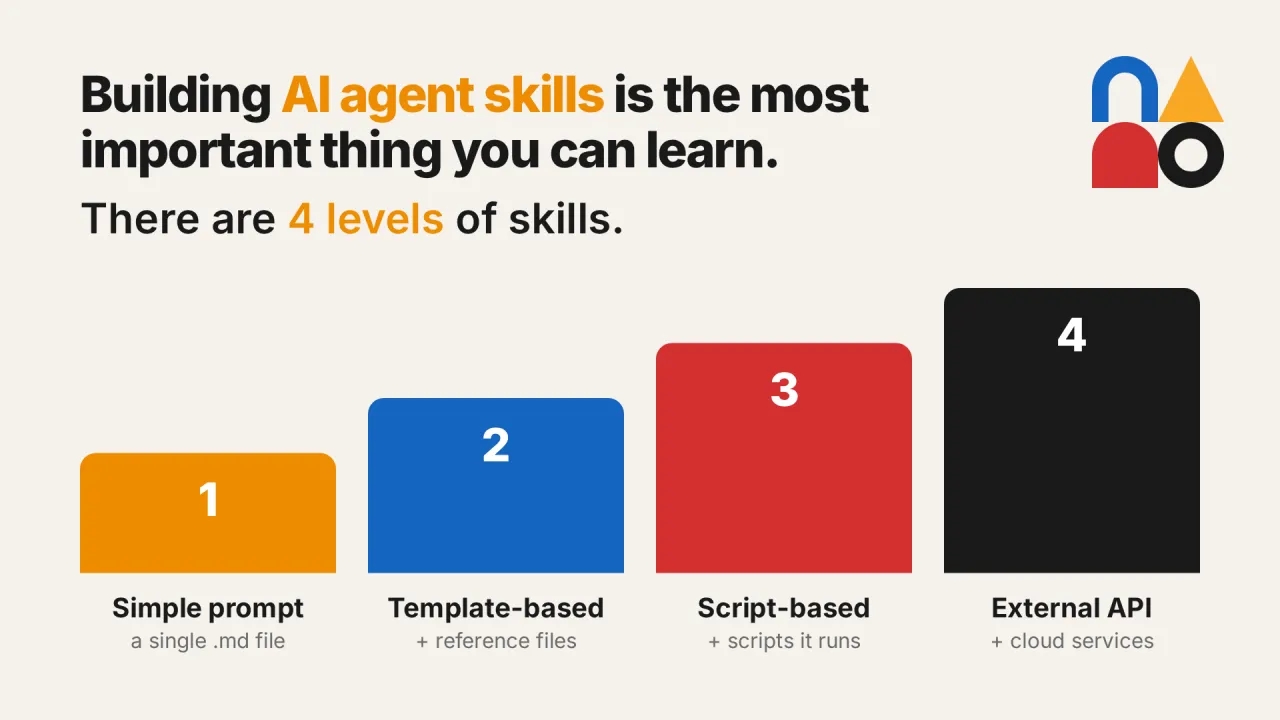
Building AI agent skills is the most important thing you can learn right now. There are 4 levels of skill complexity.
If you use an AI agent out of the box, you are running the same model as everyone else. It gives you average output. It does not know your work, your standar...
If you use an AI agent out of the box, you are running the same model as everyone else. The intelligence is not your edge. Anyone can prompt it.
Out of the box, the agent gives you average output. It does not know your work, your standards, or how you like a task done. So you explain it again every session, and you still land somewhere generic. AI is not plug-and-play.
So how do you turn a generic agent into one that does your work, your way, every time?
Skills. A skill teaches the agent a task once, so it does it your way from then on. The model is the same for everyone, so the skill is the part that is yours. That is why building skills is the most important thing to learn with AI agents, and it is still the most underused. Think of skills like apps on a phone. The phone works out of the box, but the apps are what make it useful to you.
What is a skill
Most people think a skill is just a saved prompt. A text file you trigger by name, like /write-article. This is right in some sense. But this is only a Level 1 skill.
Underneath, a skill is a folder, not a loose file: a SKILL.md with the instructions, plus any files it needs. It lives in one of two places. A user skill in ~/.claude/skills/ is available in every project on your machine. A project skill in .claude/skills/ is available only in that repo and ships with it when you push. You trigger either one by name with /skill-name.
At its simplest, that folder holds one Markdown file: a SKILL.md with instructions in natural language. But the same setup can pull in reference files, run scripts on your machine, and call cloud services. As it does, it grows from a saved prompt into something closer to a small program your agent runs on your behalf.
There are several ways to create skills. I covered five of them in an earlier article.
Read the earlier article: AI Agents are not plug-and-play. 5 ways to add useful skills to your AI agents
In this article, I share the 4 levels of skill complexity, from simplest to most capable.
Level 1: A simple prompt
Just a Markdown file with instructions. You write down how you want a task done once, and the agent follows it every time you type the command. Think of it like the step-by-step notes you would write for a new employee on day one, so they can do the task without asking you each time.
Example: /write-article. Give it a topic, and it writes a draft following the blog conventions I baked into the skill.
Best for: any task you repeat and keep re-explaining from scratch. This is where everyone should start, and a Level 1 skill alone can save you hours every week.
Level 2: Template-based
The Markdown file plus reference files: style guides, examples, or past work the skill reads before it produces anything. Think of it like upgrading those notes into a playbook with templates, so the new employee can match your format instead of inventing their own.
Example: /create-slide pulls from my existing slides as templates, so a new slide matches the deck instead of inventing a fresh look every time.
Best for: when the output has to match an existing format or voice. Instead of describing your style in the prompt, you hand the skill real examples to copy. The reference files are what keep it consistent.
Level 3: Script-based
The Markdown file plus scripts the skill runs. The agent does not improvise these steps. It runs the exact commands you gave it. Think of it like giving the employee a machine that runs the whole procedure at the push of a button, so a risky sequence happens the same way every time instead of by hand.
Example: /deploy runs my build, test, and deploy commands in order.
Best for: deterministic, multi-step operations where you do not want the model to freestyle. Anything with a fixed sequence and a real cost of getting a step wrong belongs in a script, not in a paragraph of instructions the model might read loosely.
Level 4: External API
The Markdown file plus calls to cloud services. The skill reaches outside your machine for a capability the model does not have on its own. Think of it like giving the employee a phone to call an outside specialist when the job needs something they cannot do themselves.
Example: /generate-image calls Cloudflare’s AI to create images.
Best for: when the task needs something the agent cannot do by itself. Generating an image, querying a database, hitting a third-party service. Here the skill becomes the glue between your agent and the rest of your stack.
You do not need to start at Level 4
You do not add complexity for its own sake. You add it when the task needs it. Needs to match a format? Add reference files, and you are at Level 2. Needs a fixed sequence run reliably? Add a script, Level 3. Needs a capability the model lacks? Add an API call, Level 4.
Most people never get past Level 1, and that is fine. A single text file that runs a workflow you repeat is already most of the value. But knowing the other three exist changes what you think to build. When a skill feels limited, the fix is usually not a longer prompt. It is the next level.
A skill at any level is still you, encoded
The instructions, the templates, the scripts, the choice of which service to call. All of it is your judgment, saved once and reused. This is how you apprentice an AI agent: you teach it your way of doing one task, and it does that task your way from then on.
The level only decides how far the skill can reach. It does not change whose judgment is running. That is still yours.
So look at the skills you already run. If every one of them is a Level 1 prompt, you are leaving the most useful three levels on the table. The next time a skill cannot do what you need, do not reach for a longer prompt. Ask which level it is missing.
If you would like to learn the foundations of working with Claude Code and AI agents, join my upcoming workshop. The next two cohorts are on 18 June and 2 July. It is built for non-techies with no prior knowledge of Claude Code or Terminal.
Details: https://boonkgim.com/workshops/foundations-claude-code/
#AI #ClaudeCode #AIAgents #AgenticAI #BuildInPublic
Enjoyed this? Subscribe for more.
Practical insights on AI, growth, and independent learning. No spam.
More in AI Agents
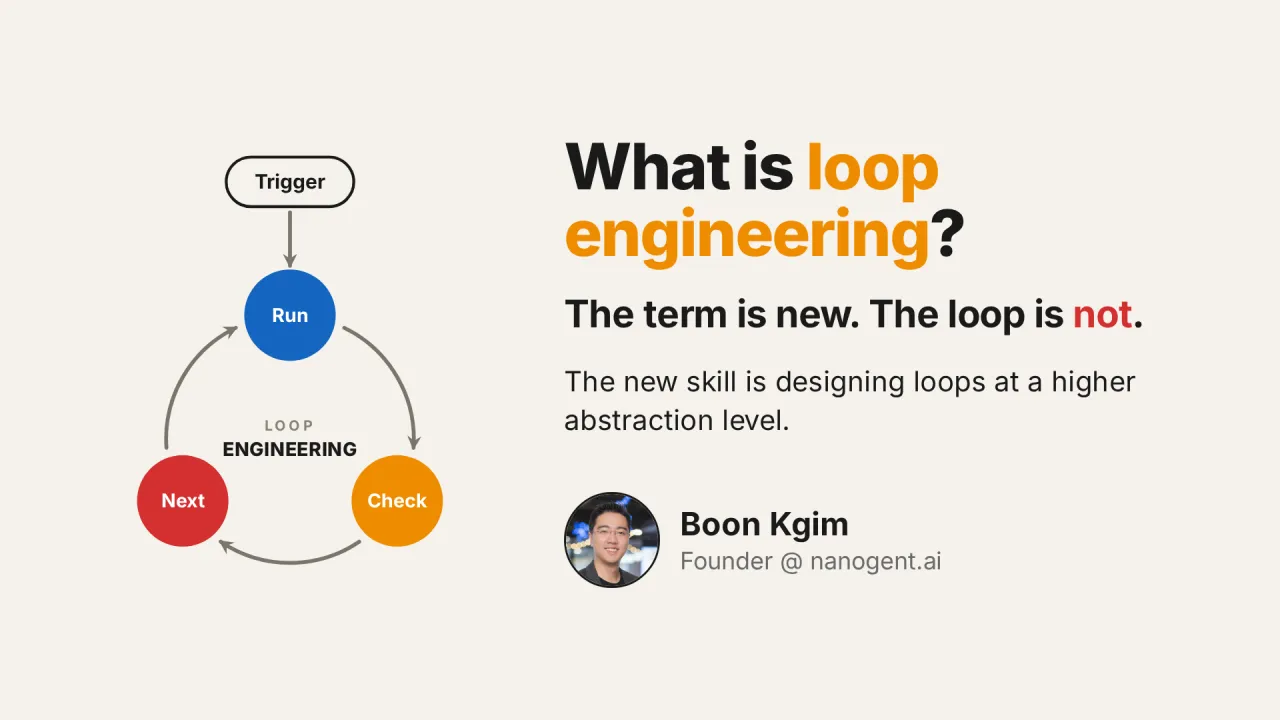
What Is Loop Engineering? Why Is It Trending? And Why Loops Are Not New
Loop engineering is everywhere right now. It is the practice of designing the system that prompts an AI agent, instead of prompting it yourself. Addy Osmani,...
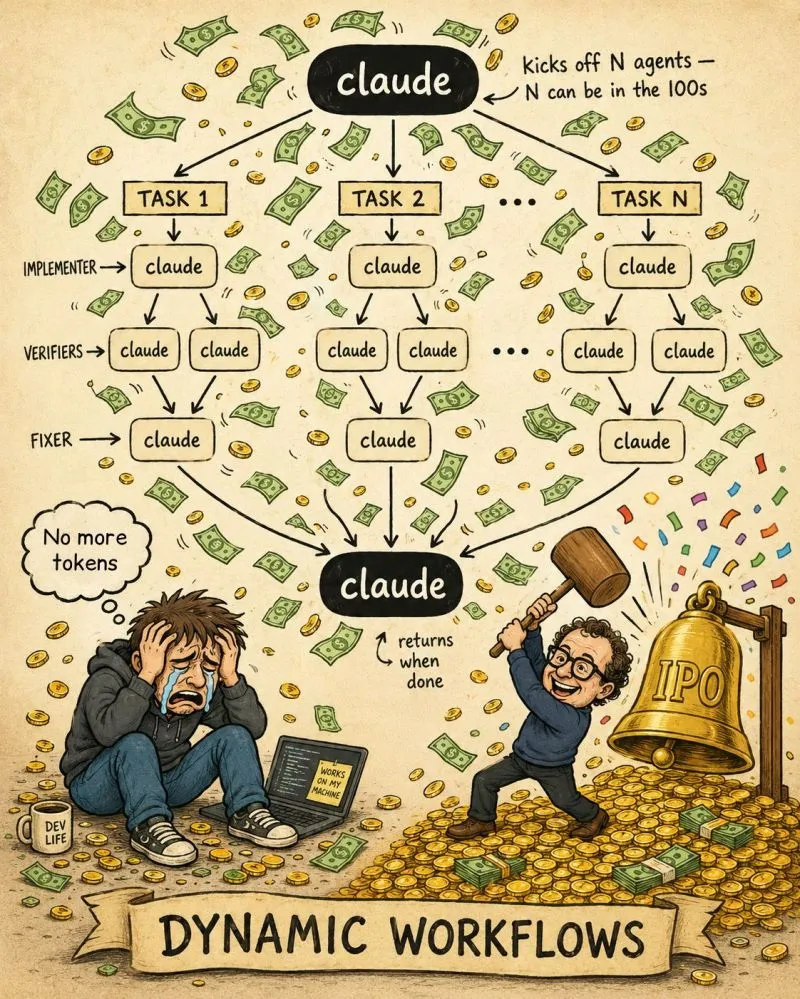
If you are new to Claude Code, turn off dynamic workflows before they burn through your usage limit.
Last week in my workshop, this caught a few learners off guard. One prompt spun up 100+ agents to research "AI patterns to avoid in web design," and burned t...
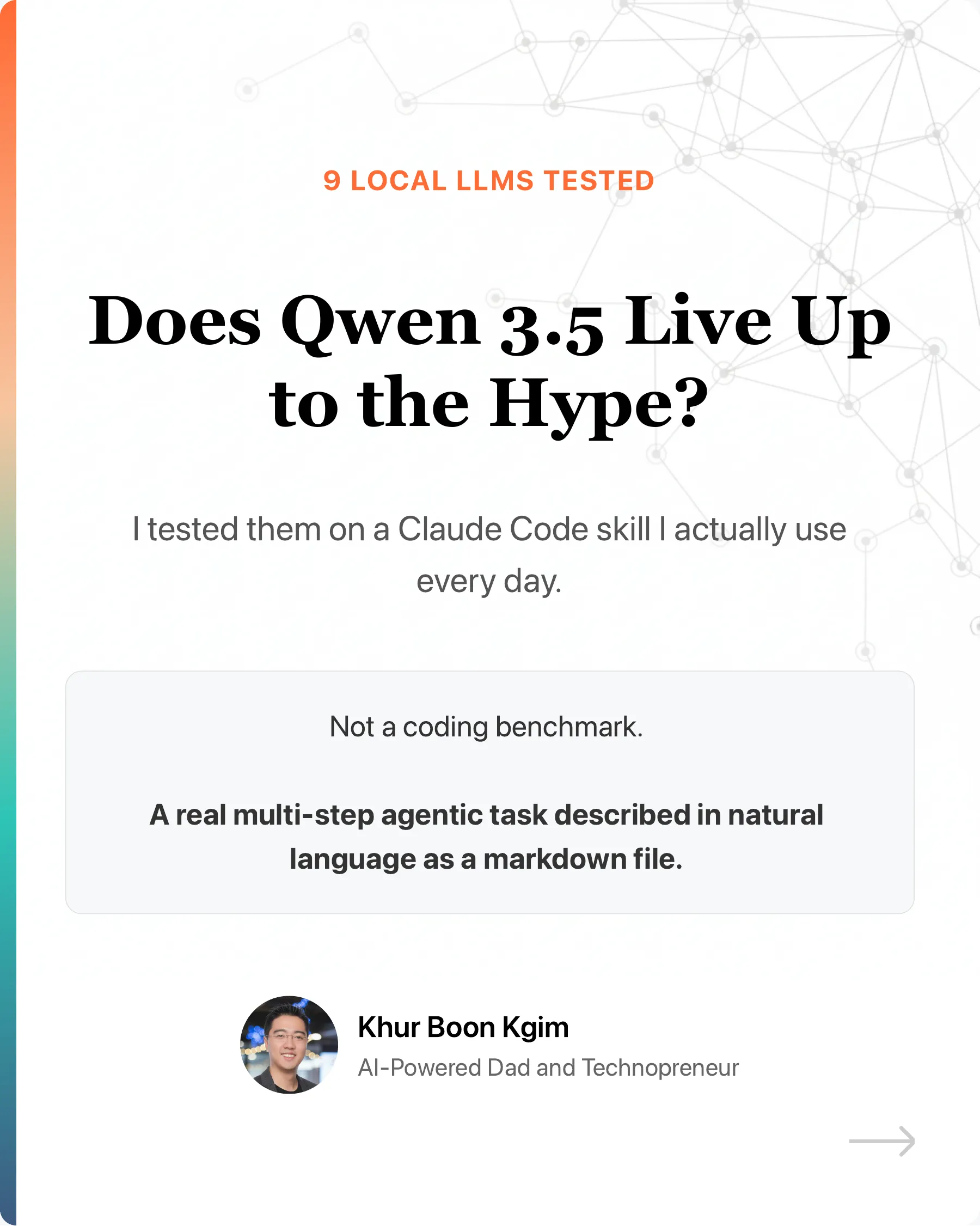
Does Qwen 3.5 live up to the hype?
I tested 9 local LLMs on a Claude Code skill I actually use every day. Not a coding benchmark. A real multi-step agentic task described in natural language a...
How To Create Agent Skill To Write LinkedIn Posts That Sound Like You
Most people are surprised when I tell them I use AI to write all of my LinkedIn posts.
Hot Take: Vibe Coding Won't Replace Software Engineers
Here, I share my journey from a strong believer to a skeptic.
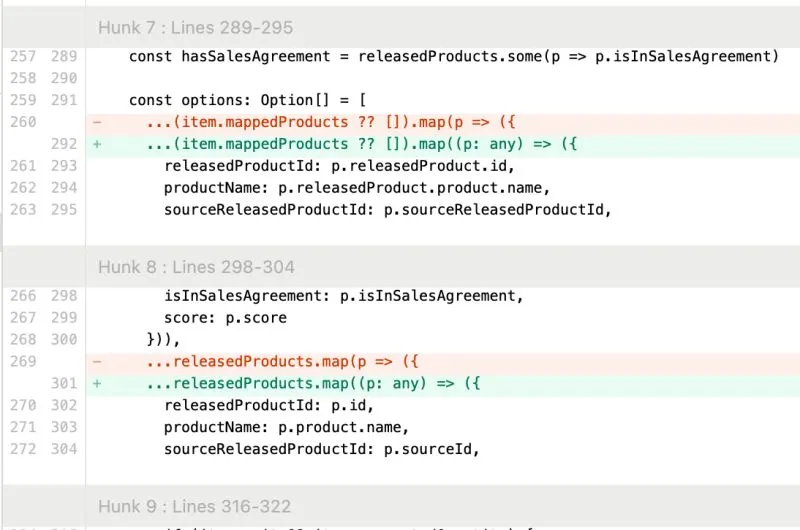
I caught Cursor trying to be lazy.
The AI agent couldn’t solve the typing error, so it cast the variable to 'any' to suppress the error, just like a sloppy software engineer would.
What Is Loop Engineering? Why Is It Trending? And Why Loops Are Not New
Loop engineering is everywhere right now. It is the practice of designing the system that prompts an AI agent, instead of prompting it yourself. Addy Osmani,...
Does Qwen 3.5 live up to the hype?
I tested 9 local LLMs on a Claude Code skill I actually use every day. Not a coding benchmark. A real multi-step agentic task described in natural language a...
Hot Take: Vibe Coding Won't Replace Software Engineers
Here, I share my journey from a strong believer to a skeptic.
If you are new to Claude Code, turn off dynamic workflows before they burn through your usage limit.
Last week in my workshop, this caught a few learners off guard. One prompt spun up 100+ agents to research "AI patterns to avoid in web design," and burned t...
How To Create Agent Skill To Write LinkedIn Posts That Sound Like You
Most people are surprised when I tell them I use AI to write all of my LinkedIn posts.
I caught Cursor trying to be lazy.
The AI agent couldn’t solve the typing error, so it cast the variable to 'any' to suppress the error, just like a sloppy software engineer would.