LangChain on AI Agents vs Workflow Builders
(I admit, I’ve contributed to one of those posts myself)
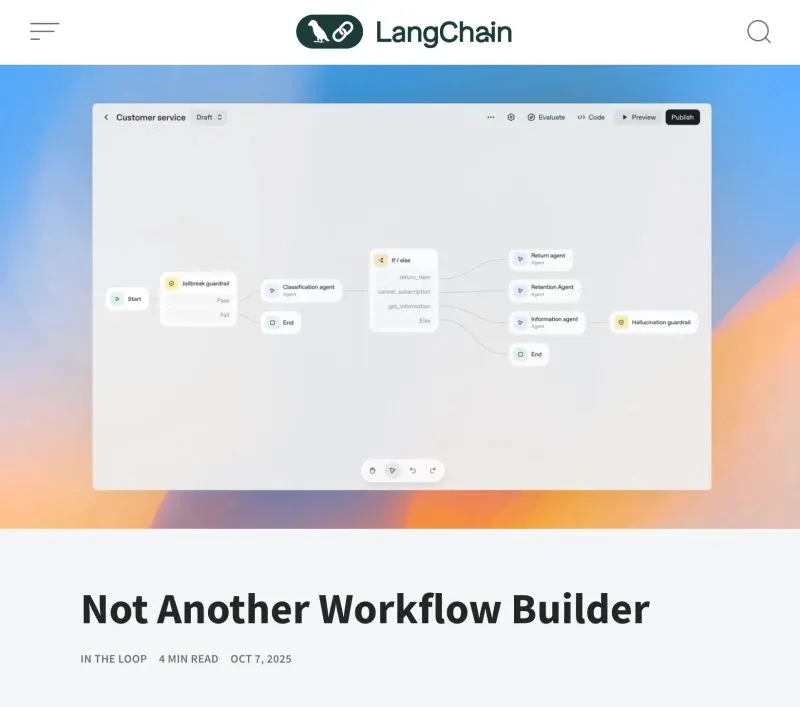
(I admit, I’ve contributed to one of those posts myself)
It actually resonates with my own experience after using both no/low-code workflow (n8n, Dify) and vibe code to build real-world AI applications for over a year.
Key takeaways from LangChain’s post:
Visual workflow builders are not low-barrier. Despite targeting a mass audience, non-technical users still struggle to use them.
Complexity scales quickly. Workflows with branching logic, parallel paths, and multiple nodes become hard to manage visually.
Workflows versus agents:
· Workflows give predictability at the cost of autonomy. · Agents give autonomy at the cost of predictability. · The goal is reliably good outcomes, which neither alone guarantees.
Best approach depends on complexity:
· Low complexity: No-code agents (prompt plus tools without workflow) are simpler and increasingly capable. · Medium complexity: No-code workflows. · High complexity: Code-based workflows.
Visual workflow builders are getting squeezed from both directions. Agents in no-code form will become easier and more reliable. High-complexity workflows will increasingly require code, but as code generation improves, the barrier drops.
The interesting problems now are making no-code creation of reliable agents easier and improving code generation for LLM-powered workflows and agents.
The takeaway is that the next frontier is not another workflow builder. It is making LLM-powered agents and workflows truly reliable and accessible.
Does this resonate with you too?
Source: https://lnkd.in/gAVj3uuf
—
I share practical tips about business, marketing and AI 🔔 Follow me to learn more! ♻️ Re-post this to help others! 🔖 Save this for future reference! 💬 DM me for collaboration!
#NoCode #WorkflowAutomation #AI
Enjoyed this? Subscribe for more.
Practical insights on AI, growth, and independent learning. No spam.
More in AI Agents
Don't believe the BS that you can use Claude Code for free.
Ollama recently made their API compatible with Claude Code. Many creators quickly jumped on the opportunity to farm engagement with the hook: "You can now u...
10 Ways to Reduce the Risk of Running OpenClaw (or Any AI Agent)
The safe answer comes from Peter Steinberger, OpenClaw's creator himself. He said OpenClaw is designed as a personal assistant - one user to one or many agen...

The most plausible bad outcome of AI (or AGI) is not the rise of Skynet.
It is humans quietly outsourcing our intelligence to AI and we eventually lose it.
Can LLMs like ChatGPT do reasoning? It failed my casual tests in under 30 minutes.
… more
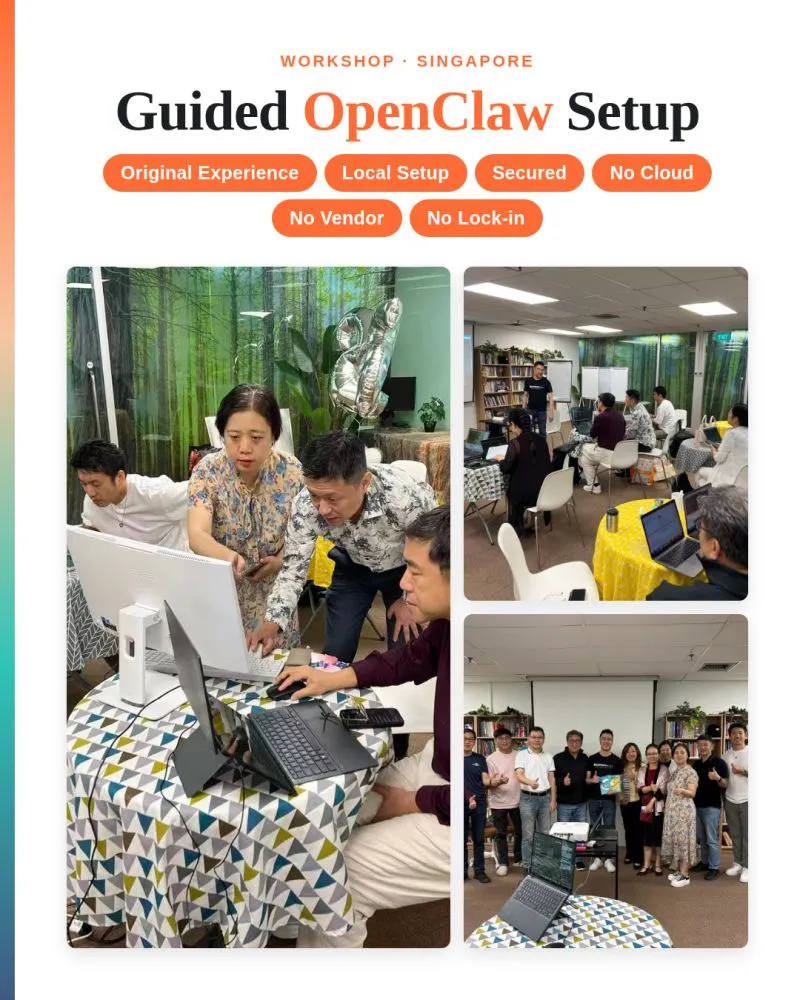
Most OpenClaw workshops skip the fundamentals and teach you 1-click setup on AI or cloud providers...
I decided to go for a different path. In my workshop, I guide learners to set up with the original experience: install it on your laptop, but with security i...
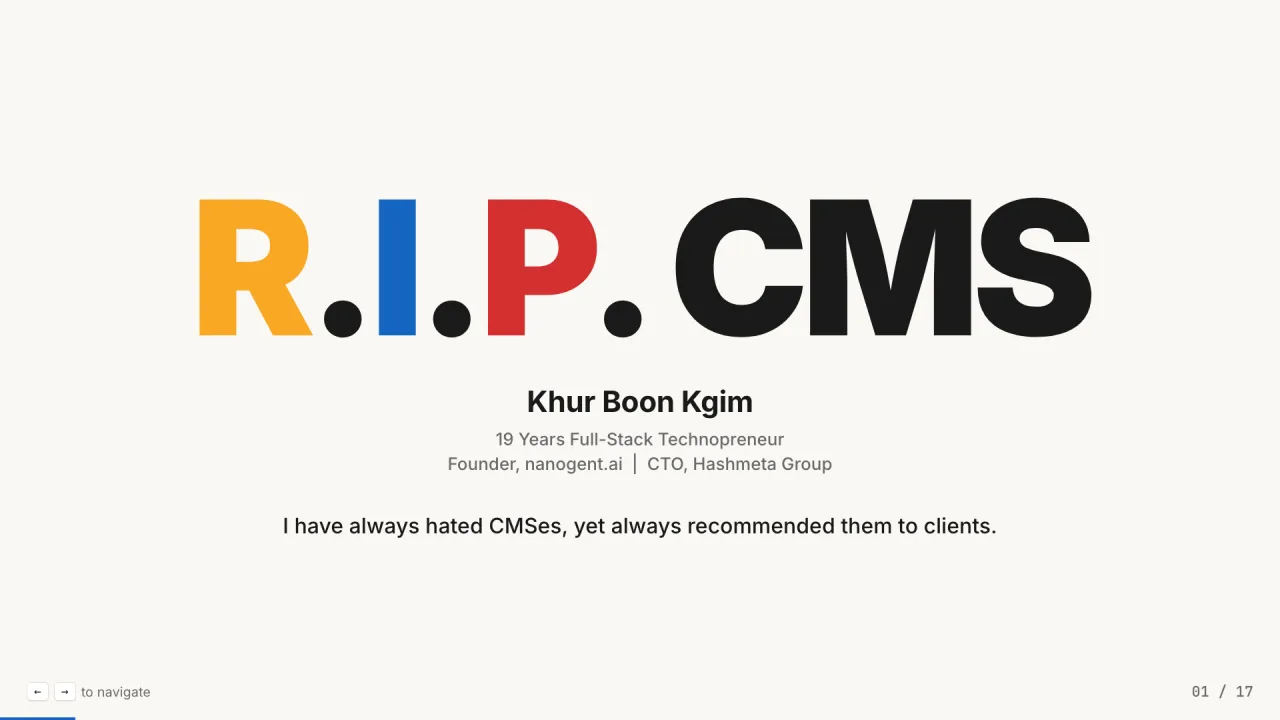
R.I.P. CMS. How AI agents like OpenClaw could replace CMS.
Thanks to Claw Singapore and Lionel Sim for the invitation. Great to be on stage with 💎 Amanda Lau Shernin, Namira Noviar, Finnley Hui Yu, Lee, Alan Yuen, M...
Don't believe the BS that you can use Claude Code for free.
Ollama recently made their API compatible with Claude Code. Many creators quickly jumped on the opportunity to farm engagement with the hook: "You can now u...
Can LLMs like ChatGPT do reasoning? It failed my casual tests in under 30 minutes.
… more
R.I.P. CMS. How AI agents like OpenClaw could replace CMS.
Thanks to Claw Singapore and Lionel Sim for the invitation. Great to be on stage with 💎 Amanda Lau Shernin, Namira Noviar, Finnley Hui Yu, Lee, Alan Yuen, M...
10 Ways to Reduce the Risk of Running OpenClaw (or Any AI Agent)
The safe answer comes from Peter Steinberger, OpenClaw's creator himself. He said OpenClaw is designed as a personal assistant - one user to one or many agen...
The most plausible bad outcome of AI (or AGI) is not the rise of Skynet.
It is humans quietly outsourcing our intelligence to AI and we eventually lose it.
Most OpenClaw workshops skip the fundamentals and teach you 1-click setup on AI or cloud providers...
I decided to go for a different path. In my workshop, I guide learners to set up with the original experience: install it on your laptop, but with security i...