Most people design AI agent systems wrong. They put AI agents inside the security boundary instead of outside. This exposes their system to prompt injection.
--
—
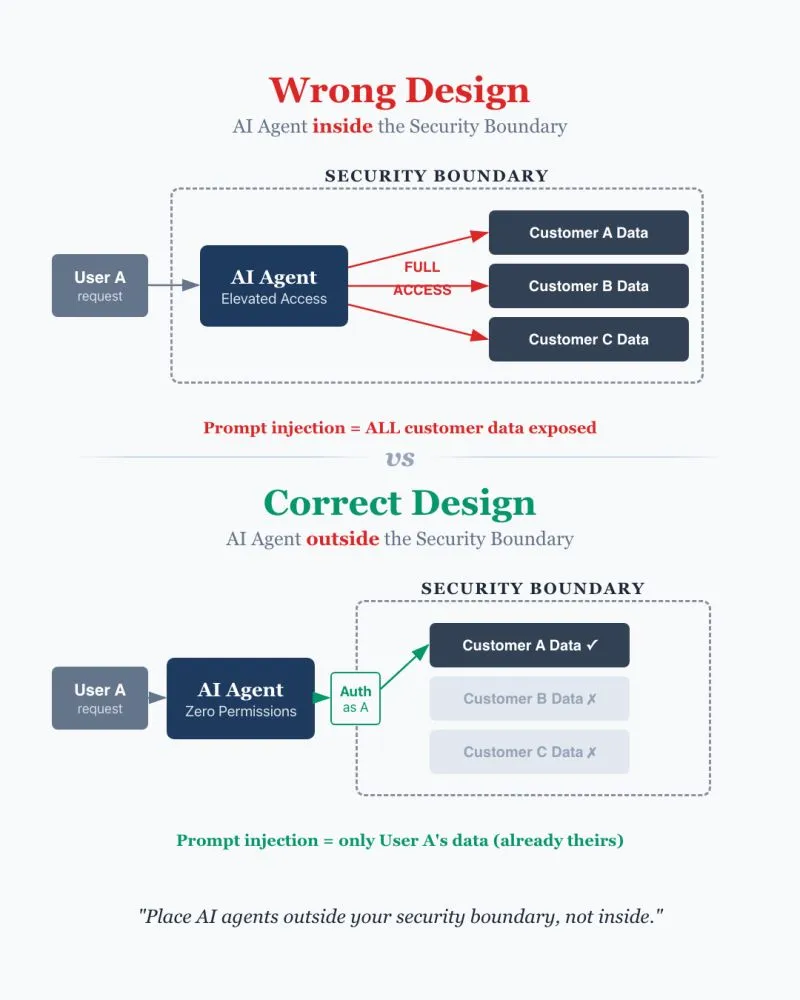
Most systems treat AI agents as internal users. For example, an AI Customer Service Agent is usually given the same elevated access as a human CS agent - access to all customer records, order history, account details.
This feels natural. The AI agent is doing the same job, so it gets the same access.
But this is where things go wrong.
If prompt injection succeeds even once, the attacker gets access to everything that agent can see. Every customer’s data.
And prompt injection WILL succeed eventually. LLMs are probabilistic. When the user’s instruction conflicts with ours, we can’t guarantee the LLM will always follow ours.
The two most common defenses are flawed:
- Instruct the AI agent to reject customers if they asked for unauthorized info.
- Add another LLM as a guardrail to detect prompt injection.
Both rely on the same thing - an LLM following OUR instructions 100% of the time.
You can stack guardrails on top of guardrails. It will still be probabilistic.
Even if you can lower the probability, AI agents are usually exposed to huge volume of untrusted input from email, chat, forum and more. Processing high volume of input means it eventually will happen.
—
The fix is simpler than most teams realize.
Instead of treating AI agents as internal users with elevated permissions, treat them as external users.
Place AI agents outside your security boundary, not inside.
Here is how:
-
Zero permissions by default
-
No elevated access. No shared service accounts.
-
The AI agent starts like any unauthenticated external user.
-
Authenticate on behalf of the user
-
If the agent needs User A’s records, it authenticates only as User A’s agent.
-
The AI agent asks for credentials from the user and logs in on their behalf.
-
Even if prompt injection succeeds, the agent can only access what that user already has access to.
-
Existing security handles the rest
-
Rate limiting, access controls, audit logs - already designed for external users.
-
All of this applies to the AI agent automatically with minimal tweaks.
—
Zero trust architecture has been around for years. Instead of building LLM guardrails as new layers, a simpler way is to apply what we already know to a new actor.
If your AI agent sits inside your security boundary with the same permissions as your internal team, prompt injection is a matter of when, not if. Move it outside, and your existing security infrastructure does most of the work.
—
What if the agent must be internal?
- Internal agents should only process input from trusted sources.
- Never expose an internal agent to untrusted input such as emails, forum posts, or 3rd party content.
- Untrusted input + elevated permissions = prompt injection surface.
#Security #PromptInjection #AIAgents #SoftwareArchitecture
Enjoyed this? Subscribe for more.
Practical insights on AI, growth, and independent learning. No spam.
More in AI Security
One of my biggest AI productivity unlocks this year is the extensive use of agent skills.
In this post, I share my insights after building around 75 skills over 5 months. Coding and non-coding. LinkedIn posts, cover images, carousels, presentation...
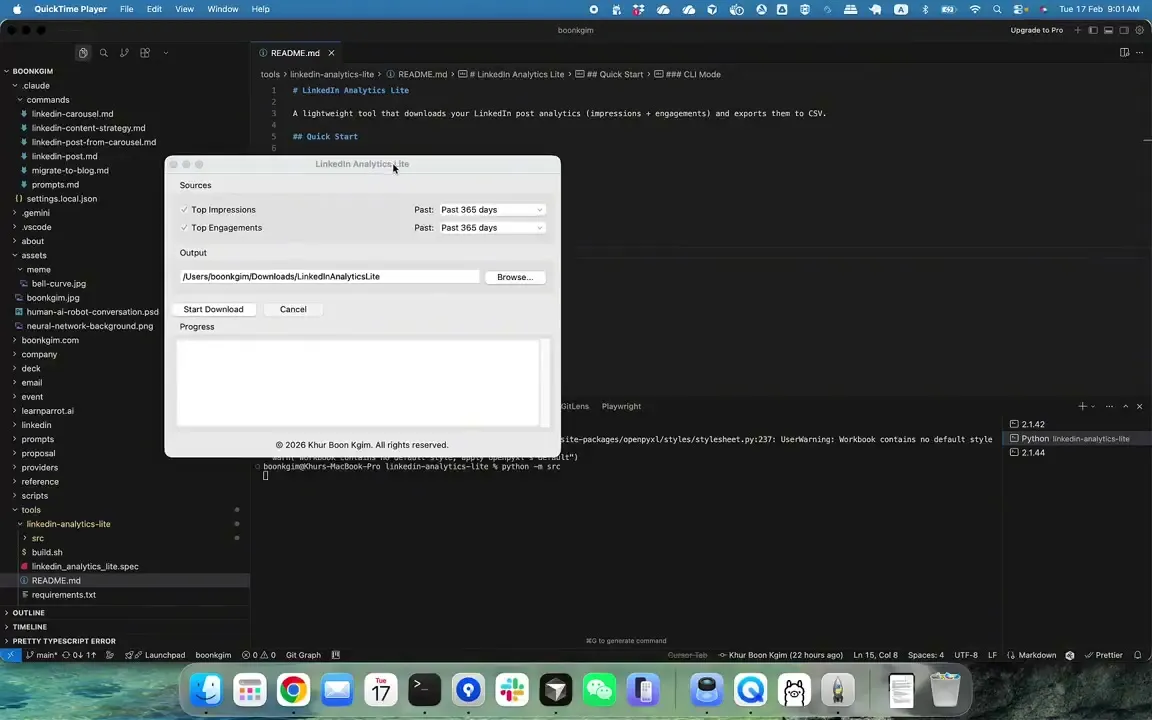
Not every automation needs an AI agent. After burning $25+ with a browser agent just to download analytics of my top LinkedIn posts, I decided to build a simple automation tool that costs nothing to run.
--
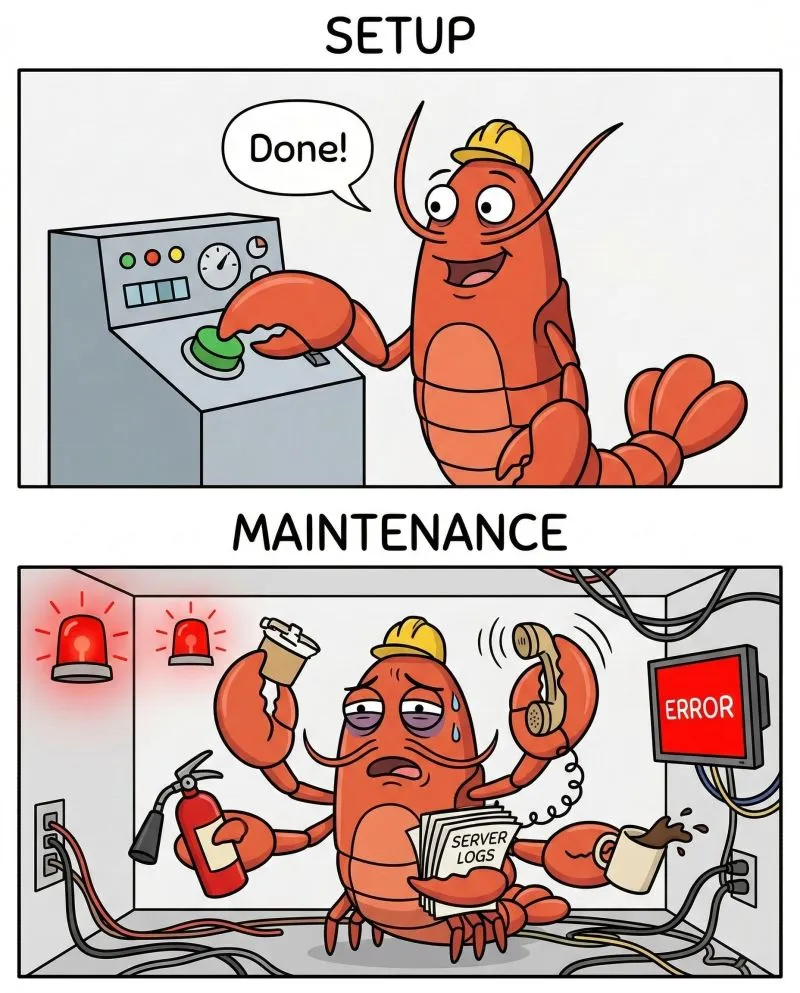
Everyone tells you how easy it is to set up an AI agent with OpenClaw.
Nobody tells you how hard it is to maintain it.
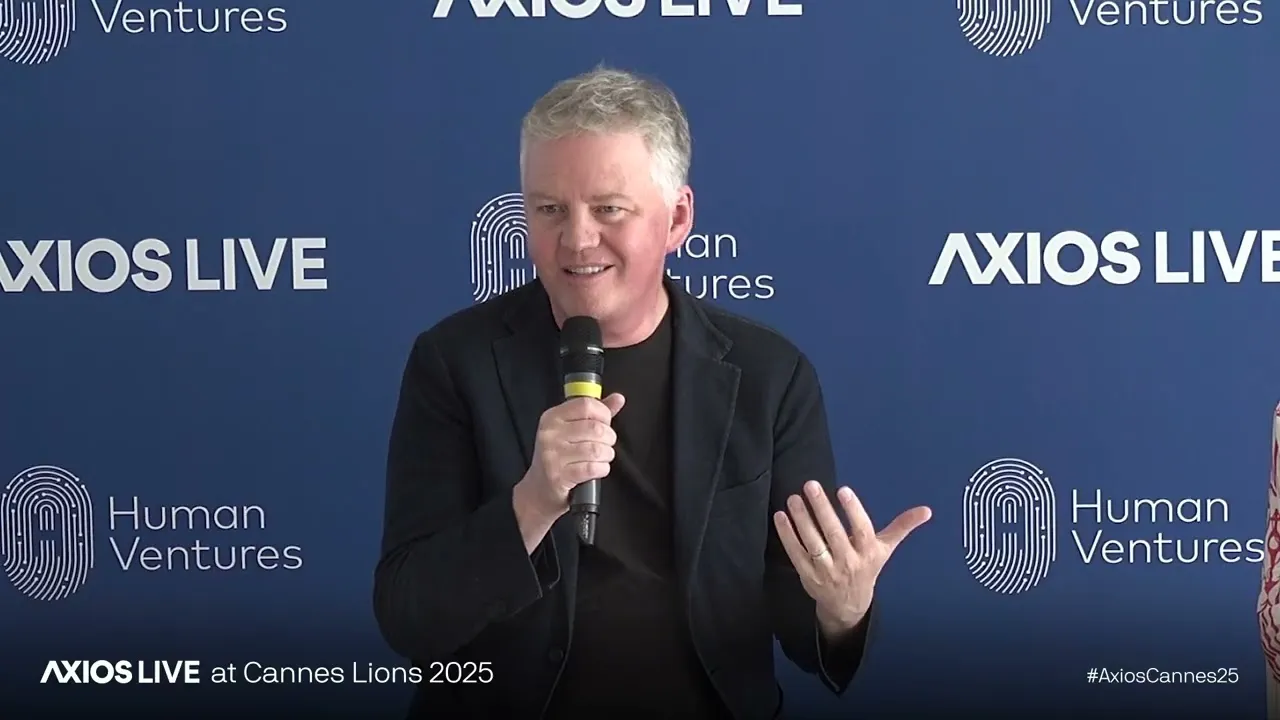
Axios’ Sara Fischer in conversation with Cloudflare’s Matthew Prince
For the past 20 years, we have benefited from "free" content on the Internet.
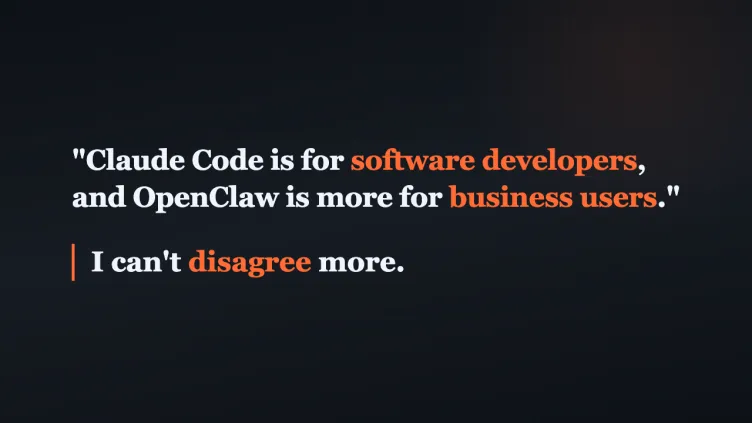
Claude Code is for software developers, and OpenClaw is more for business users.
A learner said this to another learner during a recent workshop. I think this is the most common and most dangerous misconception about these two tools.

How We Hit 5 Million Organic Search Clicks a Year
We did it. With zero ad spend. Just SEO and inbound marketing.
One of my biggest AI productivity unlocks this year is the extensive use of agent skills.
In this post, I share my insights after building around 75 skills over 5 months. Coding and non-coding. LinkedIn posts, cover images, carousels, presentation...
Axios’ Sara Fischer in conversation with Cloudflare’s Matthew Prince
For the past 20 years, we have benefited from "free" content on the Internet.
Claude Code is for software developers, and OpenClaw is more for business users.
A learner said this to another learner during a recent workshop. I think this is the most common and most dangerous misconception about these two tools.
Not every automation needs an AI agent. After burning $25+ with a browser agent just to download analytics of my top LinkedIn posts, I decided to build a simple automation tool that costs nothing to run.
--
Everyone tells you how easy it is to set up an AI agent with OpenClaw.
Nobody tells you how hard it is to maintain it.
How We Hit 5 Million Organic Search Clicks a Year
We did it. With zero ad spend. Just SEO and inbound marketing.