Three Stories of a Technopreneur
I have done many workshops and professional sharing sessions. This was the first time I shared personal stories.
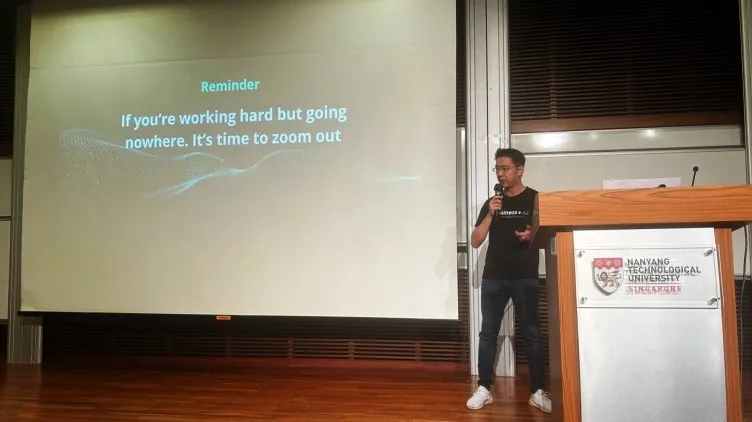
I am honored to be invited to share inspiring stories of my journey last evening at NeuroSpark with 200 startup founders, builders, and dreamers.
I have done many workshops and professional sharing sessions. This was the first time I shared personal stories.
Special thanks to NeuroX Community and The Generative Beings for organizing this incredible event, and to Prakash Kumar for the invitation to share my journey.
I thought it would be good to share my script on LinkedIn for aspiring founders to learn from.
Good evening. It’s an honor to be here with so many founders and builders.
I started my career as an AI researcher doing my PhD in NTU. I made a difficult decision to drop out. I went on to start two companies, sold one. Had many failures, a few wins.
Today, I was told to share inspiring stories of my journey. I was thinking about how to deliver this.
One of the most inspiring speeches I knew was Steve Jobs’ speech at Stanford.
Steve Jobs also once said: “Good artists copy, great artists steal”.
So today, I am going to steal his speech by sharing three stories. I hope they will inspire you.
Story 1: Talking to your users, not your product
In 2013, I started a fashion discovery app. It was my 2nd startup. We raised $500,000 with nothing more than an idea. We had a track record from the 1st startup. The investors believed in us.
We built. We launched. But it failed to gain traction, as with most original ideas.
We continued to experiment, wanting to find our killer feature. We rolled out feature after feature—one of them was “New Arrival Alert”. Every two hours, our tracker would check for new items from 10 popular stores. If we found new items, we would send push notifications to their followers.
We thought some of these features would work. But the truth? None of our features really helped. Users weren’t sticking around. Engagement was flat. Retention was poor. We didn’t have a killer feature. Our investors were losing faith. And we made a difficult decision: we returned the remaining funds to write off the convertible bond.
Our investors gave up. But as founders, we hadn’t. We noticed something.
A handful of users were still using our app every day. I remembered something the Airbnb founder once said: “Focus on 100 people that love you, not a million that kinda like you.”
Desperate to save our startup, we invited our 10 most active users for a one-hour interview.
We asked two simple questions:
- “What is the one thing you love about our app?”
- “What is the one thing you would like us to fix?”
8 out of 10 said they loved our new arrivals alert—but it was too slow. Sometimes, they’d get a notification hours after the item dropped. It was sold out by the time they clicked.
That was our aha moment.
We rewrote the tracker to run every 5 minutes. We made it scale. We extended it from 10 stores to hundreds.
The result?
Our monthly active users jumped from 5,000 to 100,000. Monthly pageviews hit 10 million. Our daily active users were spending 12 minutes on the app daily—just shy of Instagram’s 18 minutes at the time.
The lesson?
If your MVP failed, maybe it wasn’t the idea. Maybe it was the execution.
We spent months, or maybe a year, building and testing many ideas. None of them helped until we talked to our users.
Don’t build in silence. Talk to your users.
But here is a cautionary note. When you listen to your users, there will also be a lot of noise. This is a big topic that we could discuss separately.
Story 2: Taking a chance and strategic thinking
Fast forward to the end of 2018, I decided to sell the company to Hashmeta Group —where I work as a partner and CTO today.
Why? We hit our ceiling. We had traffic. But if we benchmarked against Google or Facebook, we were under-monetizing our traffic by 10x. Hashmeta, a marketing firm with a deep client network, seemed like the right partner to unlock that.
I was restless after the exit.
I dropped my PhD with a big dream - to build a tech unicorn, or at least a hundred million dollar tech company. After 10 years and two startups, I still hadn’t succeeded. I started wondering: what was I missing?
I decided to take a break. Maybe join another tech company to figure out what I didn’t know. I updated LinkedIn. Turned on “Open to Work.”
Soon, recruiters came knocking. There were two opportunities that caught my interest:
- A fast-growing startup in Singapore working on a B2G trading platform.
- Google. A dream employer for anyone in tech at that time.
But then, an unexpected one approached me: Deloitte Consulting. They wanted to hire a… web developer.
I thought, “Seriously? A web developer?”
I had built apps that handled 10 million pageviews. Sold a company. I was looking for a position like CTO or Head of Engineering.
But I took a chance.
I said yes to the interview. Not because I wanted the role, but because I believed Deloitte, as a large organisation with many big clients, could open doors. If I showed them what I could offer, maybe… just maybe… they would offer me the right position, or recommend me to their big clients.
The result? They offered me a package even better than Google’s. I took it.
It also turned out that this was one of the best career decisions I made.
I learned about business strategy, sales, and change management. I even helped to close deals worth millions. I wouldn’t have learned all these by staying in a tech role.
And I finally understood why so many startups don’t scale.
They focus on tactics without strategy.
Strategy is like your map. Tactics are the roads you take. Without strategy, you’re just driving around hoping you’ll arrive somewhere meaningful. Chances are, you won’t reach your destination.
Steve Jobs once said:
Intelligence is the ability to “zoom out” and “zoom in.” Zoom out to see the big picture. Zoom in to focus on details others miss.
That’s strategy and execution, in harmony.
If you’re working hard but going nowhere—it’s time to zoom out.
Story 3: Cost of inaction
Let me take you back to the early 2010s.
I chanced upon a whitepaper: “A Peer-to-Peer Electronic Cash System” by Satoshi Nakamoto.
Bitcoin.
I thought it was a brilliant idea. It solved a big problem: sending digital money without an intermediary. As someone who had built a few e-commerce platforms, I understood the pain of dealing with intermediaries like PayPal and banks - the high transaction fees, the slow processing time.
Bitcoin felt very promising.
In order to join it, I had to clone code, compile it, run it. Maybe it would take 30 minutes of my time.
So, what did I do?
Nothing.
I thought it was a hassle. I skipped it. There was some hype, but not enough traction.
At that time, the reward rate of bitcoin mining was 25 BTC per block. With today’s price of 100k, that’s $2.5 million every 10 minutes.
Looking back, the cost of inaction was huge.
A few years later, in 2015, a young genius, Vitalik Buterin published another whitepaper—smart contracts and a decentralized software platform. Ethereum.
Again. I thought it was a brilliant idea. I was fascinated by the idea of web3, a way to allow participants to own part of the web with tokens, and a decentralized way to run applications. I was a fan of serverless architecture. I know the pain of managing servers.
But again, I waited. I thought, Google was the 18th search engine, Facebook wasn’t the first social media. The pioneer is usually not the winner.
“Let the idea mature. I’ll jump in when the winner is clear.”
The inaction cost me, again.
Of course, it is obvious looking back in hindsight. Investing in Ethereum in 2015 was no different from gambling—it could have failed. But not acting on Bitcoin was pure laziness.
Here’s what I learned:
If you believe in something, take a chance. Because sometimes, the biggest risk is doing nothing.
Today, I hold some Bitcoin and Ethereum. It is still a very high-risk investment. Satoshi could rug pull. Quantum computing may break web3, and 99.9% of web3 projects are probably scams or will die. But, I am taking a chance. I am betting on Satoshi won’t rug pull. The genius in web3 will solve quantum risk. And once the bubble bursts, the 0.1% of web3 projects will rise. We’ll see if it plays out.
Many are still skeptical about web3. How about AI?
There is no better time to take a chance now, in AI. This is the first time in my 20-year technopreneur journey that we see software that can write software. Software that can create things, talk like humans, and make decisions like humans. The opportunity is enormous.
One last thing…
Let me close my speech with one last piece of advice.
Many of us today are chasing the next big idea in AI.
But let’s take a step back.
Ev Williams, co-founder of Blogger, Twitter, and Medium, once said something during the boom of the Internet, when everyone was looking for new ideas:
“The Internet is an engine of convenience. We think it enables us to do new things, but people just want to do the same things they’ve always done.”
He offered a formula to find the next big idea:
“Take a human desire—preferably one that’s been around a really long time—and use modern technology to remove steps.”
Many will ask you to look for painkillers. But the fact is, vitamins and health supplements have a larger market value.
Ask yourselves. What pain does ChatGPT solve? None. Instead, it gives you convenience—in speed and cognitive ease.
Remember this when you are looking for your next big idea!
Thank you.
Enjoyed this? Subscribe for more.
Practical insights on AI, growth, and independent learning. No spam.
More in Tech & Startup
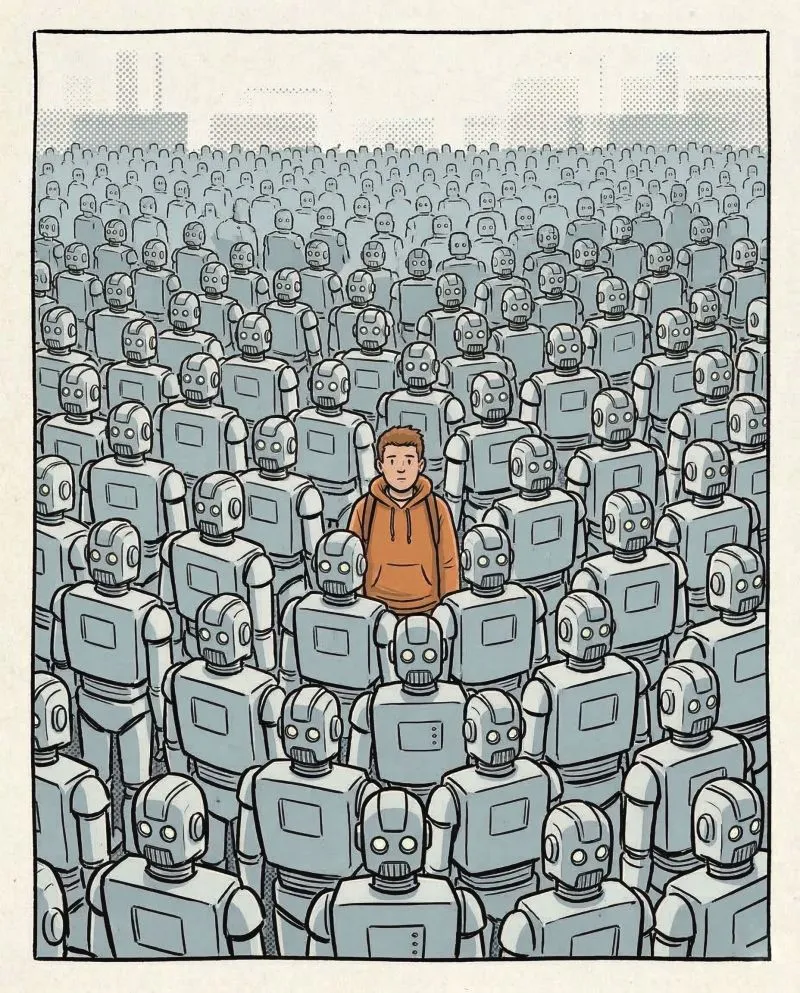
Human will be the differentiation when everyone produces the same things with AI agents with the same skills.
Since the virality of OpenClaw educated the market about agent skills, I have seen a lot of LinkedIn posts sharing 5,678 skills covering many things that pre...

If you're still thinking GenAI is just for techies, think again.
A new paper from ChatGPT, based on usage trends from over 18 billion weekly messages, shows how it's becoming indispensable for everyday problem-solving, fro...
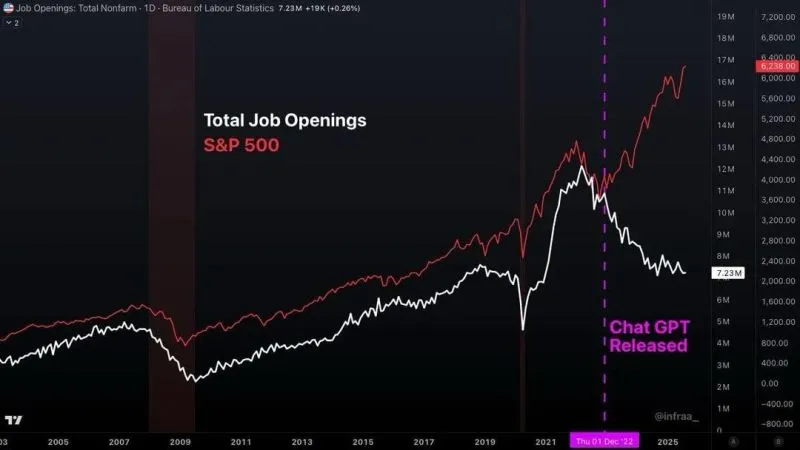
I’ve seen several people sharing this chart recently.
Interestingly, they seem to have very contrasting views.

Our inaugural Business Plus AI Forum 2024 was a smashing success!
Here’s a big shoutout to the stars of the day:
How I Balance Business and Parenting as an Entrepreneur
Last December, as I squeezed out some time to help my kids with their study, I thought:
**GenAI Pitfalls**
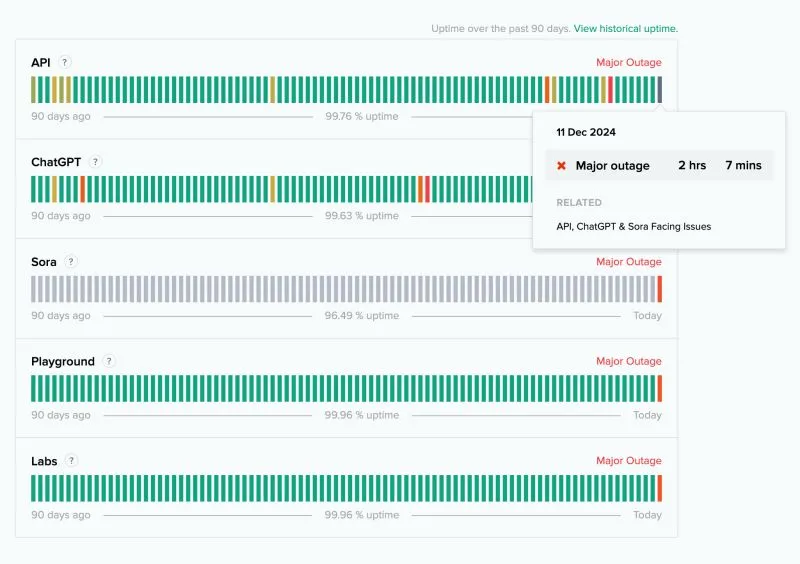
ChatGPT has recently encountered various outages. These outages took down our AI services and disrupted business operations, both for us and our clients.
Human will be the differentiation when everyone produces the same things with AI agents with the same skills.
Since the virality of OpenClaw educated the market about agent skills, I have seen a lot of LinkedIn posts sharing 5,678 skills covering many things that pre...
Our inaugural Business Plus AI Forum 2024 was a smashing success!
Here’s a big shoutout to the stars of the day:
**GenAI Pitfalls**
ChatGPT has recently encountered various outages. These outages took down our AI services and disrupted business operations, both for us and our clients.
If you're still thinking GenAI is just for techies, think again.
A new paper from ChatGPT, based on usage trends from over 18 billion weekly messages, shows how it's becoming indispensable for everyday problem-solving, fro...
I’ve seen several people sharing this chart recently.
Interestingly, they seem to have very contrasting views.
How I Balance Business and Parenting as an Entrepreneur
Last December, as I squeezed out some time to help my kids with their study, I thought: