The Worst Job Displacement of Software Engineers Is Yet to Come.
This is not another fear mongering post.
This is not another fear mongering post.
It is my honest opinion after building software for 15 years as a technopreneur, and using AI coding assistants for over a year.
No. It’s not because everyone can build software with vibe-coding now. This is a myth.
The real disruption will come from experienced product managers, solution architects, and senior engineers orchestrating fleets of autonomous AI agents.
The Evolution of Software Development: From Manual to Autonomous
The way we build software is undergoing a seismic shift. A recent a16z article, “The Trillion-Dollar AI Software Development Stack,” highlights this move towards “agentic loops,” where AI handles complex tasks under human orchestration.
- Agentic Workflows are the Future: We’re moving from simple code completion to “agentic loops” where AI handles complex tasks, including testing and debugging, all under the orchestration of a senior developer.
- Autonomous Background Agents: Imagine AI agents working tirelessly in the background, submitting pull requests for your review. This is the future of development.
- AI as an Autonomous QA Engineer: AI is already capable of generating, running, and evaluating tests across the entire stack. It’s like having an autonomous QA team.
- The End of Manual Grunt Work: Simple tasks like text changes, library updates, and minor feature additions will be fully automated.
- A Fundamental Shift in the Developer Role: The job is changing. Your value will no longer be just in writing code, but in your ability to manage and orchestrate these AI systems.
Source: https://a16z.com/the-trillion-dollar-ai-software-development-stack/
Then (Pre-GenAI):
The pre-GenAI software development process was manual:
- PM talks to stakeholders, writes PRD.
- Architect designs the system, translates PRD to implementation tasks.
- Engineers write code task-by-task.
- Seniors review code.
- Testers write tests to run against code.
- QA tests the product.
- PM conduct UAT.
Now (AI as a Co-pilot):
The process with AI coding assistant is similar, but AI acts as a pair programmer. Engineers prompt the AI, review the output, and integrate it. This is where most of us are today.
Soon (AI as an Autonomous Agent):
- PM & Architect + AI: Craft the PRD, design the system, and break it down into tasks.
- AI Agents: Pick up tasks, write code, create tests, review each other’s work, and iterate.
- Senior Engineers: Review the final, AI-generated output.
- QA & PM: Test the product and conduct UAT.
The most time-consuming parts of development are on the verge of being automated at an industrial scale.
The Barriers Are Crumbling
It is already possible to set up autonomous AI coding agents with today’s frontier LLM models. What’s been stopping this?
- A lack of awareness
- Resistance disguised as skepticism
- The learning curve of multi-agent workflows
- Token costs.
But these barriers are quickly disappearing:
- Technology is advancing: The recent release of Claude Code already supports multiple sub-agents out-of-the-box.
- Local models are improving: Models like Qwen Coder 30B are becoming increasingly capable.
- Performance is increasing: As Andrew Ng noted, agentic AI can significantly boost the performance of less capable models.
This doesn’t mean AI will write 100% of the code, but it will likely handle 80-90%, leading to significant job displacement in the short to mid-term.
How to Prepare: Move Up the Value Chain
To thrive, you must move beyond just writing code. Your value will no longer be in the code you produce, but in your ability to manage and orchestrate AI systems.
Think like a PM and Architect:
- Understand the “why” behind the product.
- See the bigger picture and design robust, scalable systems.
Become a better code reviewer than AI:
- Your critical thinking, experience, and ability to spot subtle errors are your biggest assets.
Cultivate a new skillset:
- Prompt Engineering & AI Orchestration: Master the art of communicating your intent to AI agents.
- System-Level Thinking: Understand how all the pieces of the system fit together.
- Product Sense: Grasp the business context and user needs to guide the AI effectively.
Conclusion: Be the Conductor, Not the Coder
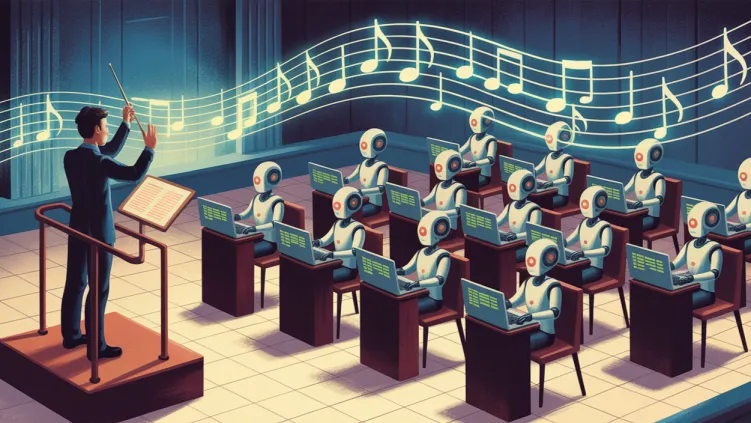
The role of the software engineer is not disappearing; it’s transforming. The value is shifting from the act of writing code to the art of orchestrating AI to solve complex business problems. The future of software engineering isn’t about being the fastest coder. It’s about being the best conductor of an AI orchestra.
The choice is yours: will you be the one writing the code, or the one conducting the orchestra?
#GenAI #SoftwareEngineering #FutureOfWork
Enjoyed this? Subscribe for more.
Practical insights on AI, growth, and independent learning. No spam.
More in AI Agents
How I Balance Business and Parenting as an Entrepreneur
Last December, as I squeezed out some time to help my kids with their study, I thought:
Low-code (or no-code) platforms will replace coding.
That’s the narrative we keep hearing for years.
Will Google penalize AI-generated content?
Last week, a post by Miquel Palet about Google penalising his website for using programmatic SEO and AI went viral.
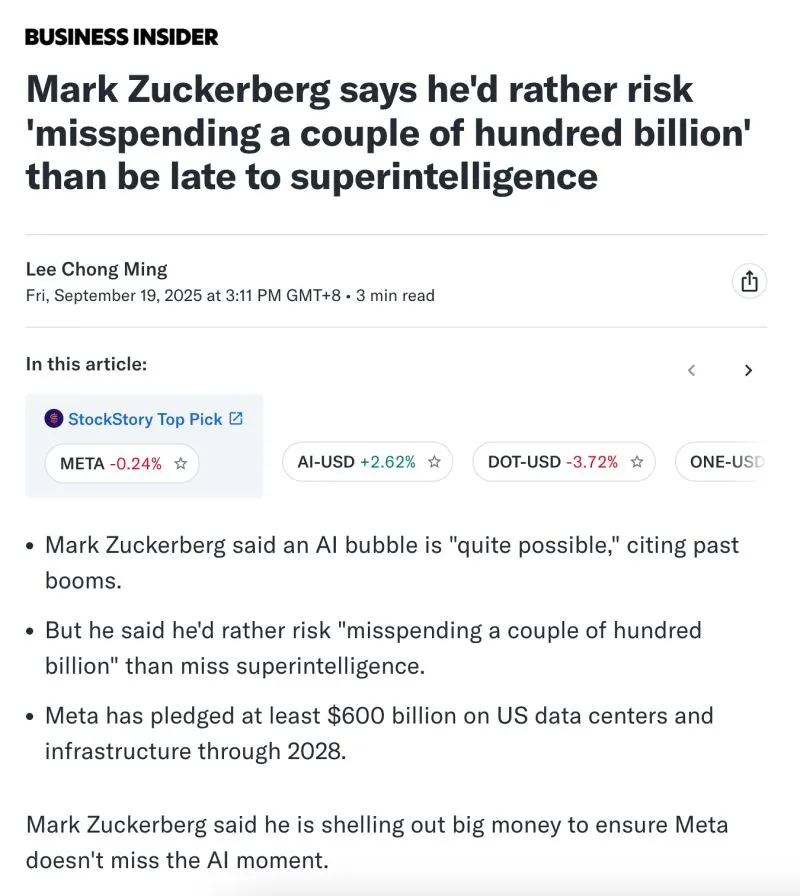
Zuckerberg: Better to Overspend on AI Than Miss It
I actually respect Mark Zuckerberg for his gut as a technopreneur and innovator.

5 Warning Signs Your Marketing Hire Is Just an Operator, Not a Strategist
Many founders make the mistake of hiring marketers who can execute… but not strategize.
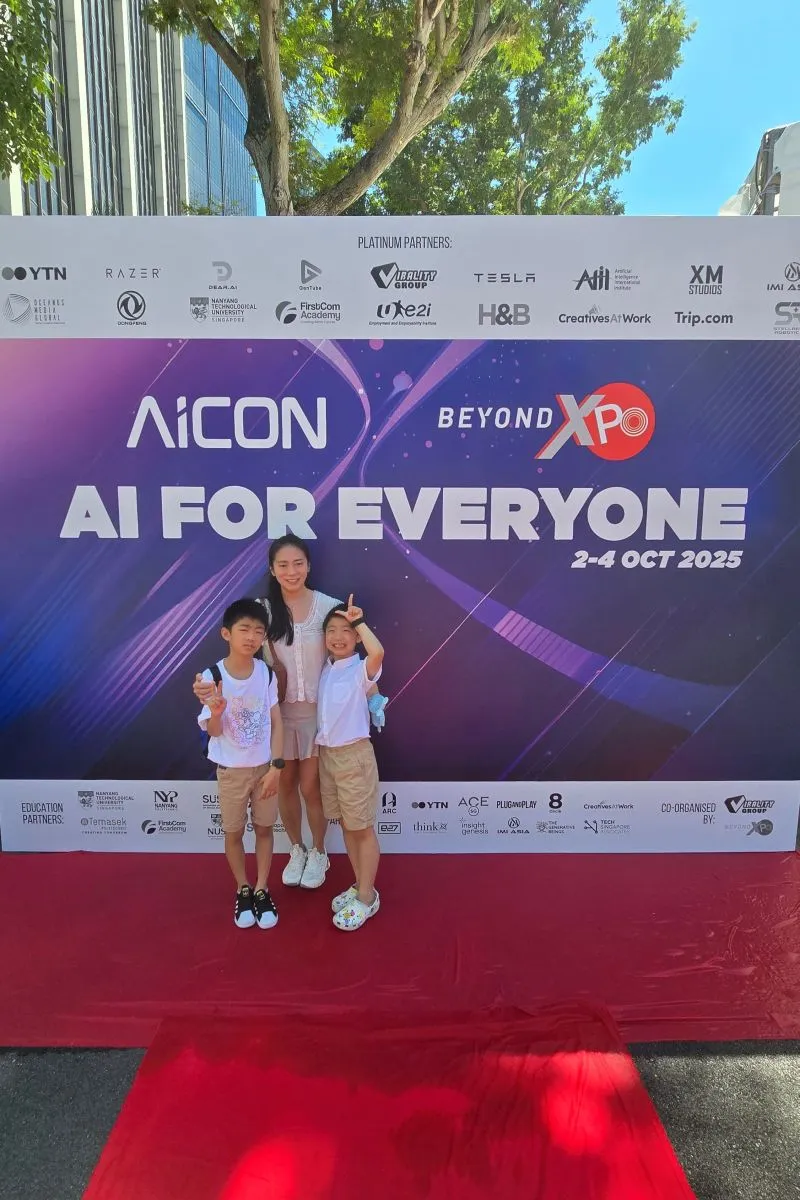
This is the first AI event I could actually bring my family and kids to.
AI events these days are getting a little dry. Most talks revolve around AI agents, business intelligence, coding, and content generation, usually targeted a...
How I Balance Business and Parenting as an Entrepreneur
Last December, as I squeezed out some time to help my kids with their study, I thought:
Zuckerberg: Better to Overspend on AI Than Miss It
I actually respect Mark Zuckerberg for his gut as a technopreneur and innovator.
This is the first AI event I could actually bring my family and kids to.
AI events these days are getting a little dry. Most talks revolve around AI agents, business intelligence, coding, and content generation, usually targeted a...
Low-code (or no-code) platforms will replace coding.
That’s the narrative we keep hearing for years.
Will Google penalize AI-generated content?
Last week, a post by Miquel Palet about Google penalising his website for using programmatic SEO and AI went viral.
5 Warning Signs Your Marketing Hire Is Just an Operator, Not a Strategist
Many founders make the mistake of hiring marketers who can execute… but not strategize.