No, Karpathy Didn’t Say Vibe Coding Doesn’t Work
This starkly contrasts with my own experience.
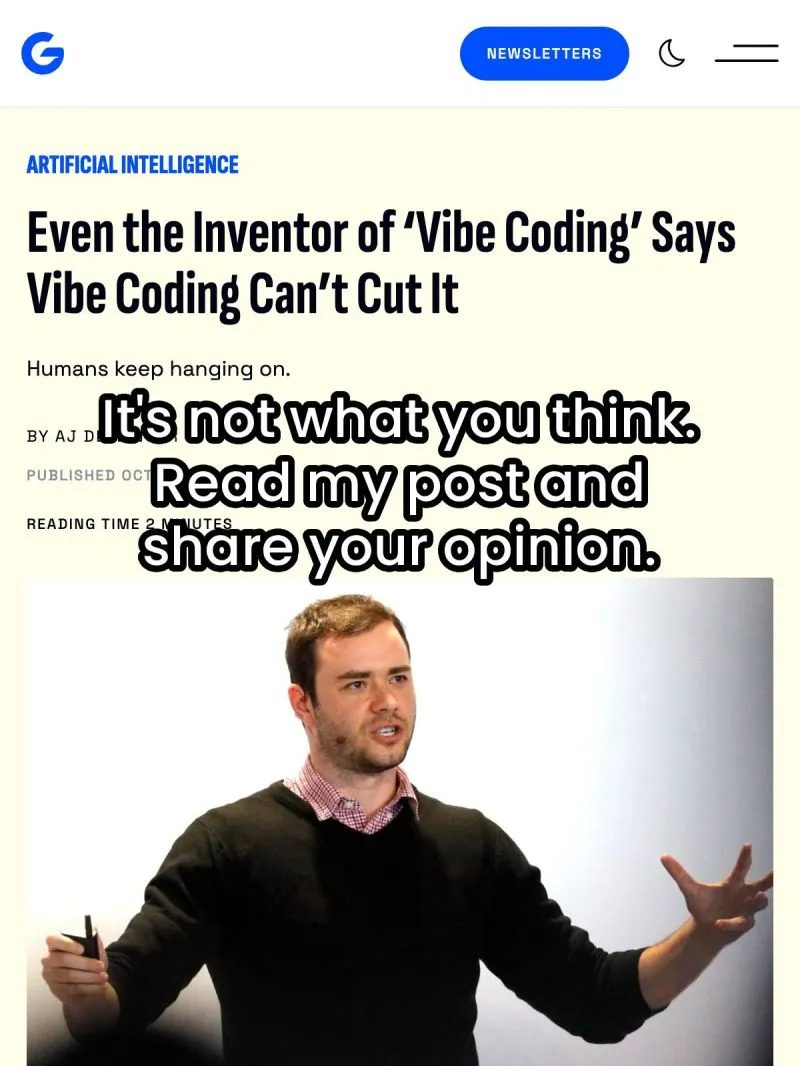
This starkly contrasts with my own experience.
My team and I have been vibe coding for the past year, and our recent experience with Claude Code has been nothing short of impressive. I even started to think that soon, we could just focus on planning, UX/UI and review, and let coding agents handle everything in between in the software development lifecycle. (Read https://lnkd.in/gTH4Cw35)
So I dug deeper into those reports.
It turns out, what Karpathy actually said was that vibe coding doesn’t work for his specific project — nanochat. He never claimed that vibe coding doesn’t work in general.
News outlets love a contrarian headline to get clicks. With the current hype around vibe coding, a title like “Even the Inventor of Vibe Coding Says Vibe Coding Can’t Cut It” is guaranteed to draw attention, regardless of context. To be fair, many articles did explain the context, but many readers just process the title and share.
I also revisited his original tweet that coined the term vibe coding. When he introduced the concept, he was probably doing it for a fairly standard web app — the kind of project where LLM-assisted coding already performs remarkably well today. (Tweet: https://lnkd.in/g7B-pR5H)
In my opinion, saying vibe coding doesn’t work because it couldn’t build nanochat is like saying a factory is broken because it can’t produce a one-of-a-kind art piece.
Factories are designed for efficient, repeatable production. Art, on the other hand, is bespoke, creative, and unpredictable. Similarly, AI coding agents are already highly capable at general-purpose codes, but expecting them to autonomously build complex, deeply novel systems today is like asking a robot to invent a new art piece.
In fact, I believe vibe coding could probably handle over 80% of standard web apps, internal tools, or backend APIs that follow established frameworks and design patterns.
In his follow-up tweet, he also said that he doesn’t want an agent that goes off for 20 minutes and comes back with 1,000 lines of code. He prefers AI coding tools that work collaboratively and transparently. He prefers to learn and improve as a programmer, not just receive bulk code. This is probably more of a personal preference. (Tweet: https://lnkd.in/gwFKDFfr)
However, he did caution that overreliance on unverified AI output could lead to poor-quality software, security risks, and widespread tech debt, which is why I think code review is still necessary.
The takeaway?
When factory can’t produce a one-of-a-kind art piece, this doesn’t mean it doesn’t work; It just means some creations still need the artist’s touch. Similarly, the recent sharing by Karpathy doesn’t mean vibe coding doesn’t work; It just means some software still demands the master craftsman.
Do you agree? Share you thought in the comment.
#VibeCoding
Enjoyed this? Subscribe for more.
Practical insights on AI, growth, and independent learning. No spam.
More in Vibe Coding
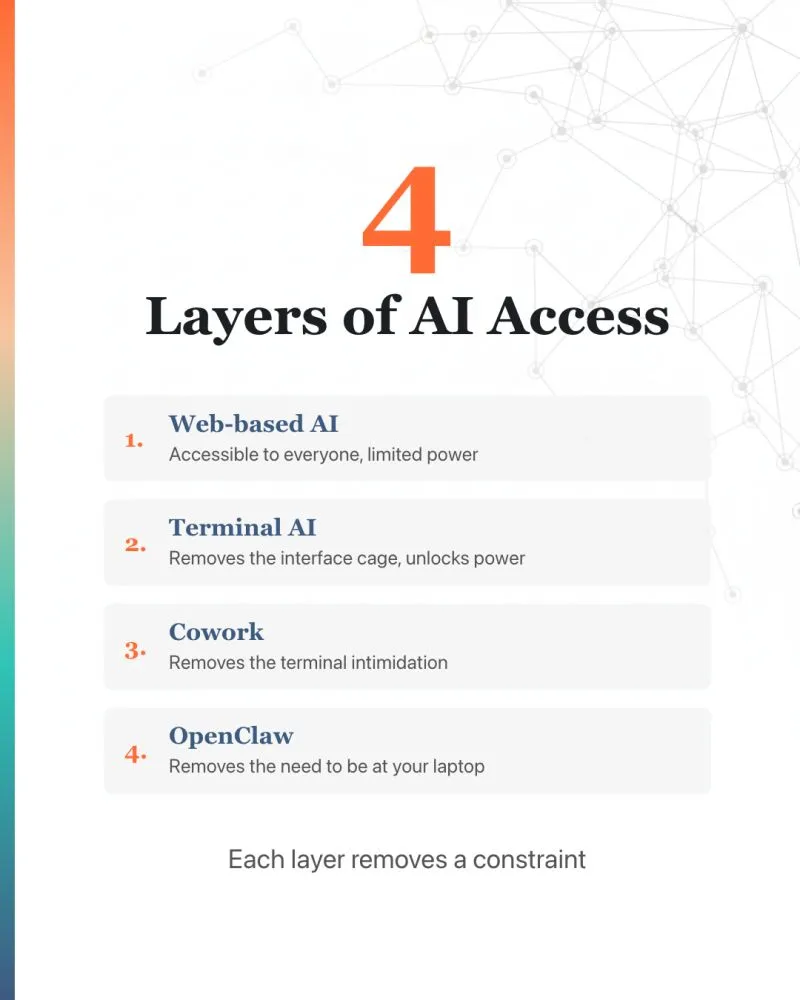
"What's the difference between ChatGPT, Claude Code, Claude Cowork, and OpenClaw?"
I've been asked this enough times that I thought I'd write it down. Here's my personal take.
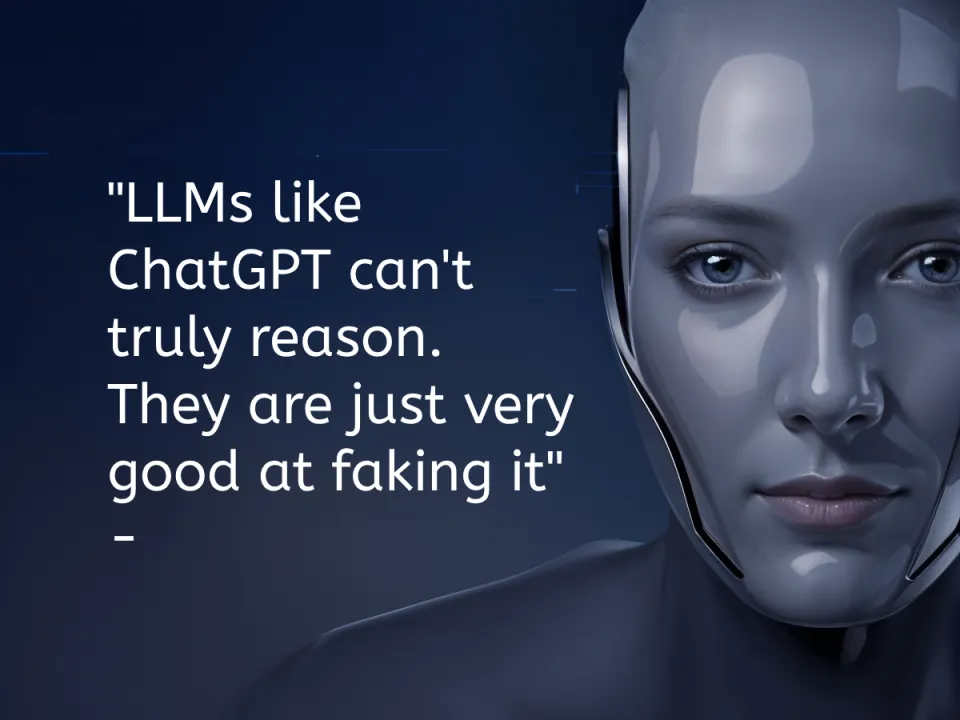
Can LLMs like ChatGPT do reasoning? It failed my casual tests in under 30 minutes.
… more

冬至快乐!Happy Winter Solstice Festival!
I’m curious to see how well Meta AI can create images of Chinese cultural festivals.
"Wait, you used to do THAT manually?"
I've been building software for 19 years. Something that would take me 2 months now takes 1 week.
Why you should get AI to replace you
The CEO knows this is the main friction to AI adoption in his company. The sharing addresses this question. This article is the written version of that shari...
Cursor's Pricing Changes Caused an Uproar
They have to do it because subsidizing the market with cheap tokens is not sustainable in the long run.
"What's the difference between ChatGPT, Claude Code, Claude Cowork, and OpenClaw?"
I've been asked this enough times that I thought I'd write it down. Here's my personal take.
"Wait, you used to do THAT manually?"
I've been building software for 19 years. Something that would take me 2 months now takes 1 week.
Cursor's Pricing Changes Caused an Uproar
They have to do it because subsidizing the market with cheap tokens is not sustainable in the long run.
Can LLMs like ChatGPT do reasoning? It failed my casual tests in under 30 minutes.
… more
冬至快乐!Happy Winter Solstice Festival!
I’m curious to see how well Meta AI can create images of Chinese cultural festivals.
Why you should get AI to replace you
The CEO knows this is the main friction to AI adoption in his company. The sharing addresses this question. This article is the written version of that shari...