From POC to production: 9 architecture components your vibe-coded app needs.
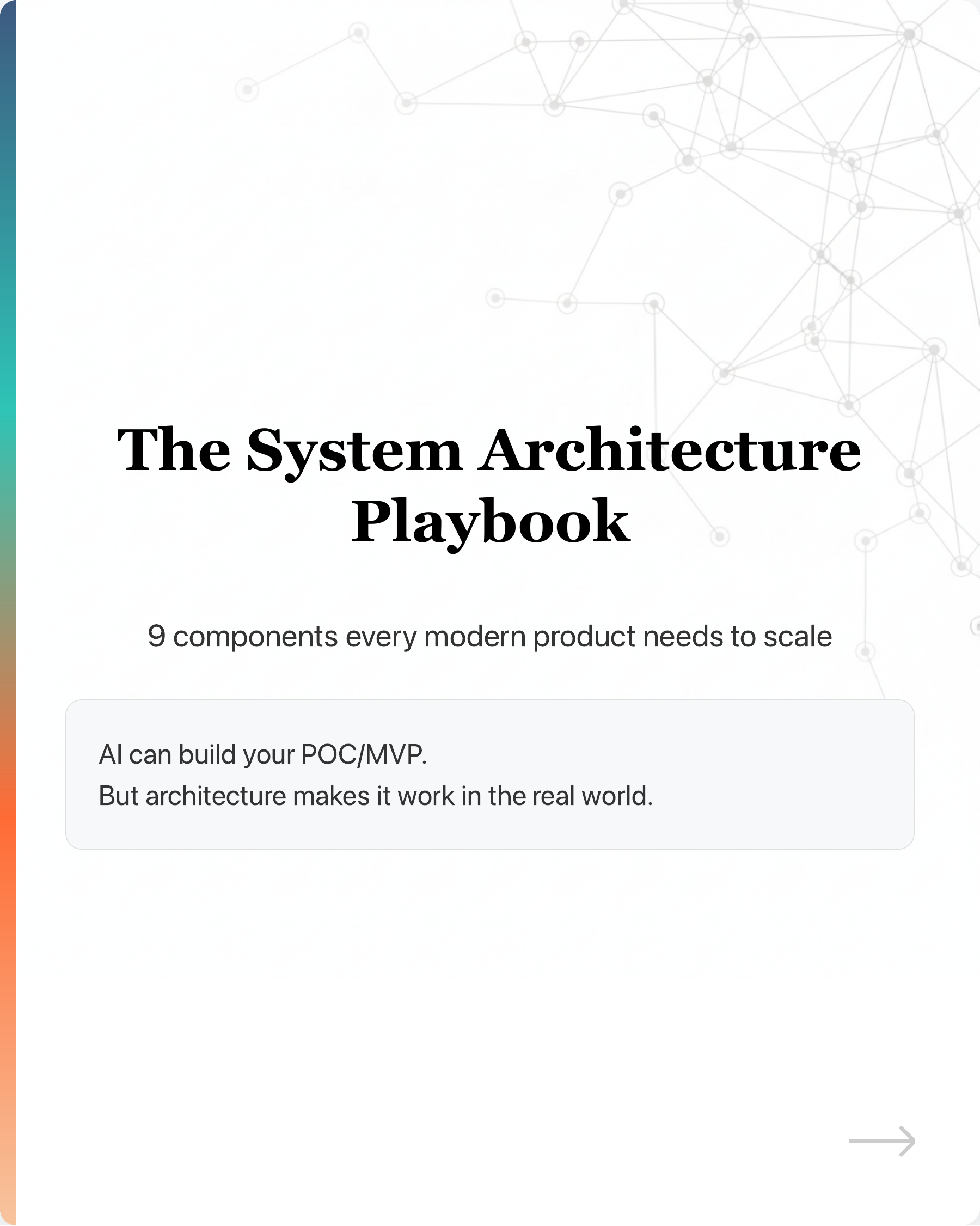
AI can build POC/MVP.
Tap a slide to expand
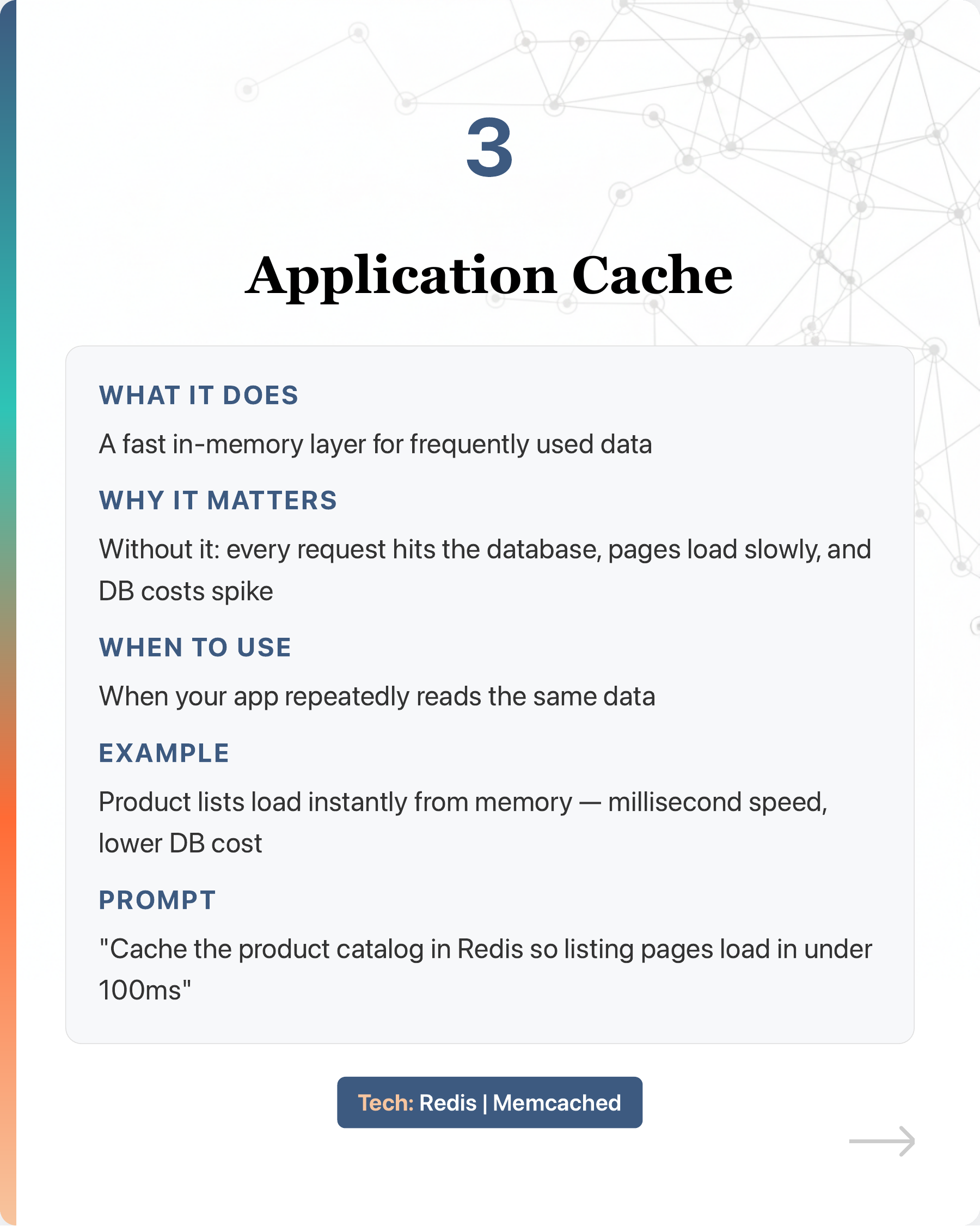
AI can build POC/MVP.
But architecture makes it work in the real world.
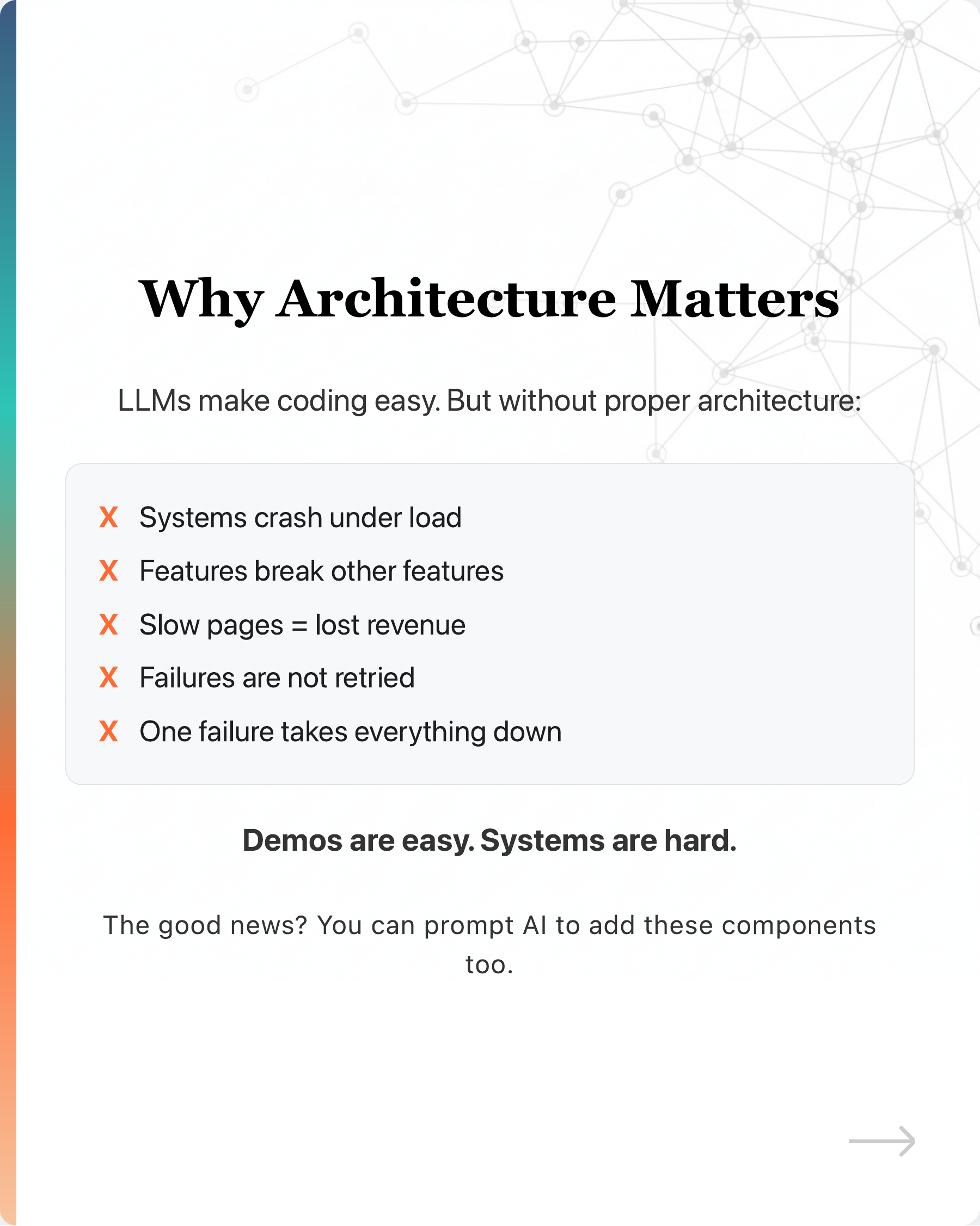
LLMs make coding easy.
But without proper architecture:
-
Systems crash under load
-
Features break other features
-
Slow pages = lost revenue
-
Failures are not retried
-
One failure takes everything down
Demos are easy. Systems are hard.
The good news? You can prompt AI to add these components too.
Here are the 9 components every modern product needs to scale:
-
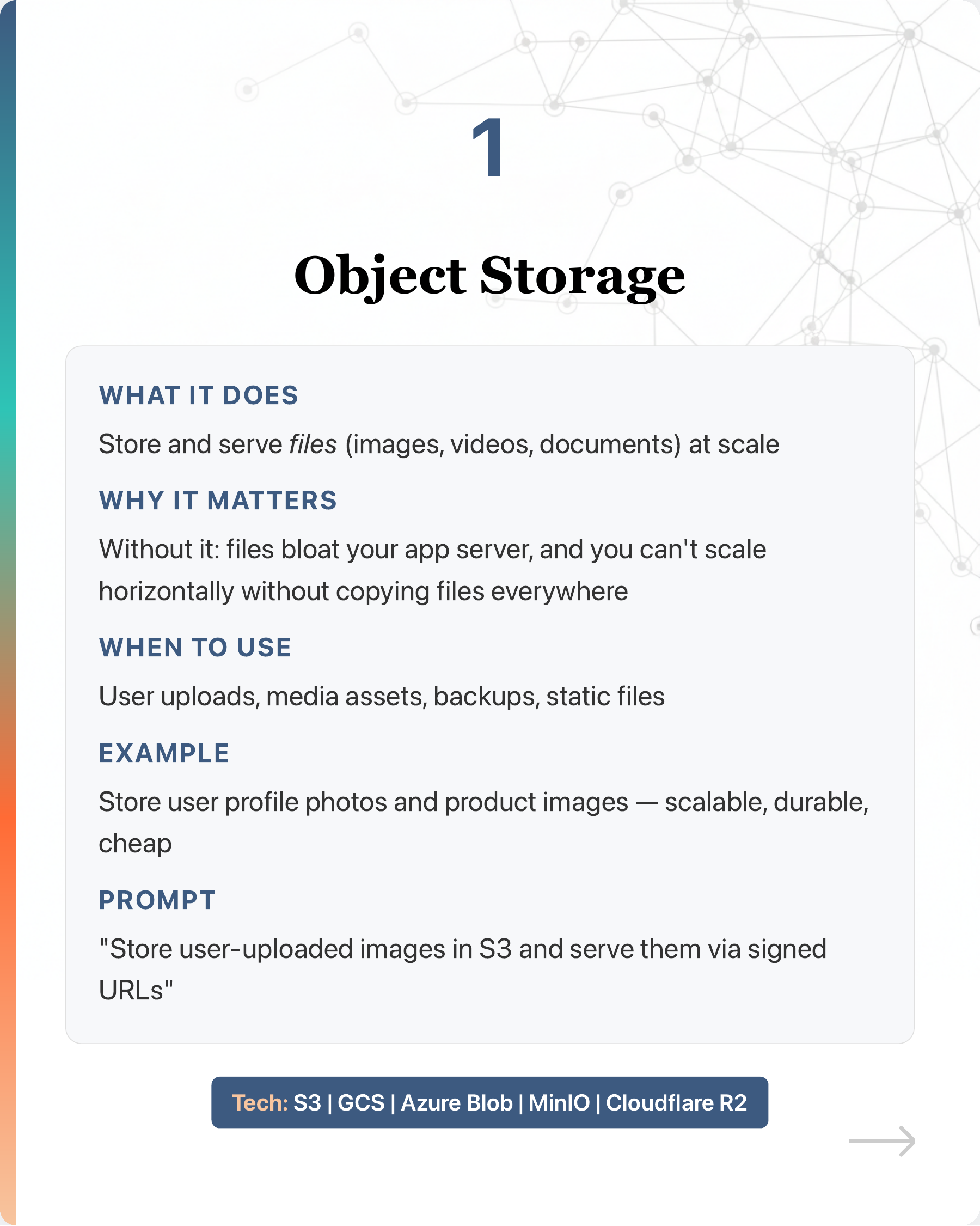
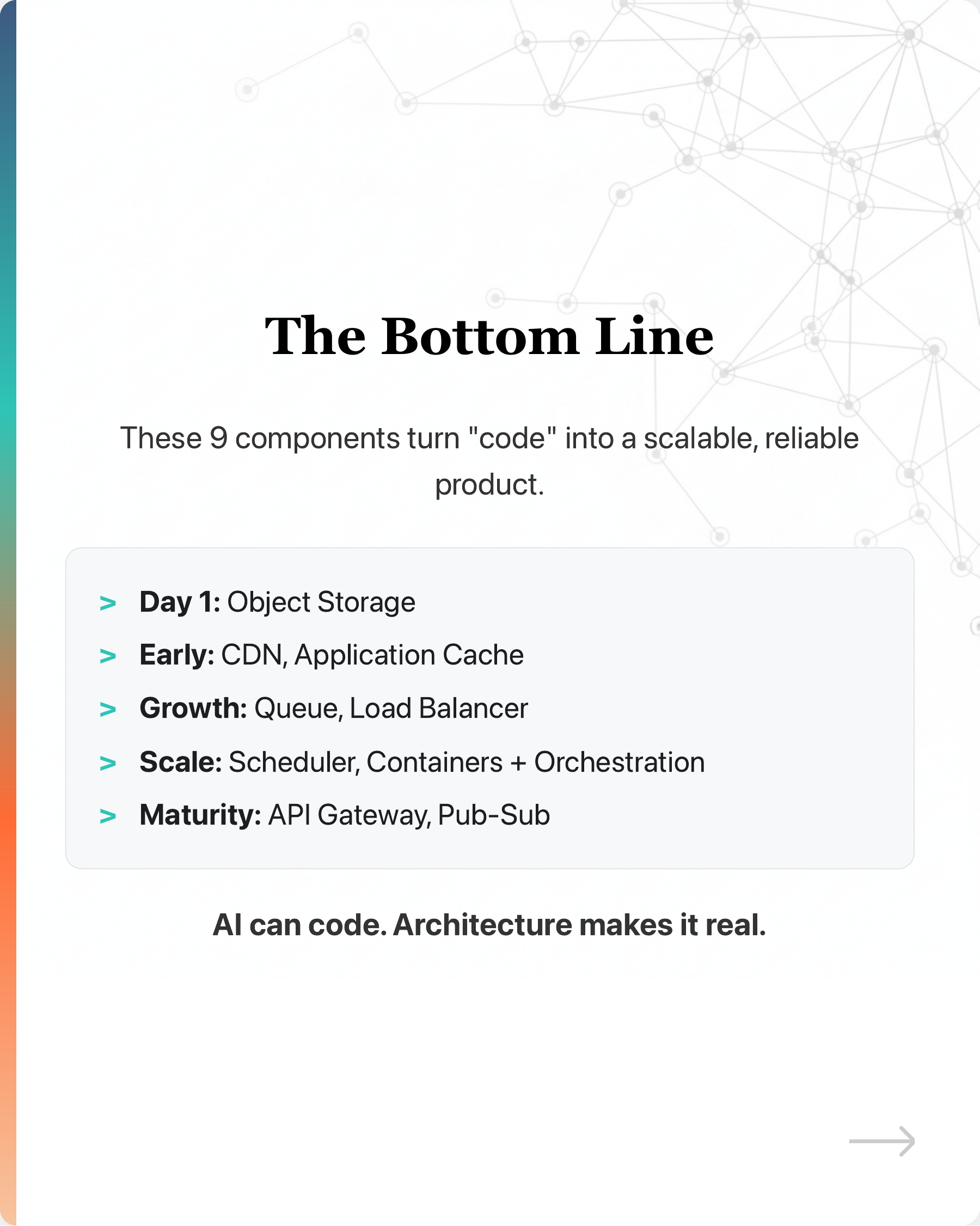
Object Storage — Store and serve files at scale
-
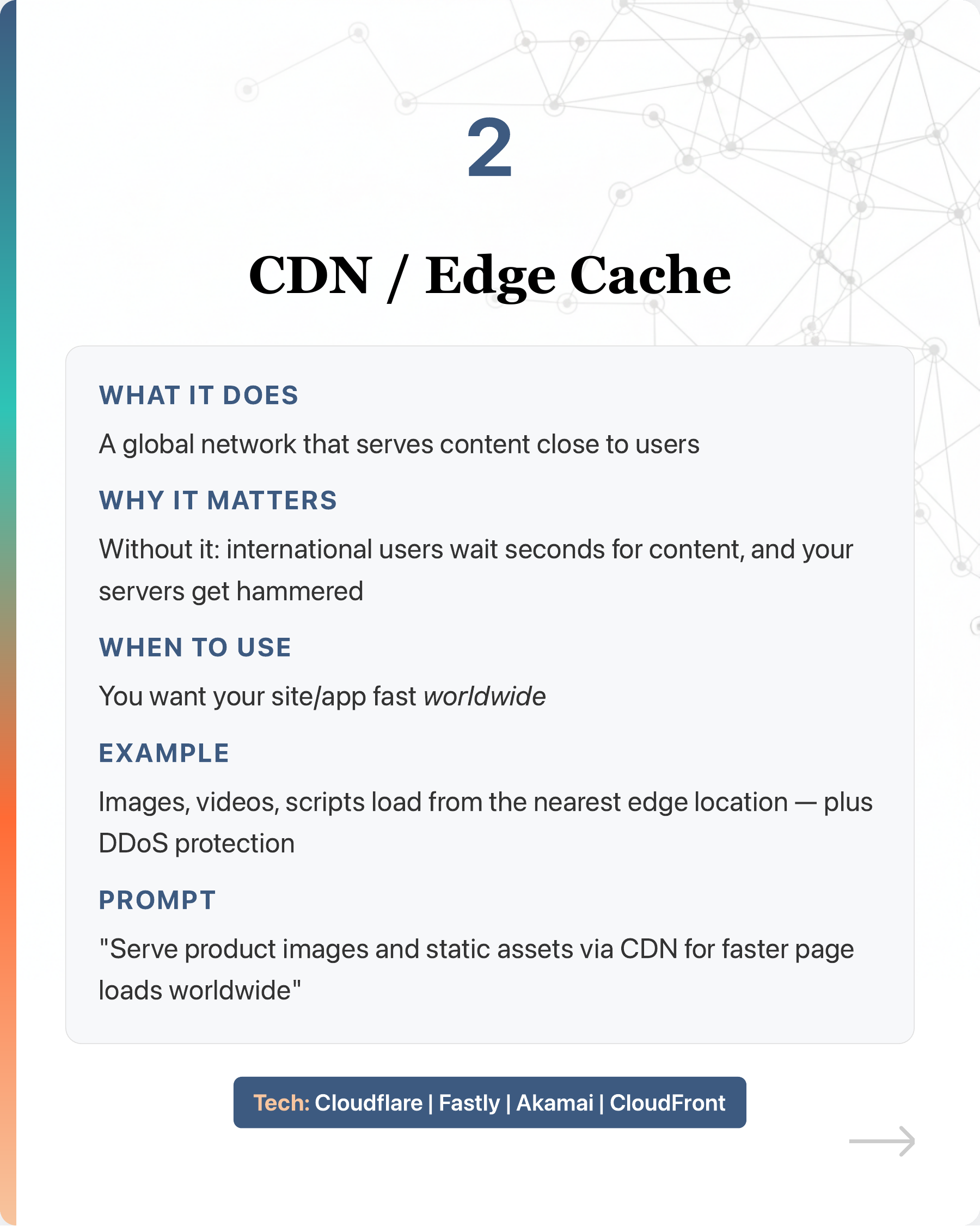
CDN — Fast content delivery worldwide
-
Application Cache — Millisecond reads from memory
-
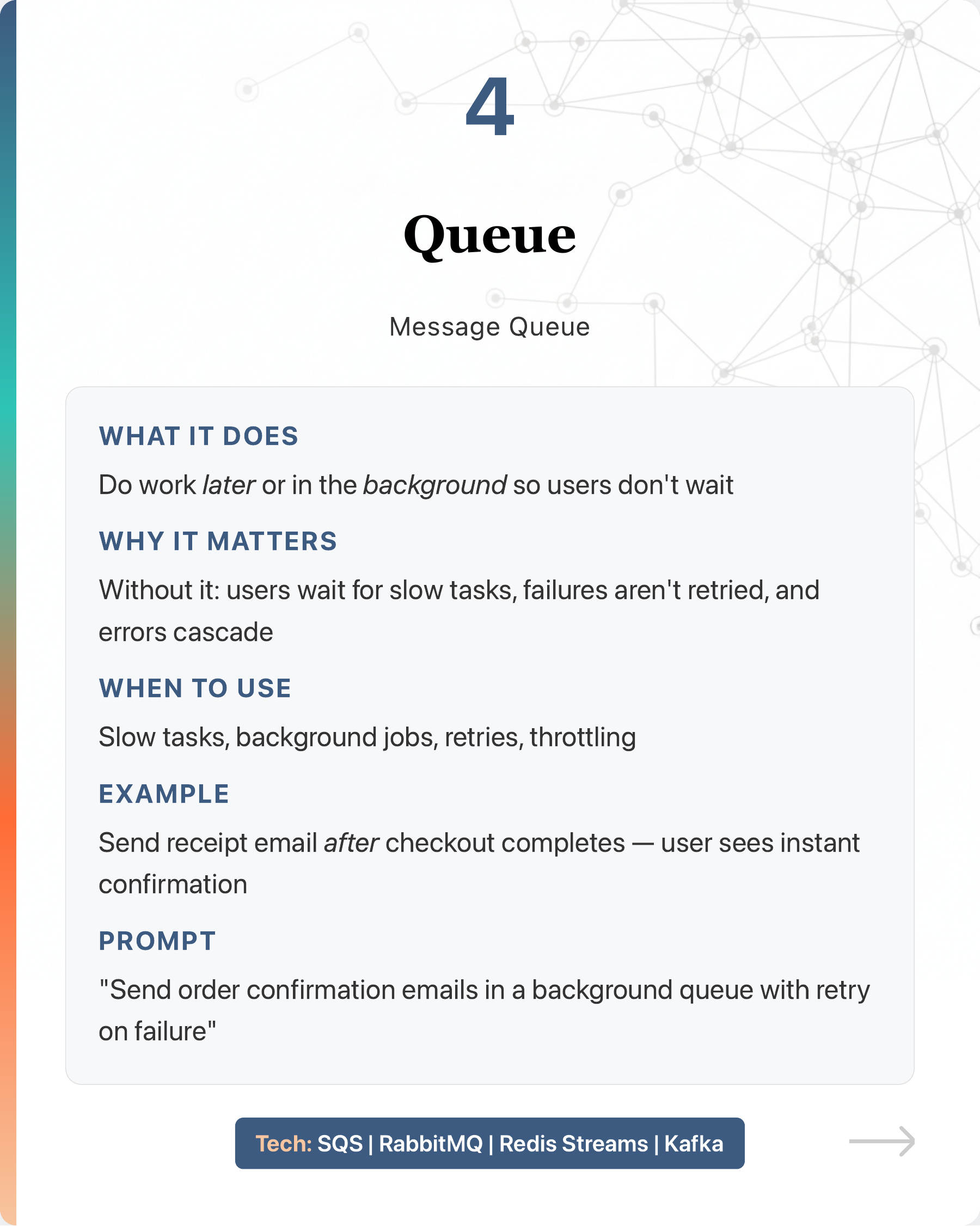
Queue — Do work later so users don’t wait
-
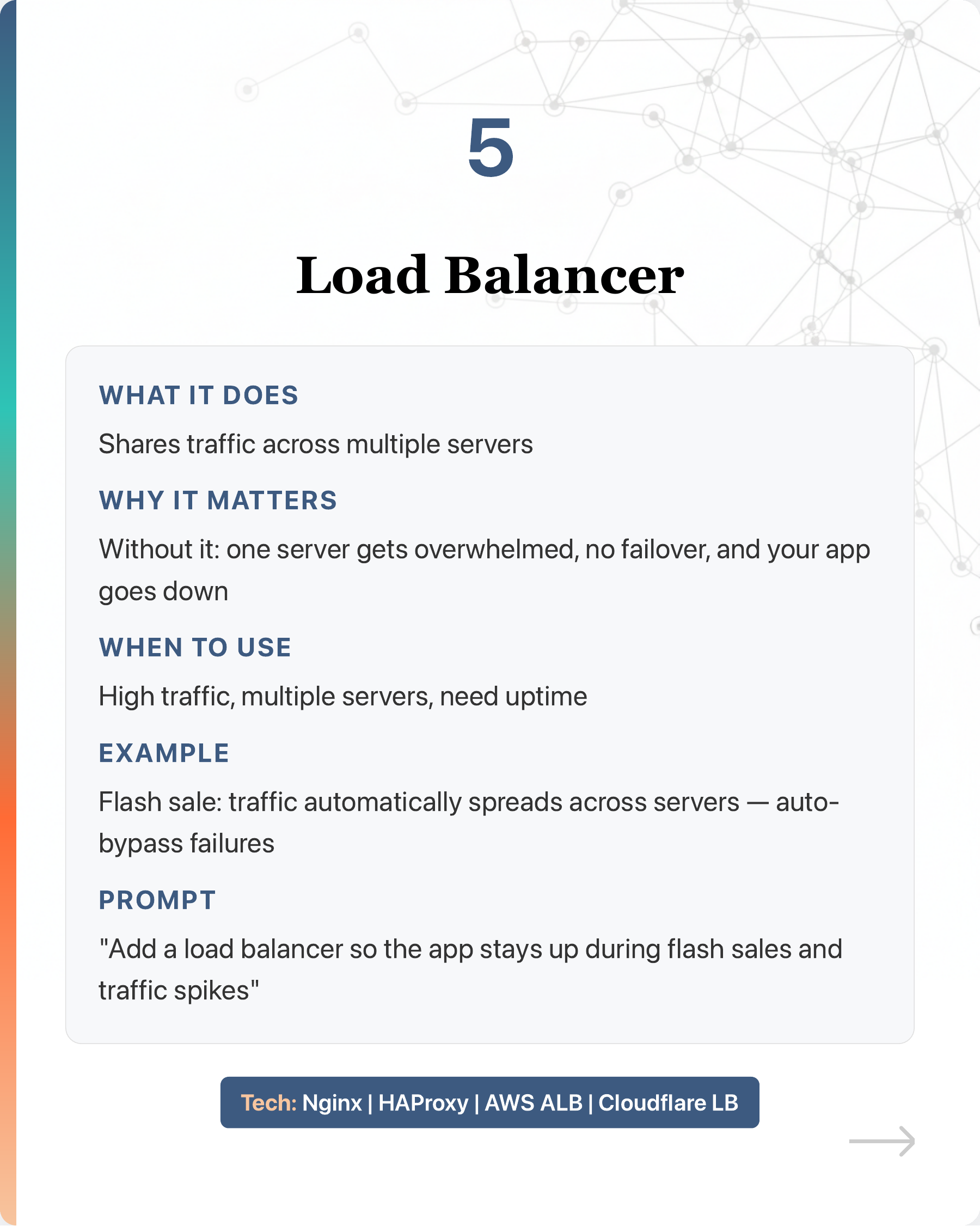
Load Balancer — Spread traffic across servers
-
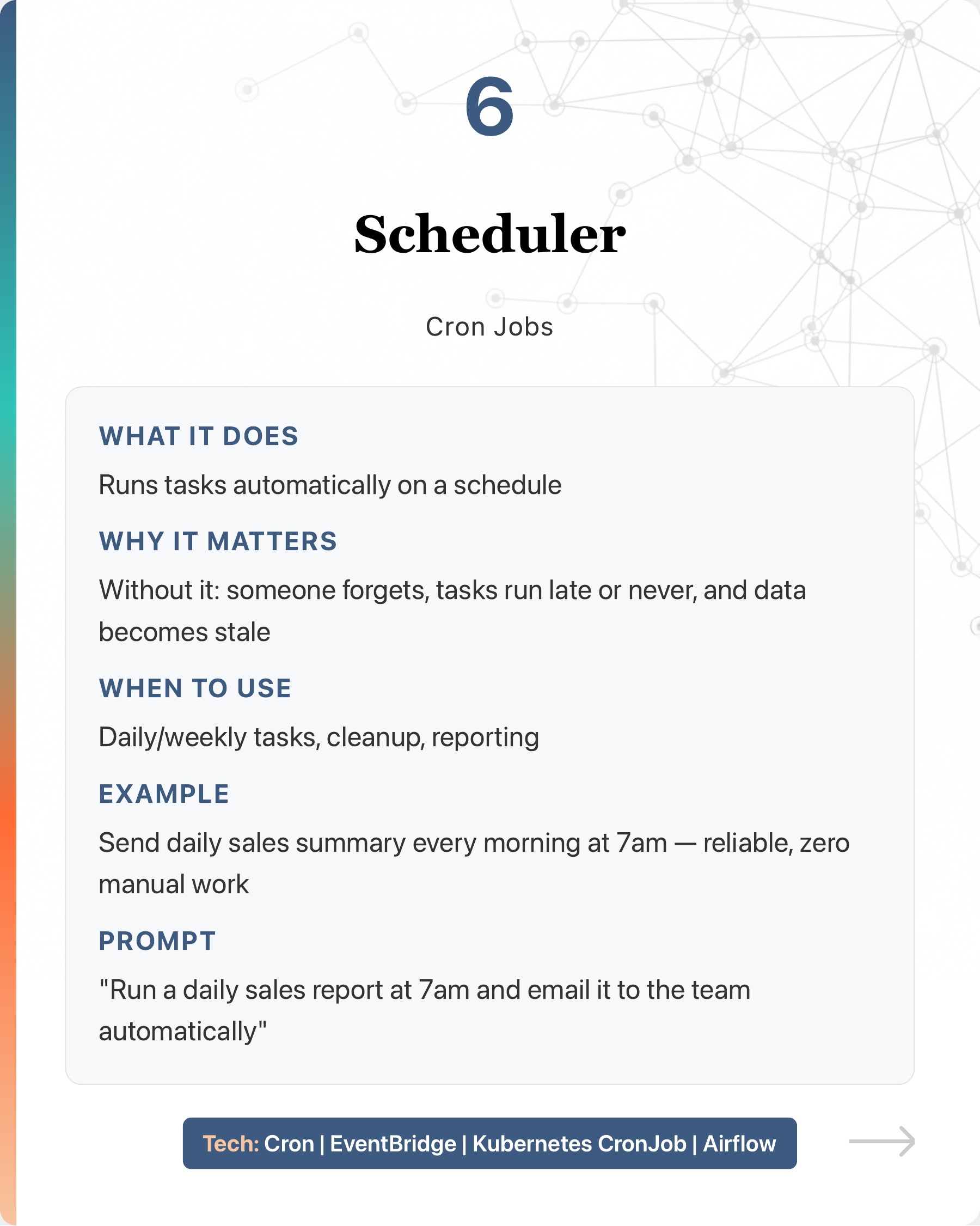
Scheduler — Automate recurring tasks
-
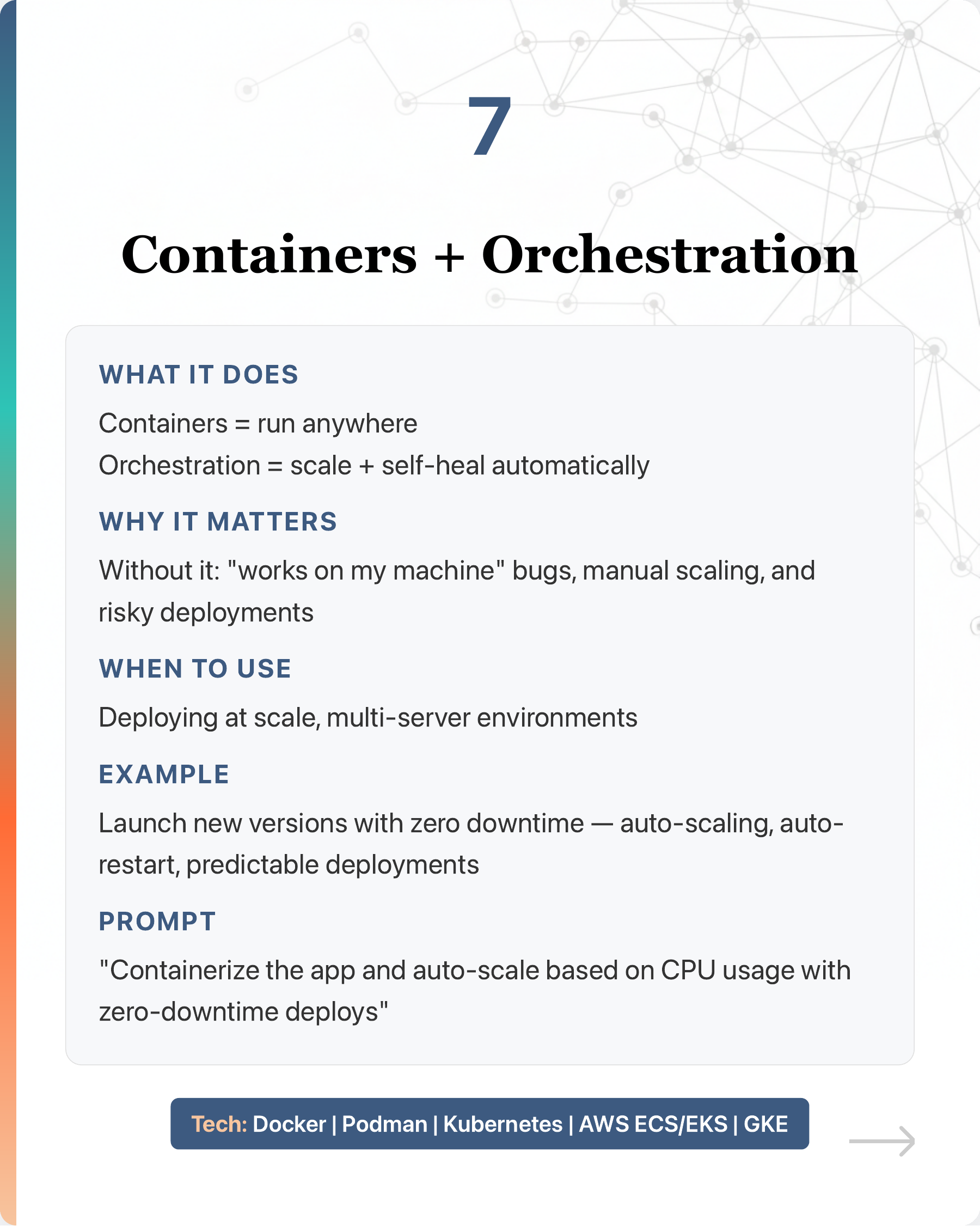
Containers + Orchestration — Scale and self-heal automatically
-
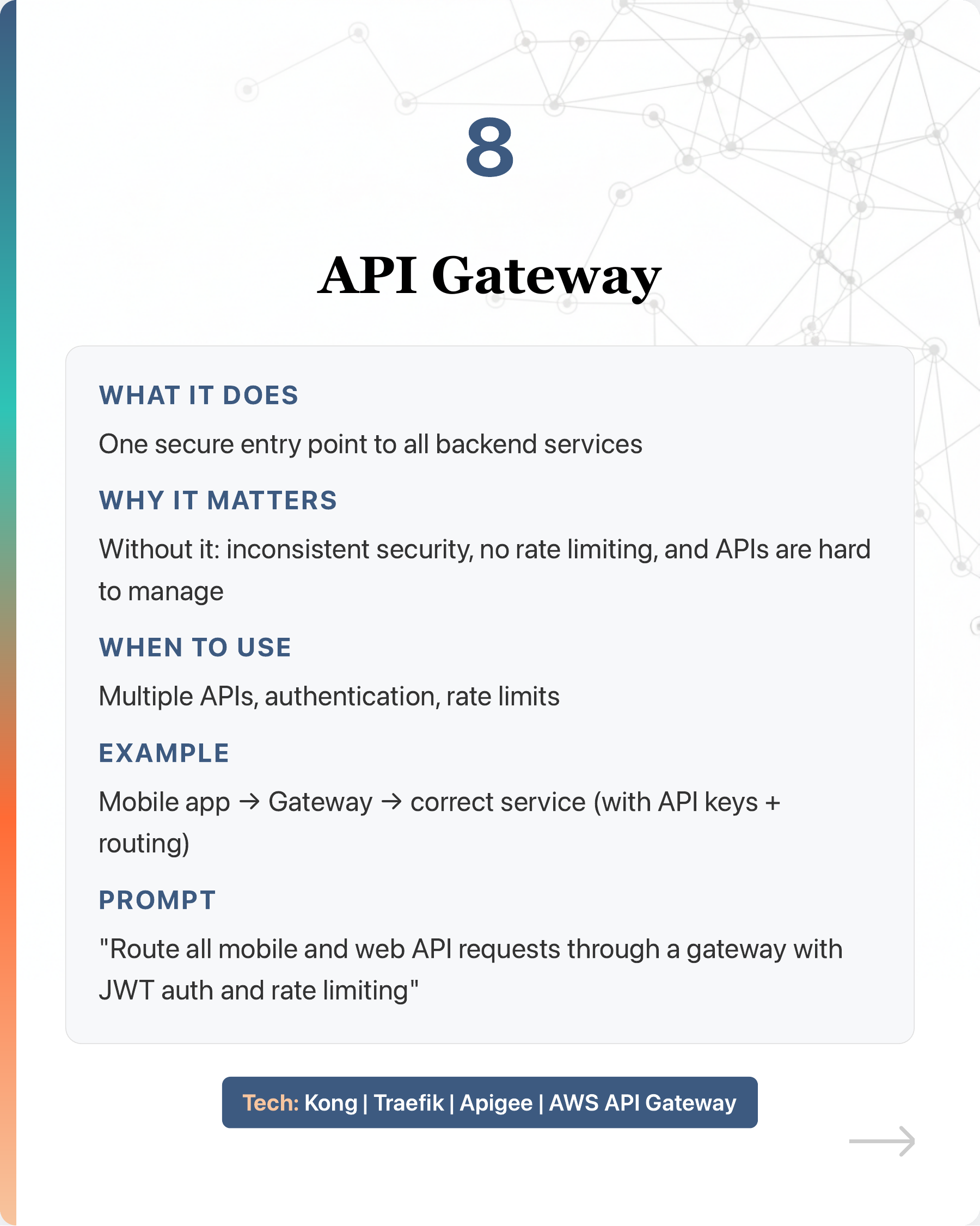
API Gateway — One secure entry to all services
-
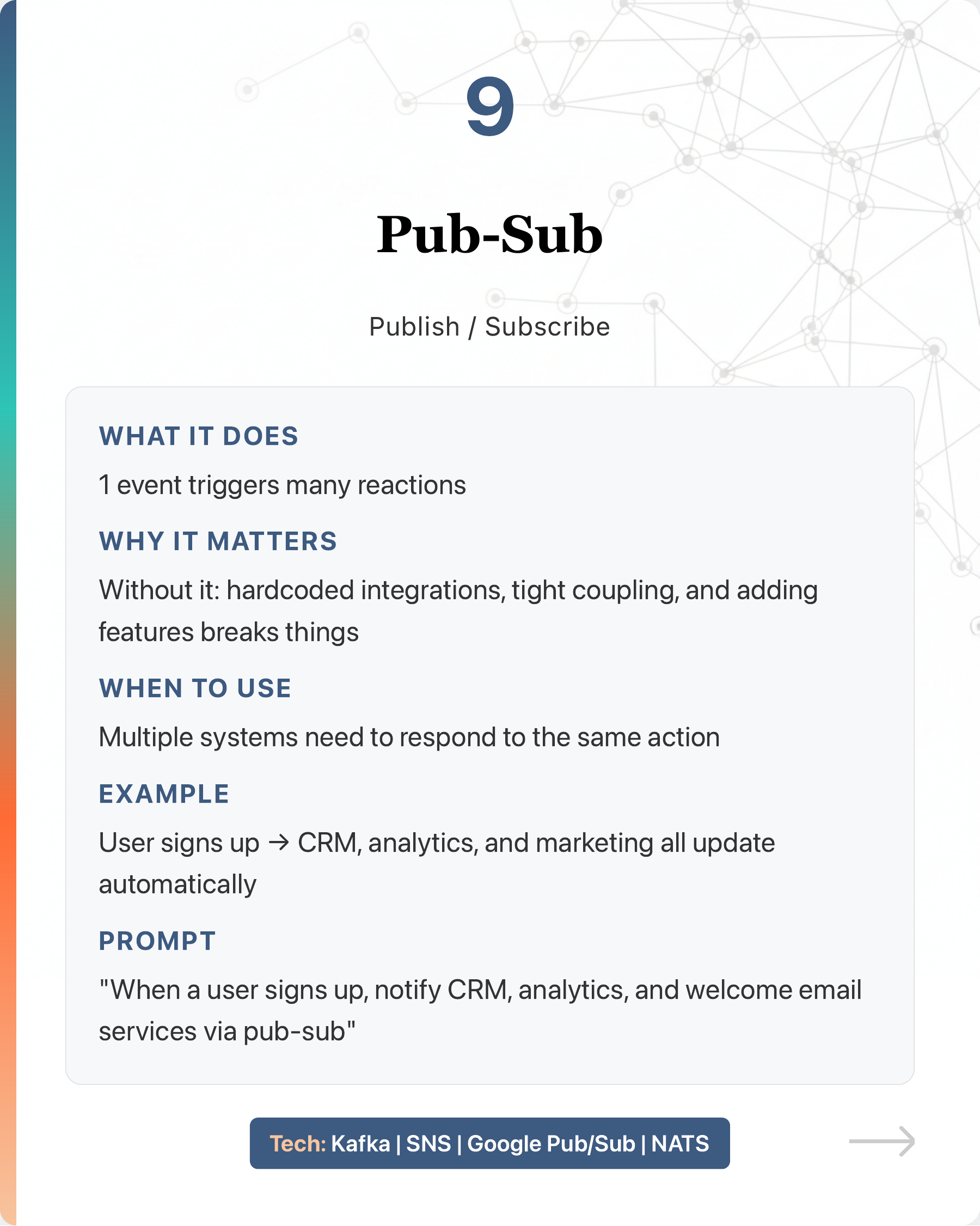
Pub-Sub — 1 event triggers many reactions
Swipe the carousel to see what each component does, when to use it, and the tech stack options.
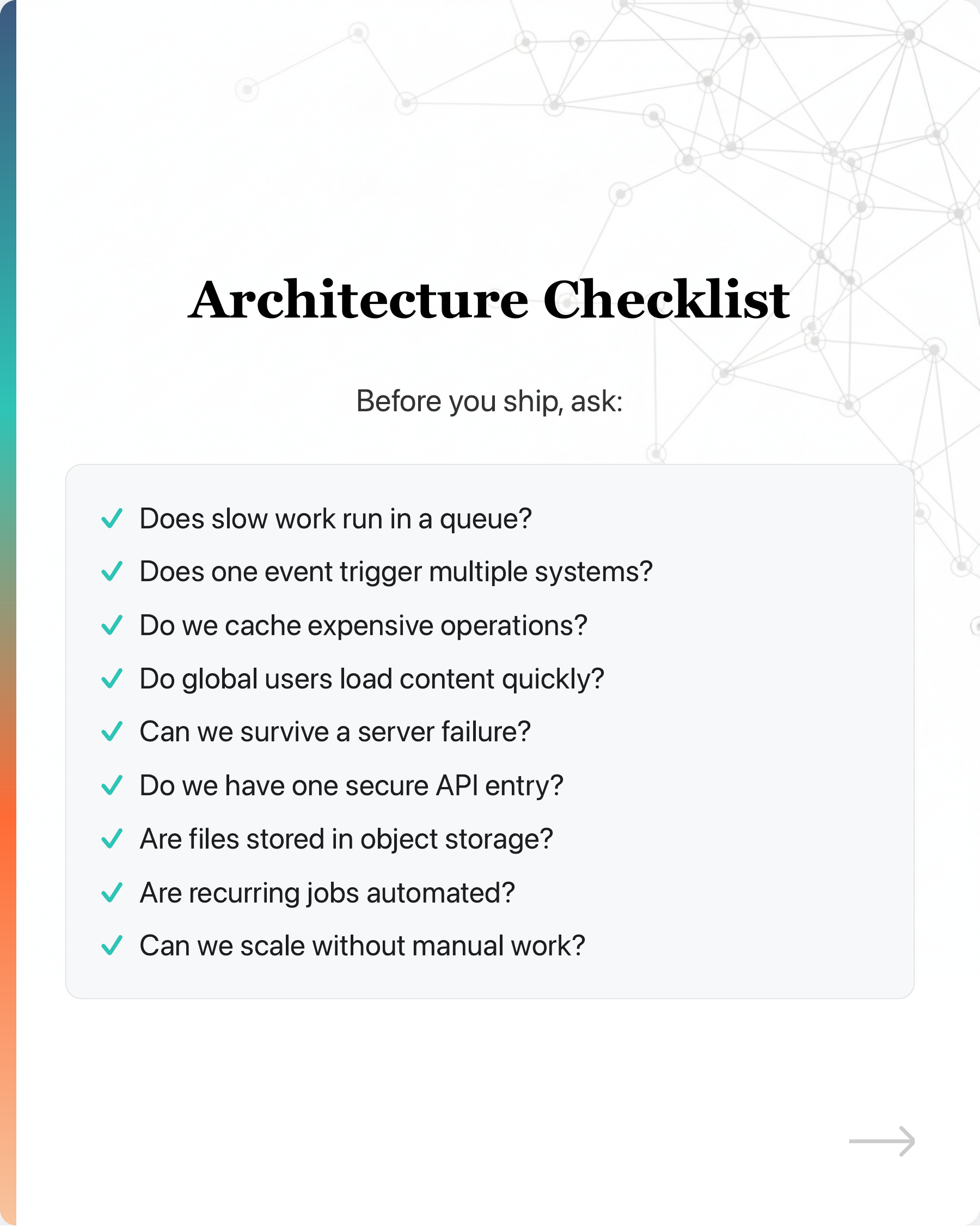
Before you ship, ask yourself:
-
Does slow work run in a queue?
-
Can you survive a server failure?
-
Are global users loading content fast?
AI can code. Architecture makes it real.
What component do you wish you’d added earlier? Drop it below.
Enjoyed this? Subscribe for more.
Practical insights on AI, growth, and independent learning. No spam.
More in Tech & Startup

OpenAI’s Windsurf deal is off — and Windsurf’s CEO is going to Google
Anyone feel like we should use AI to create a drama and publish it on Netflix?
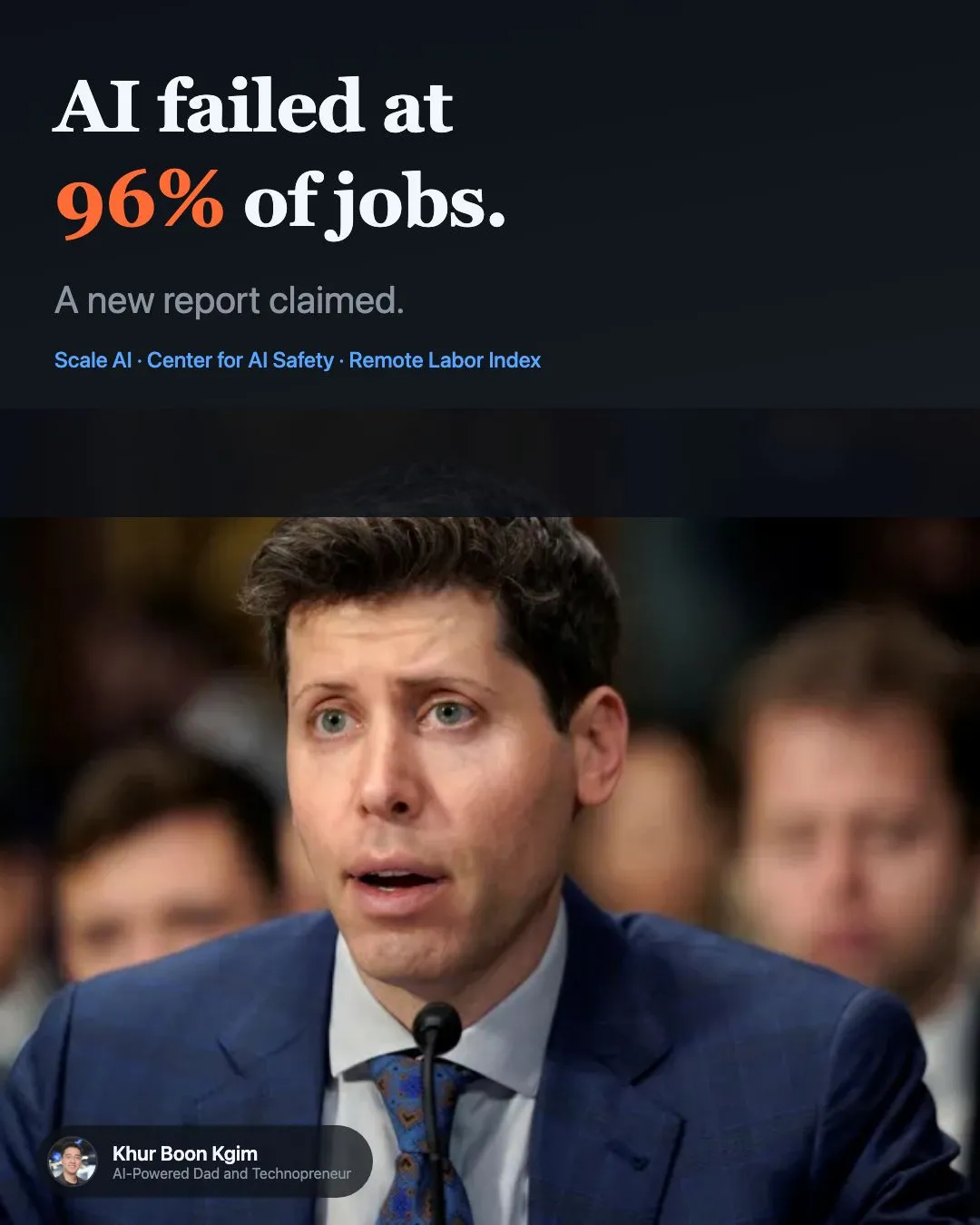
AI failed at 96% of jobs.
A new report from Scale AI and the Center for AI Safety tested AI agents against 240 real freelance projects from Upwork. The best agent completed only 2.5% ...

When we tell people we use AI to do SEO, no one pays attention.
The truth is, GEO is fundamentally 80% SEO.
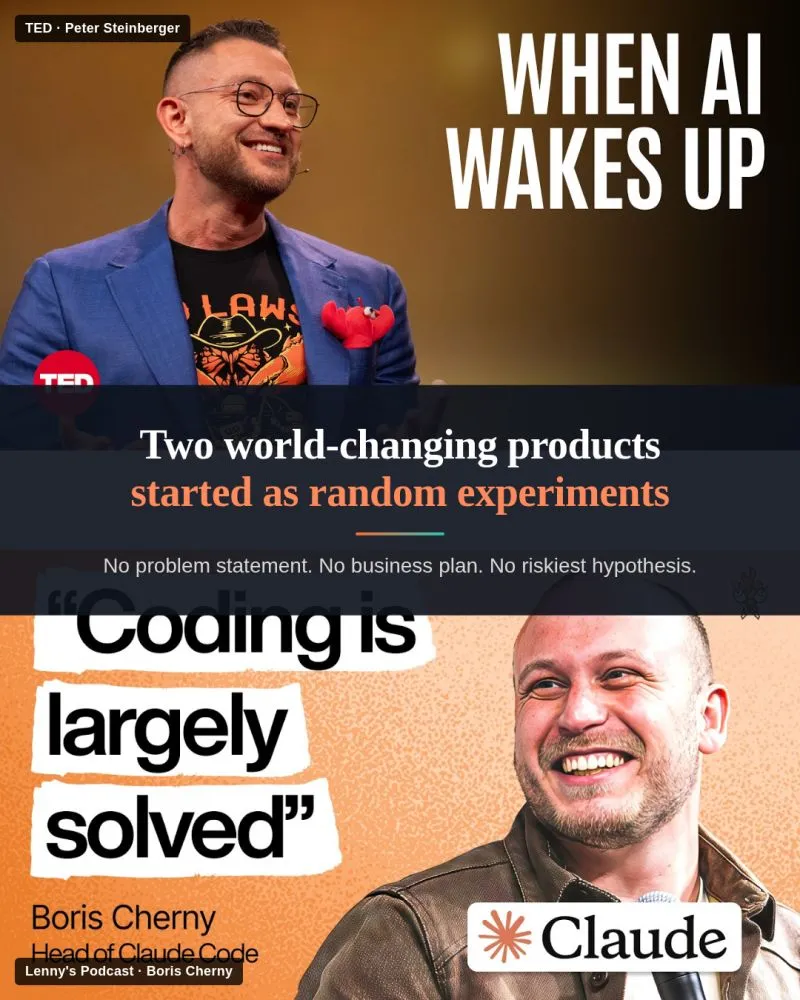
Two products that are changing the world started as random experiments.
I recently watched 2 videos. A Lenny's Podcast with Boris, the creator of Claude Code. And a TED talk by Peter, the creator of OpenClaw. I noticed a common t...
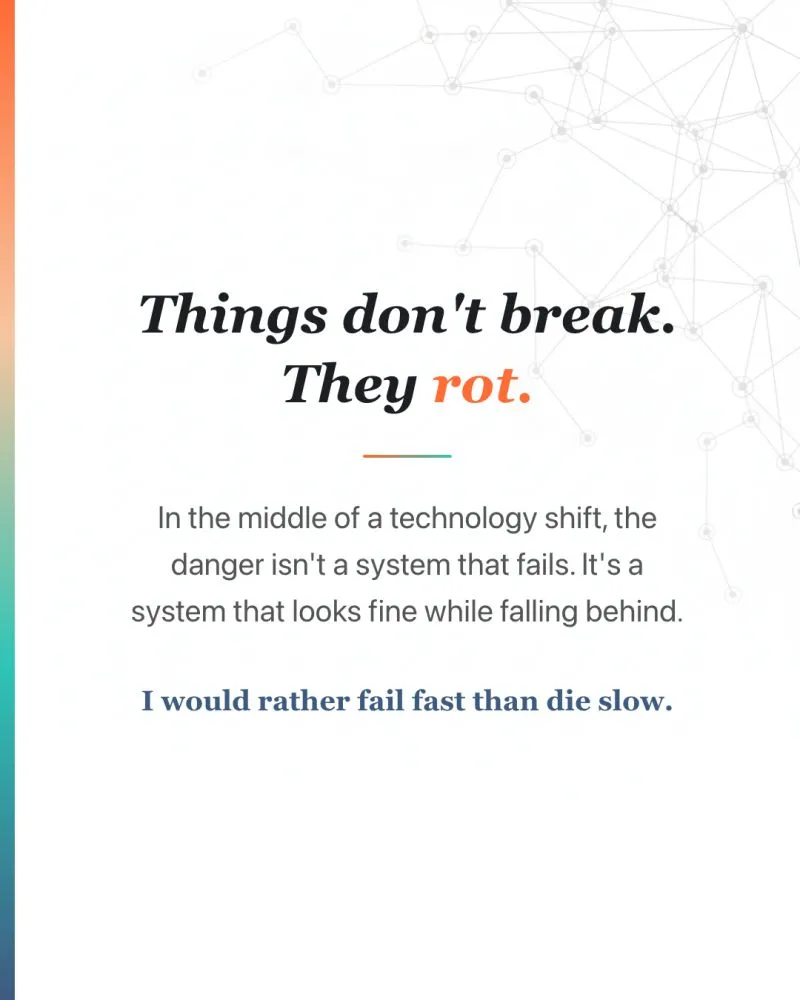
"Don't fix what's not broken. We have other priorities."
This is the most common reason to push back on transformation.
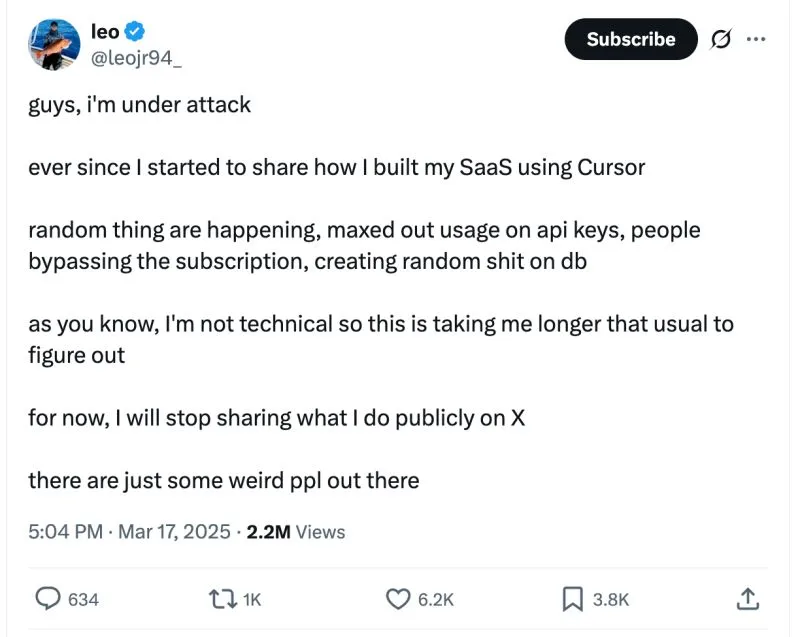
"Guys, I’m under attack"
I came across this post where a founder shared how his SaaS got exploited right after he started sharing how he built his SaaS using Cursor.
OpenAI’s Windsurf deal is off — and Windsurf’s CEO is going to Google
Anyone feel like we should use AI to create a drama and publish it on Netflix?
When we tell people we use AI to do SEO, no one pays attention.
The truth is, GEO is fundamentally 80% SEO.
"Don't fix what's not broken. We have other priorities."
This is the most common reason to push back on transformation.
AI failed at 96% of jobs.
A new report from Scale AI and the Center for AI Safety tested AI agents against 240 real freelance projects from Upwork. The best agent completed only 2.5% ...
Two products that are changing the world started as random experiments.
I recently watched 2 videos. A Lenny's Podcast with Boris, the creator of Claude Code. And a TED talk by Peter, the creator of OpenClaw. I noticed a common t...
"Guys, I’m under attack"
I came across this post where a founder shared how his SaaS got exploited right after he started sharing how he built his SaaS using Cursor.